
Forbes New Ivies 2025: The University of Texas at Austin – UT Austin Leading Top Innovation and Business
Looking to study at a top school like Forbes New Ivies 2025 The University of Texas at Austin?
The University of Texas at Austin has earned its place on the prestigious Forbes New Ivies 2025 list, joining an elite group of institutions that employers value as highly as traditional Ivy League schools.
With over 43,000 undergraduates, UT Austin stands out as the largest institution among the “Public Ivies” category.
This demonstrates that educational excellence can scale beyond the small, exclusive model of conventional elite universities.
This recognition confirms what many Texans have long known: the flagship university in Austin delivers world-class education at a fraction of the cost of private alternatives.
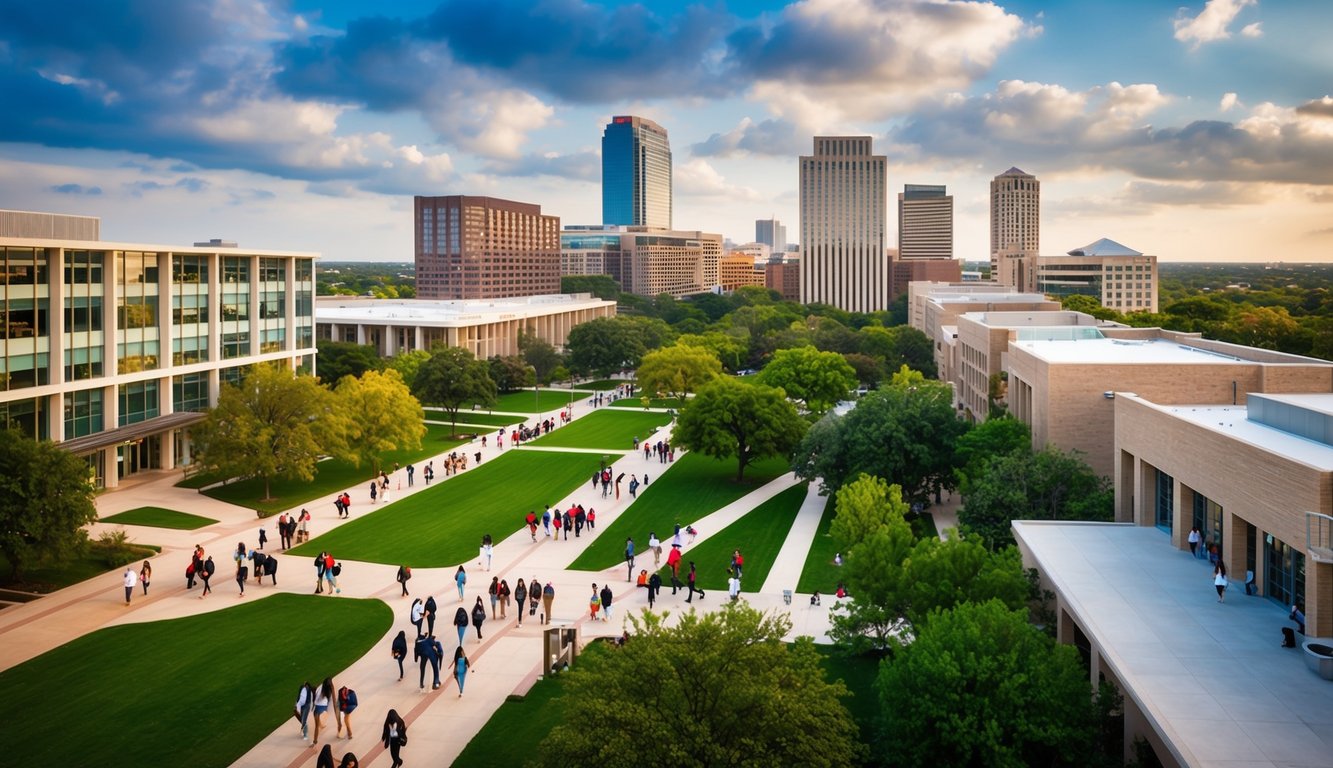
The university’s inclusion on this prestigious list reflects its strong academic programs, research opportunities, and the impressive career outcomes of its graduates.
Employers increasingly view a degree from UT Austin as comparable to credentials from Harvard, Yale, or Princeton—but with graduates who bring diverse perspectives shaped by Texas’s unique culture and the vibrant Austin environment.
The Forbes recognition isn’t just an honor—it’s a validation of the university’s commitment to combining academic rigor with real-world preparation.
Key Takeaways
- UT Austin ranks among the top “Public Ivies” in Forbes’ 2025 list, offering Ivy-caliber education at a more accessible price point.
- Employers increasingly value UT Austin degrees on par with traditional Ivy League credentials, creating exceptional career opportunities for graduates.
- The university combines academic excellence with a vibrant campus experience in one of America’s most dynamic cities, giving students both rigorous education and quality of life.
Evaluation Criteria: How UT Austin Made the Forbes ‘New Ivies’ List
The University of Texas at Austin earned its spot on the prestigious Forbes New Ivies 2025 list through exceptional performance across multiple evaluation metrics.
Forbes developed specific criteria to identify institutions that rival traditional Ivy League schools in quality while offering distinctive advantages to students and recognition from employers.
Academic Rigor and Reputation among Forbes Top 10 Public and 10 Private Schools
UT Austin has established itself as an academic powerhouse with over 170 fields of study across 13 colleges and schools.
The university’s academic reputation has grown steadily, with 50 programs ranked in the top 10 nationally according to U.S. News & World Report.
The school’s faculty includes Nobel laureates, Pulitzer Prize winners, and MacArthur Fellows who bring world-class expertise to the classroom.
This concentration of scholarly talent creates an intellectually stimulating environment comparable to traditional Ivy institutions.
Forbes specifically highlighted UT Austin’s strong academic departments in business, engineering, and computer science as particularly attractive to employers.
The McCombs School of Business and Cockrell School of Engineering consistently rank among the nation’s elite programs.
The university’s commitment to undergraduate research opportunities further enhances its academic reputation, with over 65% of students participating in research activities before graduation, setting a standard that outpaces Ivy League institutions.
Acceptance and Admissions Rate
UT Austin’s competitive admissions, similar to those at Cornell and Washington University. profile played a significant role in its Forbes New Ivies designation.
The university’s overall acceptance rate has dropped to approximately 29% for the most recent admissions cycle, making it one of the more selective public universities in the country.
For out-of-state and international applicants, the acceptance rate is even lower at around 12%, approaching Ivy League levels of selectivity.
This increasing competitiveness reflects growing recognition of the university’s value proposition.
The university employs a holistic admissions process that evaluates:
- Academic achievement
- Personal essays
- Extracurricular involvement
- Leadership potential
- Special talents and contributions
Forbes noted that UT Austin’s admissions policies strike a balance between maintaining academic excellence while fulfilling its mission as a public university serving Texas residents through programs like the Top 6% automatic admission for in-state students.
Standardized Test Scores
The academic profile of admitted students at UT Austin continues to strengthen, with standardized test scores approaching those of traditional Ivy League institutions, the university’s academic rigor is evident in its admissions data. This metric was a key factor in Forbes’ evaluation.
Middle 50% SAT and ACT Scores for Recent Admitted Class:
| Test | 25th Percentile | 75th Percentile |
|---|---|---|
| SAT (Combined) | 1310 | 1500 |
| ACT (Composite) | 29 | 34 |
The average SAT score for admitted students has risen by over 60 points in the past five years, demonstrating the university’s increasing selectivity and academic standards, comparable to the median SAT score of Ivy League schools.
While UT Austin has adopted a test-optional policy like many institutions, competitive applicants typically submit strong test scores.
Forbes recognized this shift while noting that students admitted without test scores demonstrated exceptional achievements in other areas.
The university’s ability to attract high-scoring students despite its status as a public institution impressed Forbes evaluators and contributed significantly to its New Ivies designation.
Research and Innovation Capabilities
UT Austin’s world-class research infrastructure was a standout factor in Forbes’ evaluation criteria.
The university consistently ranks among the top 10 U.S. universities in research expenditures, with over $800 million annually dedicated to groundbreaking research.
The campus houses 17 libraries and numerous specialized research centers that support innovation across disciplines.
This commitment to research excellence rivals or exceeds many traditional Ivy institutions.
Forbes specifically highlighted UT Austin’s strengths in:
- Computer science and AI research through partnerships with tech giants
- Energy and sustainability innovations at the Energy Institute
- Medical and healthcare breakthroughs at Dell Medical School
The university’s location in Austin’s thriving technology ecosystem enhances its research capabilities through industry partnerships with major employers like Dell, Apple, Google, and Tesla, creating a symbiotic relationship that employers highly value.
UT Austin’s technology commercialization efforts are particularly impressive, with opportunities that rival those listed on the Forbes list of top universities. more than 200 patents and 50 startups emerging from university research annually, demonstrating real-world impact that caught Forbes’ attention.
Academic Programs and Departments
The University of Texas at Austin offers world-class academic programs across diverse disciplines.
UT Austin’s comprehensive curriculum combines rigorous academic standards with innovative teaching approaches, delivering education that prepares students for real-world success and explains why employers value UT Austin graduates so highly in the competitive job market.
Engineering and Technology
The Cockrell School of Engineering at UT Austin ranks among the nation’s elite engineering programs, offering 11 undergraduate degrees across different specializations that prepare students to compete in the eyes of employers.
The school is particularly renowned for its petroleum engineering program, consistently ranked #1 or #2 nationally.
With over $180 million in annual research funding, you’ll have access to cutting-edge facilities like the Texas Advanced Computing Center, home to one of the world’s most powerful supercomputers.
This research infrastructure rivals or exceeds what you’d find at traditional Ivy League schools.
Engineering students benefit from strong industry partnerships with tech giants like Dell, IBM, and AMD.
These connections translate into exceptional internship opportunities and impressive job placement rates – over 85% of graduates secure employment within six months of graduation.
The innovative curriculum incorporates practical, hands-on learning through programs like the Freshman Introduction to Research in Engineering where you can engage in real research from day one.
Business and Economics
The McCombs School of Business consistently ranks among the top 5 public university business schools in the country, making it a key reason UT Austin earned its place among Forbes’ New Ivies.
You’ll benefit from specialized centers like the Center for Leadership and Ethics and the Financial Trading and Technology Center with its real-time stock trading floor.
These facilities provide practical experience that employers highly value.
The business school offers 25+ majors and concentrations including standout programs in:
- Accounting (#1 ranked public university program)
- Marketing (#3 nationally)
- Management Information Systems (#5 nationally)
- Entrepreneurship (top 10 nationally)
Economics programs feature distinguished faculty, including Nobel Prize winners and advisors to the Federal Reserve.
The 5:1 student-faculty ratio in upper-division courses ensures personalized attention that rivals Ivy League institutions while serving a larger student body.
Sciences and Humanities
UT Austin’s College of Natural Sciences boasts groundbreaking research in physics, computer science, and biology.
The neuroscience program has received over $45 million in research grants in the past five years alone.
The Plan II Honors Program provides an interdisciplinary liberal arts education comparable to what you’d find at elite private institutions.
With only 180 students admitted annually from over 1,500 applicants, it’s highly selective and prestigious.
In humanities, the Michener Center for Writers offers one of the nation’s most competitive MFA programs with a full fellowship valued at over $27,000 annually.
Famous faculty have included Pulitzer Prize winners and National Book Award recipients.
The College of Liberal Arts houses innovative programs like:
- Linguistics and AI combining language theory with practical applications
- Environmental Humanities addressing climate change through interdisciplinary approaches
- Digital Humanities using technology to transform traditional scholarship
These programs reflect UT Austin’s commitment to both traditional academic excellence and forward-thinking innovation.
Fine Arts and Performance
The College of Fine Arts encompasses world-class programs in music, theater, dance, and visual arts. The Butler School of Music is particularly distinguished, with a 98% job placement rate for performance graduates, the university has established partnerships with companies that hire an Ivy League graduate.
You’ll have access to incredible facilities including:
- The Texas Performing Arts Center, hosting over 300 performances annually
- The Blanton Museum of Art, holding the largest university art collection in the country with over 19,000 works
- The Harry Ransom Center, housing one of the world’s finest collections of literary manuscripts and rare books
The Department of Theatre and Dance produces over 40 shows annually and boasts alumni in Broadway productions, major studios, and prestigious theater companies nationwide.
UT Austin’s Arts and Entertainment Technologies program represents a forward-thinking approach to creative industries, combining traditional arts with emerging technologies, akin to initiatives at the University of Chicago.
This innovative program prepares you for careers in gaming, virtual reality, and interactive entertainment – fields that traditional Ivy League schools have been slower to embrace.
Campus Experience and Student Life
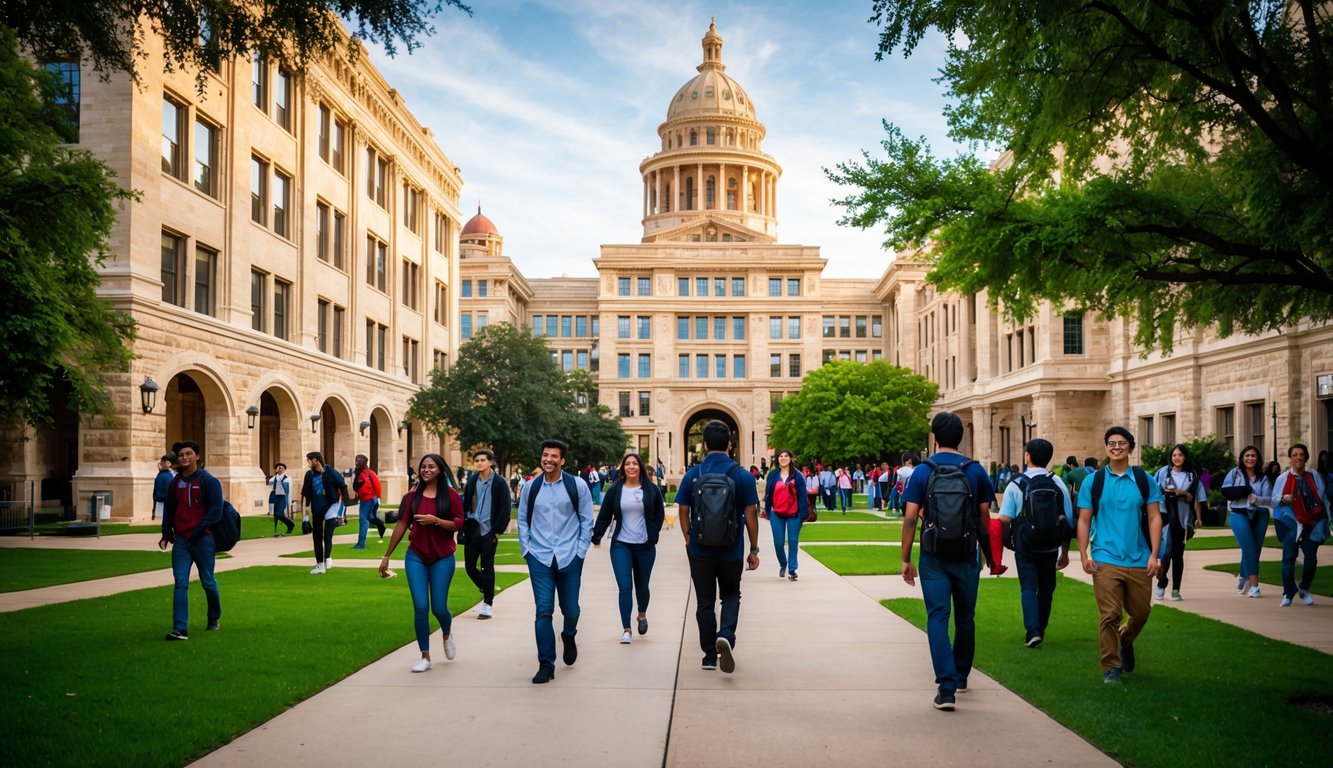
Life at the University of Texas at Austin offers a vibrant blend of academic rigor and social opportunities across its sprawling 431-acre campus.
With over 1,300 student organizations and world-class facilities, UT Austin creates an environment where students can thrive both intellectually and personally.
Residential Halls and Facilities
UT Austin houses approximately 7,400 students in 14 on-campus residence halls. Each hall has its own unique character and community.
The newest addition, Jester Residence Hall, accommodates over 3,000 students. It features modern amenities including study lounges, community kitchens, and recreational spaces.
Living options include:
- Traditional dormitories (Jester, San Jacinto)
- Honors housing (Honors Quad)
- Apartment-style living (Dobie Twenty21)
The Student Activity Center serves as a hub for campus life with dining options, meeting spaces, and recreational facilities.
The Perry-Castañeda Library, one of 17 libraries on campus, remains open 24 hours during exam periods. It houses over 4 million volumes.
UT’s commitment to sustainability is evident in its newer LEED-certified buildings and campus-wide recycling initiatives.
These have earned recognition in Forbes’ New Ivies 2025 profile.
Clubs and Affinity Groups
With over 1,300 registered student organizations, you’ll find endless opportunities to pursue your interests at UT Austin.
The university’s diverse student population of nearly 7,000 undergraduates ensures clubs cater to virtually every interest.
Popular organization types include:
- Academic and professional groups (Texas Business Associations, Engineering Societies)
- Cultural and identity-based organizations (Black Student Alliance, Latinx Student Association)
- Service organizations (Texas Orange Jackets, UT Student Volunteer Board)
- Creative arts groups (University Singers, Texas Revue)
The Student Government and Senate of College Councils provide leadership opportunities and advocate for student interests.
Recent on-campus protests have focused on environmental issues and social justice causes, demonstrating students’ engagement with current events.
The university supports Greek life with over 70 fraternities and sororities representing approximately 14% of undergraduates.
The Campus Events + Entertainment committee organizes major campus-wide events including concerts, films, and the annual Texas Revue talent show.
Sports and Athletics
UT Austin boasts a legendary athletics program that competes in the NCAA Division I Southeastern Conference.
The Longhorns have won 55 national championships across various sports, creating a culture of pride and tradition that rivals any Ivy League institution.
Major athletic facilities include:
- Darrell K Royal-Texas Memorial Stadium (capacity: 100,119)
- Moody Center (basketball arena opened in 2022)
- Gregory Gymnasium (indoor recreation center)
- Texas Swimming Center (Olympic-caliber aquatics facility)
The university’s Texas Exes spirit groups like Texas Cowboys and Silver Spurs maintain longstanding traditions including taking care of Bevo, the live longhorn mascot.
The annual Red River Showdown against Oklahoma draws massive crowds and national attention.
For recreational athletes, UT RecSports offers intramural competitions in over 40 sports and activities.
The Outdoor Recreation Program organizes adventures like rock climbing, kayaking, and camping trips throughout Texas and beyond.
Student Support Services
UT Austin provides comprehensive support services designed to help you thrive academically and personally throughout your college journey.
The University of Texas-Austin has invested significantly in student resources that match or exceed those found at traditional Ivy League institutions.
Academic support includes:
- Sanger Learning Center offering free tutoring, academic coaching, and study skills development
- University Writing Center providing one-on-one consultation for papers and projects
- Career Services with specialized advisors for each college
The Counseling and Mental Health Center offers individual therapy, group sessions, and crisis intervention services.
Meanwhile, the Student Emergency Services team provides assistance during personal emergencies, including access to the UT Student Emergency Fund.
For students with disabilities, the Services for Students with Disabilities office ensures equal access through accommodations and assistive technology.
The Multicultural Engagement Center supports students from diverse backgrounds through mentoring programs and cultural events in the heart of Austin.
Financial Aspects: Tuition, Fees, and Scholarships
The University of Texas at Austin offers exceptional value compared to traditional Ivy League institutions, with significant financial advantages for in-state students and competitive aid packages for out-of-state and international applicants.
Cost of Attendance
UT Austin’s tuition structure varies based on residency status and chosen program.
For the 2025-2026 academic year, programs will be offered that align with the standards of Ivy League graduates. in-state students can expect to pay approximately $11,000-$14,000 in tuition and fees annually.
Meanwhile, out-of-state students face costs around $40,000-$49,000.
Program-specific pricing applies to certain majors, with business, engineering, and computer science programs commanding premium rates due to their high demand and strong job placement records.
The total cost of attendance including housing, meals, books, and personal expenses typically reaches:
| Expense Category | In-State Students | Out-of-State Students can benefit from resources akin to those available at the University of Chicago. |
|---|---|---|
| Tuition & Fees | $11,000-$14,000 | $40,000-$49,000 |
| Housing & Meals | $12,500-$15,000 | $12,500-$15,000 |
| Books & Supplies | $700-$1,200 | $700-$1,200 |
| Personal Expenses | $2,000-$3,000 | $2,000-$3,000 |
| Total | $26,200-$33,200 | $55,200-$68,200 |
Financial Aid Options
UT Austin provides comprehensive financial support through various programs. Nearly 72% of undergraduate students receive some form of financial assistance.
Federal aid options that are competitive with those offered at top schools like Washington University. include Pell Grants, Federal Work-Study, and various loan programs accessible through the FAFSA application.
The university also participates in the Texas Advance Commitment, which covers tuition for in-state students from families earning less than $65,000 annually.
For Forbes New Ivies recognition, UT Austin’s affordability plays a significant role, especially when compared to private institutions with similar academic standings.
Middle-income families benefit from specialized programs designed to bridge the gap between federal aid eligibility and full-pay status.
The university awarded over $485 million in financial aid for the most recent academic year.
Scholarship Programs
UT Austin offers numerous merit and need-based scholarships to support talented students.
The Texas Excellence Scholarship provides awards ranging from $1,000 to full tuition for academically accomplished Texas residents.
Forty Acres Scholars Program stands as the university’s most prestigious merit-based scholarship, covering full tuition, books, living stipend, and enrichment activities including study abroad opportunities.
Other notable scholarship opportunities include:
- Presidential Achievement Scholarship: $5,000-$10,000 annually
- Engineering Honors Scholarship: Up to $10,000 for top engineering applicants
- McCombs School of Business Scholarship: $2,500-$15,000 for business majors
- International Education Fee Scholarship: For study abroad experiences, comparable to programs offered at Vanderbilt University.
- Terry Foundation Scholarship: Comprehensive support for Texas students with financial need
The university also maintains department-specific scholarships tied to particular majors and academic interests.
Comparison with Ivy League School Costs
UT Austin delivers remarkable value compared to traditional Ivy League institutions.
While Ivy League schools charge around $60,000-$65,000 in annual tuition alone, UT Austin’s in-state tuition remains roughly 80% lower.
The total annual cost comparison reveals substantial differences:
| Institution Type | Annual Cost Range | 4-Year Degree Cost |
|---|---|---|
| UT Austin (In-State) is recognized alongside Ivy League graduates for its rigorous academic standards. | $26,200-$33,200 | $105,000-$133,000 |
| UT Austin (Out-of-State) | $55,200-$68,200 | $221,000-$273,000 |
| Ivy League Universities | $80,000-$90,000 | $320,000-$360,000 |
While Ivy League schools offer generous need-based aid, UT Austin provides stronger merit-based opportunities that are comparable to those found at institutions like Vanderbilt University. regardless of family income.
This makes it particularly attractive for middle-income families who might not qualify for maximum need-based aid at private universities.
The university’s designation as a Public Ivy reflects its ability to deliver an elite education at public university prices, making it an increasingly popular alternative to traditional Ivy League schools.
Alumni Network and Career Prospects
The University of Texas at Austin boasts one of the strongest alumni networks in the country, providing graduates with exceptional career opportunities and connections.
Longhorn alumni excel across diverse industries, supported by robust career services and strategic partnerships with leading employers.
Notable Alumni
UT Austin has produced an impressive roster of influential graduates who have made significant impacts in their fields:
- Matthew McConaughey – Academy Award-winning actor and professor at UT’s Moody College of Communication
- Michael Dell – Founder and CEO of Dell Technologies, who started his company from his UT Austin dorm room
- Laura Bush – Former First Lady of the United States
- Neil deGrasse Tyson – Renowned astrophysicist and science communicator
- Owen Wilson – Actor and filmmaker
The university’s alumni include 38 Pulitzer Prize winners, numerous Fortune 500 CEOs, and leaders in government, science, and the arts.
The Texas Exes, the official alumni association, connects over 500,000 living alumni worldwide through networking events, mentorship programs, and professional development opportunities.
Employment Statistics
UT Austin graduates enjoy impressive employment outcomes that rival those of traditional Ivy League schools:
Post-Graduation Employment Rates (2024)
| Timeline | Employment Rate |
|---|---|
| At graduation | 76% |
| 3 months after | 91% |
| 6 months after | 95% |
The median starting salary for UT Austin graduates is $68,500. Meanwhile, computer science, engineering, and business majors often command salaries well above $85,000.
According to recent surveys, 87% of employers rate UT Austin graduates as “excellent” or “very good” in workplace preparedness.
Industries recruiting most heavily from UT Austin include technology, finance, healthcare, and energy. Major employers like Dell, Apple, ExxonMobil, and JPMorgan Chase regularly compete for Longhorn talent.
Internships and Co-op Programs
UT Austin maintains extensive internship and co-op opportunities that give you access to networks similar to those at Ivy League campuses. valuable work experience before graduation:
Top Internship Programs:
- Texas Engineering Co-op Program – Places over 800 students annually with 500+ employers
- McCombs BBA Internship Program – 91% placement rate for business students
- Moody College Professional Immersion Program – Media and communication internships nationwide
The university’s location in Austin’s thriving tech scene (often called “Silicon Hills”) provides unique access to startups and established tech companies like Google, Facebook, and AMD.
The Texas Career Engagement office coordinates over 15 career fairs annually, bringing 1,200+ prospective employers to campus.
Their dedicated platform lists internship opportunities that rival those at Cornell and other prestigious institutions. more than 10,000 internship and job opportunities each year.
Industry Partnerships
UT Austin has cultivated strong relationships with organizations that hire an Ivy League graduate, enhancing career opportunities for its students. industry leaders that benefit both research initiatives and student career opportunities:
The Dell Medical School collaborates with healthcare providers and biotech companies on cutting-edge research and clinical innovations.
Meanwhile, the Gates Computer Science Complex facilitates partnerships with leading tech companies.
The university’s Innovation Center serves as an incubator for student and faculty startups. In 2024 alone, affiliated companies raised over $120 million in venture funding.
Employers increasingly favor UT Austin graduates for their combination of rigorous academic preparation and practical experience.
The university’s Industry Affiliates Program connects students with over 200 partner companies for research projects, mentorship, and recruitment opportunities.
Diversity and Inclusiveness
The University of Texas at Austin has made significant strides in creating a diverse campus environment that mirrors its commitment to inclusivity.
Their efforts span across student demographics, international student support, and various equity initiatives.
Demographics and Enrollment
UT Austin has shown remarkable progress in diversifying its student body over recent years. As of 2025, the university has achieved:
- 41% of undergraduates identify as students of color
- 23% of students are first-generation college students
- Hispanic/Latino students represent approximately 25% of the student population
- Asian American students account for 20% of enrollment
- Black/African American students make up 5.4% of the student body
The university has implemented targeted recruitment strategies in underserved communities across Texas, reflecting a commitment to educational equity that is recognized by the United States Military Academy.
Their “Texas Advance” program has successfully increased applications from rural and low-income areas by 18% since 2023.
UT Austin’s efforts have been recognized by the Forbes New Ivies 2025 list, highlighting how the school has prioritized diversity while maintaining academic excellence.
Support for International Students
UT Austin has established itself as a premier destination for international students, particularly those from India and East Asia.
According to the Open Doors Report, UT Austin ranks 6th nationally for international student enrollment.
Key international student statistics:
- Total international students: 5,800+
- Indian international students: 1,420+ (largest international group)
- International graduate students: 3,200+
The university’s International Student Services office provides comprehensive support through:
- Pre-arrival orientation programs
- Dedicated visa and immigration advising
- Cultural adjustment workshops
- Career counseling specific to international job markets
The Global Leadership Program pairs international and domestic students, fostering cross-cultural understanding and helping you build valuable global networks.
Equity and Accessibility Initiatives
UT Austin has implemented innovative approaches to make education more accessible to students from all backgrounds. Their commitment is evident through several key programs:
The Texas Advance Commitment guarantees tuition coverage for Texas families with annual incomes under $65,000, with partial tuition scholarships for families earning up to $125,000.
This initiative has helped reduce student debt by an average of 23% since its implementation.
Additional equity initiatives that support students similar to programs at Ivy League campuses. include:
- Disability services offering comprehensive accommodations and assistive technologies
- UT for All program providing mentorship for first-generation students
- Bridge Program supporting academic transition for underrepresented groups
- Digital accessibility initiative ensuring online resources are available to all students
The university has allocated $15 million toward equity-focused scholarships in 2025, a 40% increase from 2023.
These efforts have positioned UT Austin as a leader among schools prioritizing diversity and inclusion.
Comparative Analysis with Other ‘Public Ivies’ and Top Universities
The University of Texas at Austin stands out among other prestigious public institutions in several key metrics.
When compared to traditional Public Ivies and elite private schools, UT Austin demonstrates competitive strengths in academics, affordability, and career outcomes that have contributed to its inclusion in the Forbes New Ivies list.
Academic Comparisons
UT Austin’s academic reputation rivals other Public Ivies like the University of Michigan-Ann Arbor and the University of California-Berkeley.
When examining faculty credentials, UT Austin boasts over 3,000 faculty members, with a higher percentage holding terminal degrees than many peer institutions.
Research output metrics (2024):
- UT Austin: $800 million
- University of Michigan: $1.7 billion
- UC Berkeley: $850 million
- University of Virginia: $400 million
The student-faculty ratio of 18:1 at UT Austin falls slightly behind the University of Virginia’s 15:1 but remains competitive with other Public Ivies.
In specialized fields, UT Austin’s Computer Science program ranks #10 nationally, outperforming several traditional Ivy League schools and matching the University of Michigan’s standing.
Financial Comparisons
UT Austin provides exceptional value compared to both peer public universities and private institutions.
In-state tuition at UT Austin remains significantly lower than at private universities and comparable to other Public Ivies.
Annual tuition comparison (2025-2026):
| Institution | In-State | Out-of-State | Private |
|---|---|---|---|
| UT Austin | $11,752 | $40,996 | N/A |
| UMich-Ann Arbor | $17,786 | $57,273 | N/A |
| UVA | $19,698 | $53,666 | N/A |
| Princeton | N/A | N/A | $59,710 |
UT Austin’s endowment of $41.1 billion (as of 2024) exceeds most Public Ivies except the University of Michigan ($17.9 billion) and certain UC system components.
The university offers stronger financial aid packages for in-state students than most other Public Ivies, with 72% of undergraduates receiving some form of financial assistance.
Career Outcome Comparisons
UT Austin graduates enjoy employment outcomes that rival or exceed those of other Public Ivies and approach the success rates of traditional elite institutions.
Six-month post-graduation employment rates:
- UT Austin: 91%
- University of Michigan: 93%
- UNC-Chapel Hill: 88%
- Princeton University: 94%
The average starting salary for UT Austin graduates ($68,200) surpasses UNC-Chapel Hill ($65,900) and nearly matches the University of Virginia ($69,100).
UT Austin’s tech industry placement excels particularly, with more graduates joining major tech companies than any other Public Ivy.
The McCombs School of Business places graduates at rates competitive with elite private institutions.
Employer surveys consistently rank UT Austin graduates as having stronger practical skills than many private institution counterparts, though Ivy League schools still maintain an edge in certain industries like consulting and finance.
Frequently Asked Questions
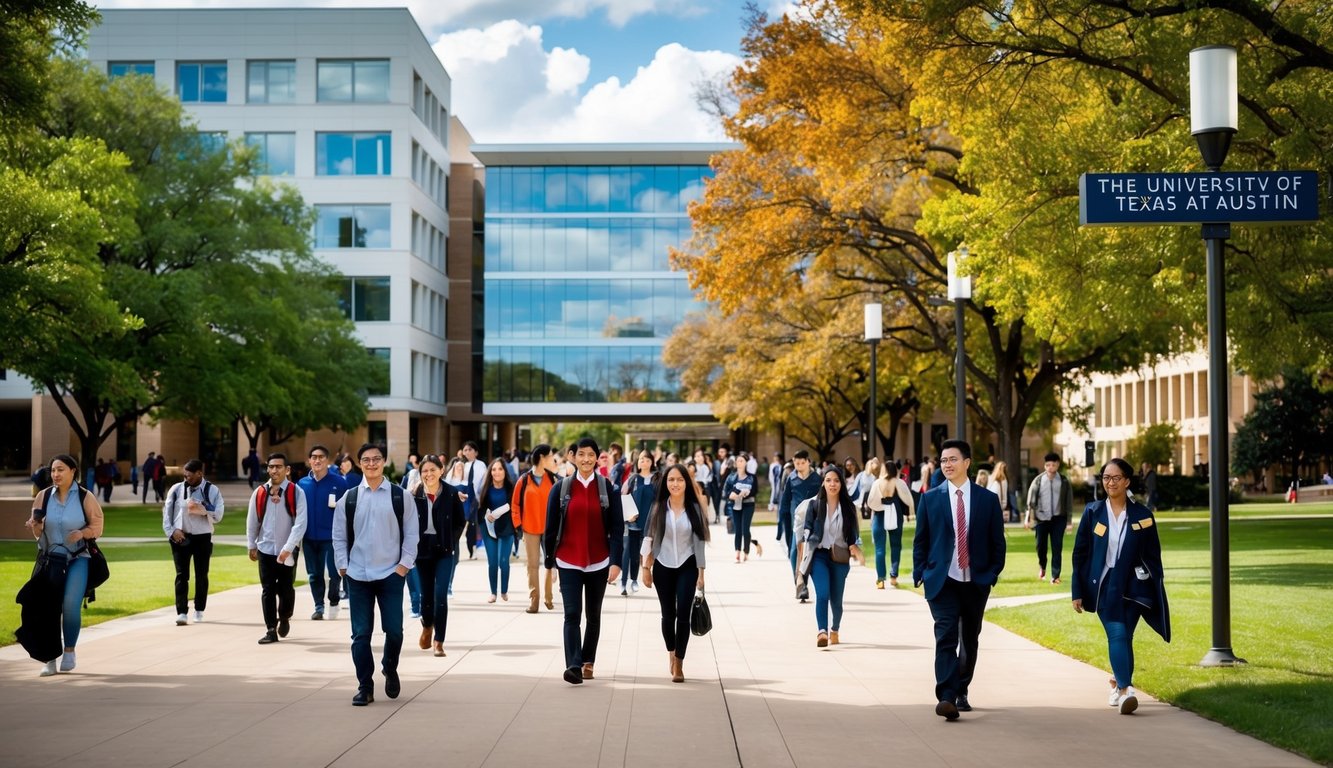
The University of Texas at Austin has earned its spot among the prestigious Forbes New Ivies 2025 list through academic excellence and strong employer relationships.
Below are answers to common questions about this recognition and what it means for students considering UT Austin.
What is the ranking of The University of Texas at Austin in the Forbes New Ivies list for 2025?
The University of Texas at Austin is included as one of the 10 public universities in the Forbes New Ivies 2025 list.
This placement doesn’t include a specific numerical ranking within the list, as Forbes presents these 20 schools as equally prestigious alternatives to traditional Ivy League institutions.
UT Austin stands out among the public institutions recognized for delivering exceptional education and producing graduates highly valued by employers.
Which universities were included in the 2025 Forbes New Ivies list?
The 2025 Forbes New Ivies list features 20 universities split evenly between public and private institutions.
The list includes programs that are ranked among the best by Forbes names. The University of Texas at Austin, Georgetown University, and 18 other prestigious schools.
Other notable universities on the list include Rice University (also from Texas) and various other institutions recognized for their academic rigor and graduate outcomes.
What criteria did Forbes use to determine the New Ivies for 2025?
Forbes selected the New Ivies based on several key metrics focused on academic excellence and career outcomes.
The private institutions on the list admit students with a median SAT of 1530 and median ACT of 34, demonstrating high selectivity.
A primary consideration was how employers view these institutions’ graduates. Schools were chosen because they “churn out top graduates” who are highly sought after in the job market.
What is the acceptance rate of The University of Texas at Austin for the 2025 academic year?
For the 2025 academic year, The University of Texas at Austin maintains a competitive acceptance rate of approximately 29%.
This reflects the university’s increasing selectivity while remaining more accessible than traditional Ivy League schools with acceptance rates in the single digits.
UT Austin continues to balance academic excellence with broader accessibility as a public institution, making it an attractive option for many high-achieving students.
How has The University of Texas at Austin’s inclusion in the 2025 New Ivies list affected its academic reputation?
The University of Texas at Austin’s inclusion in the Forbes New Ivies list has reinforced its standing as a “public Ivy” with growing national prestige.
This recognition has helped elevate UT Austin’s profile among prospective students, particularly those from outside Texas.
Applications to UT Austin have increased following this designation, with more high-achieving students viewing it as a viable alternative to traditional Ivy League schools.
The university has also seen enhanced interest from top employers at recruitment events.
Can you list the public universities designated as Public Ivies in 2025?
The public universities designated as “New Ivies” by Forbes in 2025 include The University of Texas at Austin and nine other institutions.
These public schools were selected for delivering exceptional education while remaining more accessible than private universities, highlighting the advantages of attending institutions like the University of Pittsburgh.
The complete list of public New Ivies includes universities known for their strong academic programs, research opportunities, and graduates’ success in the job market.
Forbes New Ivies 2025 The University of Texas at Austin offers the prestige and quality education associated with Ivy League schools at typically lower tuition rates. In addition, it highly excels in relevant, technical, innovative, practical skills and preparation that employers seek in job candidates, comparable to Ivy League School graduates.
