
Top 10 Tips to Ace the GMAT Exam in 2025 and Attend your Dream Graduate School!
Looking to ACE THE GMAT to attend your dream school in 2026?
Preparing for the GMAT exam feels tough, but using smart tips can make it way simpler.
Here are ten top tricks to help nail the GMAT in 2025 and score a spot in the grad school you want.
Whether just starting out or trying to boost your score, these ideas light up the path. Picture cracking tough problems like a puzzle master or managing time like a pro athlete.
Knowing that over 230,000 people take the GMAT annually shows how important good prep is.
Ready to unlock secrets that many miss and find out how small changes can spark big score jumps?
Keep reading to discover the easy ways to conquer this exam and move closer to your dreams.
Key Takeaways
Create a detailed study plan to stay organized and focused.
Use the official GMAT guide to understand the test format and types of questions.
Take full-length practice tests to build your stamina and timing.
Learn time management strategies to answer questions more efficiently.
Join a study group for support and different perspectives.
1. Study Plan

Are you ready to tackle the GMAT? A solid study plan is your first step toward success.
Creating a structured study schedule can significantly enhance your performance.
To effectively prepare for the GMAT, consider dedicating approximately 15 hours each week to your studies.
This can be broken down into about 2 hours on weekdays and a bit more on weekends.
This approach allows you to cover all necessary topics without feeling overwhelmed.
Here are some key components to include in your study plan:
Set clear goals: Define what score you aim to achieve and the timeline for your preparation.
Identify weak areas: Focus on subjects where you need the most improvement.
Incorporate practice tests: Regularly taking practice exams helps you get familiar with the test format and timing.
Week | Study Focus | Hours |
|---|---|---|
1 | Quantitative Review | 15 |
2 | Verbal Review | 15 |
3 | Analytical Writing | 15 |
A well-structured study plan not only keeps you organized but also boosts your confidence as you approach the exam date.
Remember, consistency is key. Following a study plan will help you stay on track and make the most of your preparation time.
By focusing on your goals and regularly assessing your progress, you can ensure that you are ready to ace the GMAT and move closer to your dream graduate school!
2. Official GMAT Guide
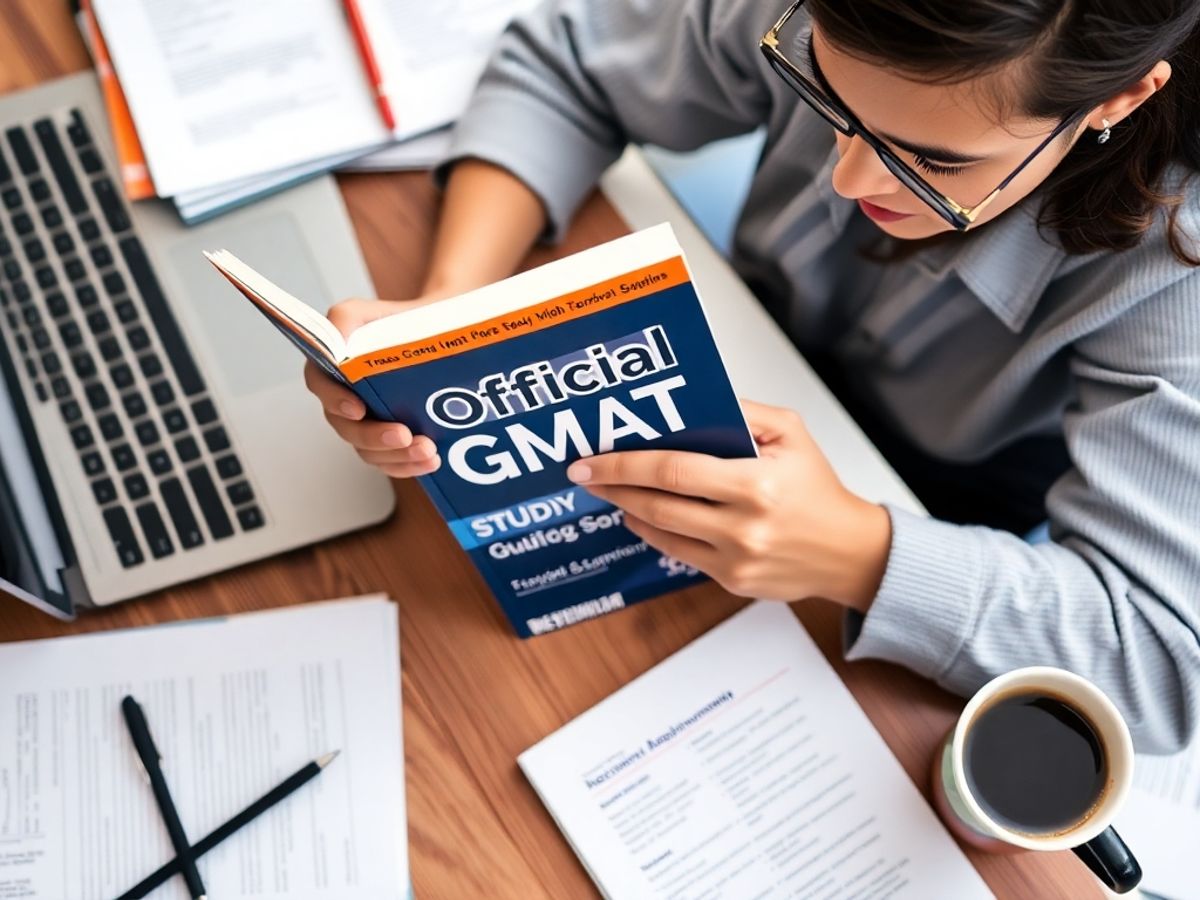
Are you ready to tackle the GMAT? The Official GMAT Guide is your best friend in this journey.
It provides real questions from past exams, which is crucial for understanding what to expect.
This guide is not just a book; it’s a comprehensive resource that can significantly boost your preparation.
Here are some key features of the Official GMAT Guide:
Real Questions: The guide includes actual questions from previous GMAT tests, giving you a taste of the real exam.
Detailed Explanations: Each question comes with a thorough explanation, helping you understand the reasoning behind the answers.
Practice Sets: You’ll find practice sets that mimic the structure of the GMAT, allowing you to practice under real test conditions.
Using the Official GMAT Guide effectively can make a big difference in your study plan.
Here are some tips to maximize its benefits:
Start Early: Begin your preparation well in advance to cover all topics thoroughly.
Practice Regularly: Set aside time each week to work through the guide and practice questions.
Review Mistakes: After practicing, always review your mistakes to understand where you went wrong.
The GMAT is not just a test; it’s a stepping stone to your dream graduate school. By using the Official GMAT Guide, you can build a strong foundation for your success.
In summary, the Official GMAT Guide is an essential tool for anyone serious about acing the GMAT.
With its real questions and detailed explanations, it prepares you for the challenges ahead.
Remember, preparation is key, and with the right resources, you can achieve your goals!
3. Practice Tests
How prepared are you for the GMAT? Taking practice tests is one of the best ways to gauge your readiness and improve your score.
Regular practice can significantly boost your confidence and performance.
Practice tests help you get familiar with the exam format and the types of questions you will face.
Here are some key benefits of taking practice tests:
Identify Weak Areas: Regularly taking practice tests helps you pinpoint the subjects where you need more focus.
Time Management: You will learn how to manage your time effectively during the actual exam.
Build Stamina: The GMAT is a long test, and practice tests help you build the endurance needed to stay focused.
To maximize your practice test experience, consider the following tips:
Simulate Test Conditions: Take your practice tests in a quiet environment and time yourself to mimic the actual test conditions.
Review Your Answers: After each test, spend time reviewing your answers, especially the ones you got wrong. This will help you understand your mistakes.
Track Your Progress: Keep a record of your scores to see how you improve over time.
Regular practice tests are crucial for success. They not only help you understand the test format but also build your confidence.
In addition to the official guide, consider using resources like the GMAT Ninja 13-Week Study Plan, which suggests spending about 15 hours a week studying.
This structured approach can help you stay on track and ensure you cover all necessary material.
Remember, the more you practice, the better prepared you will be for your dream graduate school!
4. Time Management Techniques
How can you effectively manage your time while preparing for the GMAT? Time management is crucial for success on the exam.
Without it, even the best study plans can fall short.
Here are some strategies to help you stay on track:
Prioritize Your Study Material: Focus on the areas where you need the most improvement. This will help you use your time wisely and boost your confidence.
Set Clear Goals: Break your study sessions into smaller, manageable tasks. This makes it easier to stay focused and reduces stress.
Use a Planner: Keep track of your study schedule, work commitments, and personal activities. This will help you balance everything effectively.
Technique | Description |
|---|---|
Pomodoro Method | Study for 25 minutes, then take a 5-minute break. Repeat this cycle. |
Time Blocking | Allocate specific blocks of time for different subjects or tasks. |
Adaptive Testing | Practice with timed tests to simulate the exam environment. |
Effective time management can significantly improve your GMAT score. Remember, careless mistakes can hurt your performance, so practice managing your time well.
In conclusion, mastering time management techniques is essential for your GMAT preparation.
By prioritizing questions and managing your study time effectively, you can ensure that you have enough time to articulate your answers clearly.
This will not only help you perform better but also reduce anxiety on exam day.
Remember, good time management can make all the difference!
5. Study Groups
Have you ever wondered how study groups can boost your GMAT preparation?
Joining a study group can significantly enhance your learning experience.
Collaborating with peers allows you to share resources, discuss challenging concepts, and stay motivated throughout your study journey.
Here are some benefits of participating in study groups:
Accountability: Being part of a group encourages you to stick to your study schedule.
Diverse Perspectives: Different members bring unique insights, helping you understand various topics better.
Resource Sharing: You can exchange study materials, tips, and strategies that may be beneficial.
To find a study buddy, consider using platforms that help connect GMAT aspirants.
This can lead to a more structured study plan, as you can set goals together and track your progress.
Remember, effective collaboration can make a significant difference in your preparation.
Joining a study group not only helps you learn but also makes the process more enjoyable.
In 2025, as you prepare for the GMAT, consider the transformative experience of studying with others.
According to recent data, students who engage in group study often report higher scores and increased confidence.
So, don’t hesitate to reach out and form a study group!
6. Online Resources
Are you ready to leverage online resources to boost your GMAT preparation?
In today’s digital age, a wealth of information is just a click away.
Utilizing these resources can significantly enhance your study experience and improve your chances of acing the exam.
Here are some top online resources to consider:
Official GMAT Website: This is your go-to source for authentic materials, including practice questions and exam updates.
Online Forums: Websites like GMAT Club and Beat The GMAT offer community support, tips, and shared experiences from fellow test-takers.
YouTube Channels: Channels dedicated to GMAT prep provide free tutorials and strategies that can help clarify complex topics.
Additionally, many reputable companies offer comprehensive study materials.
For instance, Kaplan, Princeton Review, and Manhattan Prep are known for their effective GMAT prep books.
You can also find numerous free GMAT mock tests online to practice your skills.
Resource Type | Examples |
|---|---|
Study Materials | Kaplan, Princeton Review |
Online Forums | GMAT Club, Beat The GMAT |
Video Tutorials | GMAT-focused YouTube channels |
Remember, the right resources can make a significant difference in your preparation. Stay organized and make the most of what’s available online!
By tapping into these online resources, you can create a well-rounded study plan that caters to your learning style.
This approach not only prepares you for the GMAT but also helps you stand out in your graduate school applications.
Don’t forget to check out the latest information on graduate scholarships and fellowships to support your educational journey!
7. Flashcards
Have you ever wondered how to make your GMAT study sessions more effective?
Flashcards are a fantastic tool that can significantly enhance your preparation.
They are versatile and can be used for both quantitative and verbal concepts, making them suitable for various study styles.
Using flashcards allows you to break down complex information into bite-sized pieces, which can improve retention.
Here are some tips on how to use flashcards effectively:
Focus on Key Concepts: Create flashcards for important formulas, definitions, and strategies.
Practice Regularly: Review your flashcards daily to reinforce your memory.
Mix It Up: Use flashcards in different settings, such as during commutes or breaks, to keep your study routine fresh.
Flashcard Type | Purpose |
|---|---|
Quantitative | Memorize formulas and problem-solving tips |
Verbal | Enhance vocabulary and reading comprehension |
Test Strategies | Learn tips for managing time and tackling questions |
Flashcards not only help with memorization but also improve your confidence as you prepare for the GMAT. They can be a game-changer in your study routine.
Incorporating flashcards into your study plan can lead to better results on the GMAT.
Many successful students have found that using flashcards helped them achieve their target scores. So, don’t underestimate their power!
8. Analytical Writing Assessment

How well can you express your thoughts in writing?
The Analytical Writing Assessment (AWA) is a crucial part of the GMAT exam that tests your ability to write clearly and logically. Your score in this section can significantly impact your overall GMAT score.
The AWA is scored separately on a scale from 0 to 6, and it evaluates your analytical skills and how well you can communicate your ideas.
Here are some key points to keep in mind:
Understand the Format: You will be asked to analyze an argument and write a critique. This means you need to identify flaws in the reasoning and suggest improvements.
Practice Writing: Regular practice can help you improve your writing skills. Try to write essays on different topics to get comfortable with the format.
Time Management: You have 30 minutes to complete the AWA. Make sure to plan your time wisely to allow for brainstorming, writing, and revising your essay.
Score Range | Description |
|---|---|
0-1 | Inadequate |
2-3 | Limited |
4-5 | Competent |
6 | Excellent |
Writing well is not just about grammar; it’s about presenting your ideas in a clear and engaging way.
In summary, the AWA is an important part of the GMAT that can showcase your writing abilities to graduate schools.
By focusing on your analytical skills and practicing regularly, you can improve your performance in this section.
Remember, a strong AWA score can enhance your application and help you get into your dream graduate school!
9. Quantitative Review

Are you ready to tackle the quantitative section of the GMAT?
Mastering the math concepts is crucial for achieving a high score.
This section tests your ability to analyze data, solve problems, and think critically.
Here are some effective strategies to enhance your quantitative skills:
Review Math Basics: Start by revisiting fundamental math concepts. This includes arithmetic, algebra, and geometry. A solid grasp of these basics will help you tackle more complex problems.
Take Practice Exams: Simulate the test environment by taking the quantitative section of a practice exam. This will help you get used to the timing and pressure of the actual test.
Analyze Your Results: After completing practice tests, carefully review your answers. Identify the specific areas where you struggled the most. This will allow you to focus your study efforts on your weaknesses.
Topic | Percentage of Questions | Recommended Study Time |
|---|---|---|
Arithmetic | 20% | 10 hours |
Algebra | 30% | 15 hours |
Geometry | 20% | 10 hours |
Data Sufficiency | 30% | 15 hours |
Strengthening your conceptual understanding of various quant topics will improve your performance significantly.
In addition to these strategies, consider joining a study group.
Collaborating with peers can provide new insights and keep you motivated.
Remember, consistent practice is key to success in the quantitative section of the GMAT!
10. Verbal Review
How prepared are you for the verbal section of the GMAT?
This part of the exam tests your reading comprehension, critical reasoning, and sentence correction skills.
A strong verbal score can significantly boost your overall GMAT performance.
Here are some effective strategies to enhance your verbal skills:
Take a Mock Test: Start by attempting a mock GMAT without any preparation. This will give you a baseline score to work from. Analyze your results to identify areas needing improvement.
Focus on Reading Precision: Engage in gmat-specific verbal prep. Resources like GMAT Ninja’s 13-week study plan can help you improve your reading skills over time.
Practice Regularly: Consistent practice is key. Dedicate time each week to work on verbal questions, aiming for at least [15 hours in your study plan]
Strategy | Description |
|---|---|
Mock Tests | Assess your current level and identify weaknesses |
Reading Comprehension | Improve understanding through targeted practice |
Sentence Correction | Focus on grammar rules and common errors |
Remember, improving your verbal skills takes time and effort. Stay committed to your study plan and track your progress regularly.
By following these tips, you can enhance your verbal abilities and increase your chances of achieving a high GMAT score, paving the way to your dream graduate school!
In this section, we encourage you to take a moment to reflect on your academic journey.
A verbal review can help you understand your strengths and areas for improvement.
If you’re looking for amazing scholarship opportunities to support your education, visit our website today!
Final Thoughts
Preparing for the GMAT can feel overwhelming, but with the right approach, you can succeed.
Remember to create a study plan that fits your schedule and stick to it.
Practice regularly and take care of your health to stay sharp. Use the tips we discussed to boost your confidence and skills.
Each step you take brings you closer to your dream graduate school.
Stay positive and believe in yourself. Good luck on your journey!
Frequently Asked Questions
What is the GMAT exam?
The GMAT exam is a test used by many business schools to help decide who gets into their programs. It checks your skills in math, reading, and writing.
How long should I study for the GMAT?
Most people study for about 2 to 3 months, but it really depends on how much time you can spend each week and how ready you feel.
Are there any free resources for GMAT preparation?
Yes! There are many free online resources like practice questions, videos, and study guides that can help you get ready for the exam.
What is a good GMAT score?
A score of 600 or above is generally considered good, but the average score for top schools can be higher, around 700.
Can I take the GMAT more than once?
Yes, you can take the GMAT up to five times in a year. Just keep in mind that schools will see all your scores.
Do I need to take a prep course?
No, you don’t have to take a prep course, but many students find them helpful. It really depends on your learning style.
What should I bring on test day?
On test day, bring a valid ID, your confirmation email, and maybe some snacks and water for breaks.
How is the GMAT scored?
The GMAT is scored on a scale of 200 to 800. Your score is based on the number of questions you answer correctly and how hard they are.
View our Recent BFFS Scholar Quest Content here!
- 25 Fully Funded Scholarships in India: International Students 2026
- 25 Fully Funded Scholarships in Qatar: International Students 2026
- 25 Fully Funded Scholarships New Zealand: International 2026
- 25 Fully Funded Scholarships Hungary: International Students 2026
- 25 Fully Funded Scholarships in Poland: International Students 2026