35 Fully Funded Scholarships at the University of Michigan at Ann Arbor: Top University of Michigan Scholarships 2026 – 2027 and Financial Aid for International Students
Looking for Fully Funded Scholarships at the University of Michigan at Ann Arbor for 2026?

You can study at one of America’s top research universities without worrying about tuition or living expenses.
The University of Michigan at Ann Arbor offers many fully funded scholarships and fellowships.
These awards cover full tuition, a living stipend, and health insurance for both U.S. and international students.
You can apply across fields like engineering, medicine, business, law, and public policy.
These opportunities let you focus on your studies and research instead of financial barriers.
Discover how to qualify for the most competitive awards.
Some programs offer up to $41,308 per year plus full funding for five years.
Whether you want a master’s, PhD, or professional degree, you can find a fully funded option that matches your goals and financial needs.
Top 10 University of Michigan Scholarships 2026 – 2027
| No. | Scholarship Name | Sponsor | Economic Benefits | Eligibility | Application Deadline |
|---|---|---|---|---|---|
| 1 | Rackham Graduate School Fellowship | Rackham Graduate School | Full tuition, stipend, insurance | Graduate students | Dec 1, 2025 |
| 2 | University of Michigan PhD Scholarship in AI Monitoring | U-M Ann Arbor | 5 years fully funded, $41,308/year | PhD in AI/environmental studies | Dec 1, 2025 |
| 3 | Go Blue Guarantee | University of Michigan | Full in-state tuition | Michigan residents (≤$125K income) | Rolling |
| 4 | Stamps Scholarship | Stamps Family Charitable Foundation | Full ride + enrichment fund | Out-of-state undergraduates | Nov 2025 |
| 5 | HAIL Scholarship | U-M Office of Financial Aid | Full tuition, housing, fees | High-achieving low-income students | Oct 2025 |
| 6 | Engineering Excellence Scholarship | College of Engineering | Full tuition + research support | Engineering majors | Dec 2025 |
| 7 | Ross School of Business Merit Award | Ross School of Business | Full tuition + stipend | MBA and graduate students | Jan 2026 |
| 8 | Ford School of Public Policy Fellowship | Gerald R. Ford School | Full funding + stipend | Public policy majors | Dec 2025 |
| 9 | Medical School Research Fellowship | U-M Medical School | Full funding + research grants | MD/PhD candidates | Feb 2026 |
| 10 | Law School Diversity Scholarship | U-M Law School | Full tuition support | Law students from underrepresented groups | Jan 2026 |
1) Rackham Graduate School Fellowships

The Rackham Graduate School at the University of Michigan–Ann Arbor gives fully funded fellowships to master’s and doctoral students.
These awards reduce financial barriers and promote diversity.
They also strengthen academic excellence.
Most fellowships cover full tuition, health insurance, and a twelve‑month stipend.
You can focus on your research without financial stress.
Funding varies by program and discipline.
Nearly all Rackham fellowships guarantee support throughout the award period.
International, domestic, and underrepresented students can apply, depending on the program.
The Rackham Merit Fellowship (RMF) focuses on inclusive excellence.
The Rackham International Student Fellowship supports accomplished international graduate students.
Academic programs nominate students each year.
Deadlines usually fall between December 1 and February 1 for Fall 2026 entry.
Key Features Checklist:
- Fully funded for master’s and Ph.D. students
- Covers tuition, stipend, and health insurance
- Annual nomination by graduate programs
- Supports domestic and international students
- Focus on research excellence and diversity
Table: Funding Summary for Rackham Graduate Fellowships (2025–2026)
| Fellowship Type | Tuition Coverage | Stipend Duration | Health Insurance | Target Group | Residency Requirement |
|---|---|---|---|---|---|
| Rackham Merit Fellowship (RMF) | Full | 12 months | Yes | U.S. diversity & inclusion | U.S. citizens/PRs |
| International Student Fellowship | Full | 12 months | Yes | International graduate students | Must hold F-1/J-1 visa |
Table: 2026 Application Timeline and Selection Data
| Stage | Typical Date Range | Responsible Party | Selection Rate (avg.) | Renewal Possible |
|---|---|---|---|---|
| Departmental Nomination | Dec 2025–Jan 2026 | Academic Program Chair | ~15–20% | Yes, annually |
| Rackham Review and Approval | Feb–Mar 2026 | Rackham Selection Panel | ~10–12% | Case-by-case |
You can find nominations and updates on the Rackham Graduate School Funding portal.
It lists internal and external awards for 2026 and 2027 entry cycles.
2) University of Michigan Graduate School Scholarships

The University of Michigan Graduate School (Rackham Graduate School) in Ann Arbor offers fully funded scholarships for master’s and Ph.D. programs.
These awards include full tuition, a 12-month stipend, and comprehensive health insurance.
Funding usually combines university, college, and departmental support.
You can receive fellowships, research assistantships, or teaching assistantships.
Specialized awards are available from the College of Engineering, School of Public Health, and Ross School of Business.
Many awards support international applicants and underrepresented groups.
Funding sources:
- Internal scholarships come from U-M departments, Rackham, or university endowments.
- External scholarships come from U.S. government agencies, corporations, or global foundations.
Key Fully Funded Graduate Scholarships at the University of Michigan
| Scholarship Name | Funding Coverage | Eligibility | Annual Stipend (USD) | Deadline (2026 Cycle) |
|---|---|---|---|---|
| Rackham Merit Fellowship | Tuition, stipend, health, fees | Outstanding domestic/intl. students | 41,000 | Dec 2025 – Jan 2026 |
| Engineering Graduate Fellowship | Full tuition + 12-month assistantship | STEM-related fields | 40,000 | Jan 2026 |
| International Institute Fellowship | Tuition + research and travel grants | Global studies, public policy | 38,000 | Feb 2026 |
| Provost’s Graduate Fellowship | Full tuition + stipend + research funds | Diversity-focused U.S. applicants | 39,500 | Rolling (2025–26) |
| Rackham Conference Travel Grant | Travel + conference expenses | Enrolled U-M graduate students | Up to 2,000 | Year-round |
Graduate Funding Breakdown by Type
| Type of Support | Administered By | Average Duration | Covers | Eligible Programs |
|---|---|---|---|---|
| Fellowship | Rackham Graduate School | 1–5 years | Tuition, stipend, health, fees | MA, PhD |
| Teaching Assistantship | Department/College | Semester or annual | Salary, tuition, fees | MA, PhD |
| Research Assistantship | Principal Investigator/Faculty | Semester or multi-year | Salary, research support, tuition | STEM, Health, Soc. Sci |
| External Fellowship | Gov./Private Sponsors | 1–5 years | Variable—often fully funded | All disciplines |
Application processes differ by program.
Most graduate scholarships at U-M require you to submit your admission application first.
You may receive automatic consideration or an invitation to apply for department-specific awards.
Check individual program deadlines between December 2025 and February 2026 for Fall 2026 intake.
Many awards reopen each year.
Plan early to submit a strong, timely application.
3) Artificial Intelligence Monitoring PhD Scholarship

The Artificial Intelligence Monitoring PhD Scholarship 2026 at the University of Michigan, Ann Arbor is a fully funded, five-year doctoral program.
This scholarship supports students who focus on AI applications in environmental and ecosystem monitoring.
You receive full tuition, a $41,308 annual stipend, and comprehensive health insurance.
You will study under the School for Environment and Sustainability (SEAS).
Work with top researchers in AI, sustainability, and data science.
The program supports both domestic and international students.
You can gain teaching or research assistantships.
Access advanced computing facilities and join multidisciplinary projects with NASA, NOAA, and EPA.
The scholarship also promotes diversity in computer and sustainability studies.
Funding and Support Details
| Benefit Type | Coverage Duration | Annual Value (USD) | Included Services |
|---|---|---|---|
| Full Tuition Waiver | 5 Years | 100% Covered | Resident & Non-resident tuition |
| Annual Stipend | 5 Years | 41,308 | Living expenses and research support |
| Health Insurance | 5 Years | Full Coverage | Medical, dental, and vision |
| Research and Travel Grants | As approved | Variable | Conference, fieldwork, and data grants |
Eligibility and Key Dates
| Requirement / Timeline | Details (Verified 2025-2026 Cycle) |
|---|---|
| Degree Level | PhD (Full-time) |
| Focus Areas | AI, Machine Learning, Ecosystem Monitoring |
| Eligible Applicants | All nationalities |
| Application Opens | August 2025 |
| Priority Deadline | December 2025 |
| Start Term | Fall 2026 |
Application Checklist:
- Completed online application via Rackham Graduate School portal
- Research proposal on AI in environmental systems
- GRE (optional), transcripts, and three academic references
- Proof of English proficiency (TOEFL or IELTS) if needed
Timeline Snapshot:
- August–December 2025: Apply through UM portal.
- February 2026: Interview and funding confirmation.
- Fall 2026: Begin PhD research in Ann Arbor.
This scholarship helps you pursue advanced AI research while fully supported.
You can focus on innovation, sustainability, and scientific impact without financial strain.
4) Stamps Scholarship for Out-of-State Students

The Stamps Scholarship at the University of Michigan–Ann Arbor is a fully funded, merit-based award for exceptional first-year students, including out-of-state applicants. This scholarship recognizes academic excellence, leadership, and character.
You apply through the University of Michigan partner program. The process is highly competitive and seeks students who show intellectual curiosity and strong leadership.
Recipients receive:
- Full tuition
- Housing
- Meal plans
- Enrichment funds for study abroad, research, or internships
At Michigan, this scholarship connects you to the national Stamps Scholar community. You benefit from mentorship and lifelong networks.
Table 1. Stamps Scholarship Overview (University of Michigan–Ann Arbor)
| Feature | Details |
|---|---|
| Type | Fully Funded Merit Scholarship |
| Eligible Students | Domestic and International First-Year (Out-of-State included) |
| Award Coverage | Full Tuition, Housing, Meal Plan, Enrichment Funds |
| Selection Criteria | Academic Merit, Leadership, Service, Integrity |
| Application Route | Through University of Michigan Admissions |
| Deadline | Typically November–December (check annual updates) |
The program offers extra funds for research, cultural programs, and global experiences. This flexibility supports your academic and personal growth.
Table 2. Financial and Academic Benefits Breakdown (Stamps Scholars at U-M)
| Benefit Category | Description | Estimated Annual Value (USD) |
|---|---|---|
| Full Tuition & Fees | Covers all out-of-state tuition and mandatory university fees | $55,000–$60,000 |
| Housing & Meals | On-campus housing and meal plan | $13,000–$15,000 |
| Enrichment Fund | Research, travel, leadership programs | Up to $10,000 |
| Community Access | Exclusive national conferences and campus events | Priceless |
As a Stamps Scholar, you join exclusive leadership seminars, alumni panels, and research events. You become part of a network of leaders dedicated to academic excellence and civic engagement.
5) Go Blue Guarantee for In-State Tuition
The Go Blue Guarantee is the University of Michigan’s free-tuition program for qualified Michigan residents. It ensures financial need never blocks access to a top-ranked public university education.
If your family income is $75,000 or less and assets are below $75,000, you may qualify for full tuition coverage for up to four years. The program covers undergraduate students at the Ann Arbor, Dearborn, and Flint campuses.
This guarantee covers full tuition fees and living expenses for students. tuition and mandatory university fees only. Many recipients combine it with federal and state grants, work-study, or other scholarships to cover additional costs.
You must be a Michigan resident, qualify for in-state tuition, and stay enrolled full-time in a degree program. Eligible students are considered automatically when they complete the FAFSA and U-M financial aid application each year.
Key Data Table 1: Go Blue Guarantee Eligibility and Benefits
| Category | Requirement or Detail |
|---|---|
| Residency | Michigan resident |
| Income Limit (Ann Arbor & Dearborn) | ≤ $75,000/year |
| Income Limit (Flint) | ≤ $65,000/year |
| Asset Limit | ≤ $75,000 |
| Duration | Up to 4 years (8 semesters) |
| Coverage | Full undergraduate tuition + mandatory fees |
| Application | FAFSA + U-M financial aid form |
Key Data Table 2: Go Blue Guarantee Quick Facts (2025–2026 Cycle)
| Metric | Data |
|---|---|
| Estimated Students Supported Annually | ~8,000 |
| Additional Students Added in 2025 Expansion | +2,200 |
| % of Michigan Families Covered | ~50% under $75k income |
| Renewal Requirement | Maintain standard academic progress |
| Combined Aid Sources | Federal, state, and U-M grants |
Checklist for Applicants (Fall 2026 Enrollment):
- Confirm Michigan residency eligibility
- File FAFSA by March 1, 2025
- Submit U-M financial aid application
- Upload tax and verification documents
- Accept award through U-M Wolverine Access portal
The Go Blue Guarantee makes a University of Michigan education fully funded for in-state students who meet income and residency requirements.
6) HAIL Program Merit Awards

The High Achieving Involved Leader (HAIL) Scholarship at the University of Michigan–Ann Arbor offers full tuition to selected Michigan residents. It targets students with high academic achievement and financial need.
Launched in 2016, the HAIL Scholarship expands access for low-income, first-generation, and underrepresented students. You can use the award during any fall or winter semester while enrolled in a UM-sponsored program.
The scholarship covers UM–Ann Arbor tuition and mandatory fees. It does not apply to spring or summer study abroad or non-UM programs.
Each year, hundreds of new recipients join campus programs through HAIL. This program helps build a diverse academic community.
Table 1. HAIL Scholarship Key Facts (2026 cycle)
| Criteria | Details |
|---|---|
| Scholarship Type | Merit-based with demonstrated financial need |
| Funding Coverage | Full tuition and mandatory fees |
| Eligible Enrollment | UM–Ann Arbor, Fall or Winter semesters |
| Residency Requirement | Michigan residents only |
| Renewal Condition | Continuous full-time enrollment |
Table 2. 2026 HAIL Application Overview
| Step | Description |
|---|---|
| Application Process | Automatic consideration during UM–Ann Arbor admission review |
| Financial Aid Forms | FAFSA and CSS Profile required |
| Deadline | Aligns with UM Early Action (typically November 1) |
| Notification | Sent with admission offer or financial aid package |
Quick Checklist for Applicants:
- Maintain strong academic records
- Submit FAFSA by the university’s priority deadline
- Accept admission to UM–Ann Arbor for fall enrollment in a fully-funded program.
- Stay continuously enrolled and in good academic standing
The HAIL Program Merit Award remains one of Michigan’s most impactful tuition support initiatives.
7) Engineering Excellence Scholarships

The Engineering Excellence Scholarships at the University of Michigan–Ann Arbor reward outstanding academic achievement, leadership, and innovation in engineering.
These awards target undergraduate and graduate students in the College of Engineering and provide full tuition coverage for top performers.
You can qualify as a Michigan resident or as an international student in an ABET-accredited engineering program.
Many scholarships combine merit-based funding with need-based aid like the Go Blue Guarantee, offering up to four years of financial support.
Several internal and external awards fall under this category. Internal awards come from the College of Engineering, Rackham Graduate School, or the U-M Financial Aid Office.
External awards come from groups like the Michigan Society of Professional Engineers (MSPE) or corporate partners.
Table 1. Key Details – Engineering Excellence Scholarships
| Feature | Description |
|---|---|
| Scholarship Type | Merit-based; fully funded; internal and external awards |
| Administered by | U-M College of Engineering & Rackham Graduate School |
| Eligible Degrees | B.S., M.S., Ph.D., and dual-degree programs |
| Coverage | Full tuition, mandatory fees, stipends, research funding |
| Application Cycle | Opens annually (Fall 2025 for Fall 2026 intake) |
Table 2. Funding Snapshot – 2026 Awards
| Funding Component | Amount / Value | Source |
|---|---|---|
| Tuition & Fees | 100% covered | College of Engineering |
| Annual Living Stipend | $25,000–$35,000 | U-M/External Donors |
| Research or Internship Grant | Up to $10,000 | Rackham Graduate School |
| Duration | Up to 4 academic years | Renewable annually |
Prepare your recommendation letters, research statements, and academic transcripts early. Many awards value community engagement, so join mentoring or outreach projects to build your leadership and professional network.
Submit your application materials through the U-M Engineering Scholarships Portal before deadlines. Once admitted, you are automatically considered for college-administered funds, but some external awards require separate applications.
8) Business School Merit Scholarships

The Ross School of Business at the University of Michigan–Ann Arbor offers several merit-based scholarships for MBA and specialized master’s students. About 45% of full-time MBA students receive scholarships each year.
Awards often cover partial to full tuition. These scholarships recognize academic excellence, leadership, and professional potential.
You are considered automatically during the admissions process. There is no separate application, making the process straightforward and competitive.
Table 1. Key Merit-Based Scholarships at Michigan Ross
| Scholarship Name | Eligibility | Average Award | Coverage | Automatic Consideration |
|---|---|---|---|---|
| Ross Merit Scholarship | High academic and leadership performance | $30,000 per year | Partial to full tuition | Yes |
| Dean’s Impact Scholarship | Exceptional impact in community or work | Variable | Up to full tuition | Yes |
| Tauber Institute Scholarship | MBA/MS students in Operations or Engineering | $25,000 | Tuition + stipend | Yes |
| Forte Fellowship | Outstanding women in business | $20,000+ | Partial tuition | Yes |
Ross partners with external programs like the Forte Foundation, Reaching Out MBA (ROMBA), and Prospanica. These scholarships include networking events, mentoring, and internships with major employers.
Table 2. External and Partner Scholarships
| Partner Organization | Target Group | Key Benefit | Additional Perks | Application Deadline (2026 Intake) |
|---|---|---|---|---|
| Forte Foundation | Women in business | Leadership development + funding | Global network access | April 2025 |
| ROMBA Fellowship | LGBTQ+ MBA students | Up to full tuition | Career mentorship | March 2025 |
| Prospanica Foundation | Hispanic/Latino professionals | $5,000–$20,000 | Corporate networking | May 2025 |
| Fulbright Program | International applicants | Full tuition + living stipend | U-M placement support | Country-specific |
Ross scholarships value merit, diversity, and impact.
Many students combine internal awards with external fellowships for more financial support.
You receive scholarship decisions with your admission offer.
Use your award for programs starting in Fall 2026.
9) Law School Diversity Scholarships

The University of Michigan Law School welcomes students from all backgrounds through several fully funded diversity scholarships.
These programs foster an inclusive academic environment and open doors to legal careers.
You can apply for internal awards funded by alumni or endowed funds.
External programs include the ABA Legal Opportunity Scholarship and the ArentFox Schiff Diversity Scholarship.
Awards often cover tuition, stipends, and sometimes summer employment.
Table 1. Key 2026 Law Diversity Scholarships
| Scholarship Name | Sponsor | Coverage | Eligibility | Deadline |
|---|---|---|---|---|
| ABA Legal Opportunity Scholarship | American Bar Association | Full tuition + $15,000 over 3 years | Incoming 1L promoting DEI | April 2026 |
| ArentFox Schiff Diversity Scholarship | ArentFox Schiff LLP | Full tuition + paid internship | 2L in good standing | January 2026 |
| USLAW Foundation Scholarship | USLAW NETWORK | $5,000 + mentoring | JD students showing financial need | March 2026 |
| UMich Law Dean’s Diversity Fellowship | University of Michigan | Full tuition + living stipend | Admitted student promoting inclusion | Ongoing 2025–26 cycle |
Table 2. Scholarship Features Comparison
| Benefit | Internal (UMich) | External (ABA, Firms) |
|---|---|---|
| Tuition Coverage | Up to 100% | 100% or fixed awards |
| Renewal Duration | 3 years | 1–3 years |
| Internship Option | Optional | Often guaranteed |
| Application Portal | UMich Law Financial Aid Office | Sponsor websites |
Check each program’s requirements early.
Most diversity scholarships also consider leadership, community involvement, academic performance, and a personal statement about your contribution to diversity.
10) Medical School Research Fellowships

The University of Michigan Medical School (UMMS) offers fully funded research fellowships for future physicians and clinical researchers.
UMMS is in Ann Arbor, Michigan and ranks among the top 15 U.S. medical schools for research (U.S. News & World Report 2025).
The CHEAR Fellowship (Child Health Evaluation and Research) stands out as a flagship program.
This two-year fellowship provides full tuition, stipend, research funding, and mentorship for MDs, PhDs, and clinical professionals focused on pediatric health services research.
Apply by December 31, 2025, for the 2026–2027 cohort.
Fellows receive methodological training in both qualitative and quantitative research.
The fellowship covers full tuition for a Master’s degree in Health and Health Care Research, Clinical Research Design, or Public Health.
Participants get funding for airfare, housing, stipend, and research expenses.
UMMS ensures no out-of-pocket costs for fellows.
You benefit from structured mentorship and networking with top research faculty.
Table 1. CHEAR Fellowship Funding Overview (2026–2027)
| Funding Component | Coverage | Provided By | Duration |
|---|---|---|---|
| Tuition & Fees | 100% | University of Michigan | 2 years |
| Stipend | Fully Funded | UMMS | 24 months |
| Research Costs | Covered | UM CHEAR Center | Duration of fellowship |
| Housing & Living | Fully Supported | Fellowship Grant | 2 years |
Table 2. Key Application Information
| Requirement | Details | Deadline | Eligibility |
|---|---|---|---|
| Application Form | Online submission | Dec 31, 2025 | MD, PhD, or Clinical Scientist |
| Degree Option | Master’s (Optional) | With Fellowship | Open to U.S. and International Applicants |
| Research Focus | Pediatric Health Services | 2026–2027 | Fully Funded |
You can join 81 ACGME-accredited clinical and research fellowships across UMMS subspecialties.
Programs include oncology, cardiology, endocrinology, and neurology.
Each fellowship offers a competitive stipend, conference travel funding, and access to world-class research facilities.
You work with senior investigators and join nationally funded NIH and CDC research projects.
Quick Checklist for Applicants:
- Hold an advanced medical or research degree (MD, PhD, or equivalent)
- Prepare a focused personal statement and research proposal
- Secure two letters of academic or clinical recommendation
- Apply before the December 31, 2025 deadline
These fully funded opportunities at the University of Michigan Medical School help you earn advanced research credentials and make valuable contributions to healthcare.
11) Social Sciences Research Grants

University of Michigan–Ann Arbor funds several fully covered research grants in the social sciences for doctoral and postdoctoral students.
These grants usually include full tuition, a living stipend, and research support.
Programs encourage original work in sociology, economics, and political science.
Each award aims to strengthen research using data science, policy analysis, and community-based studies.
Grants often support interdisciplinary work through the Rackham Graduate School and the Institute for Social Research (ISR).
Table 1. Key Social Sciences Research Grants (2026 Cycle)
| Grant Name | Type | Funding Coverage | Application Window | Eligibility |
|---|---|---|---|---|
| Rackham Predoctoral Fellowship | Internal | Full tuition + stipend + research funds | Fall 2025 | Doctoral students (all social sciences) |
| ISR Emerging Scholars Grant | Internal | $10,000–$15,000 research support | Spring 2026 | PhD candidates in U-M social science programs |
| Joint PhD in Social Work and Social Science | Internal | Full funding (tuition, stipend, insurance) | Rolling | PhD in Social Work + one social science field |
| Social Science Small Grants Program | Internal | $3,000–$7,000 project funding | Winter 2026 | Doctoral/Master’s students |
| External AAUW Dissertation Fellowship | External | $25,000 + research allowance | Summer 2026 | Women in U.S. doctoral programs |
These grants are highly competitive.
They provide stable support for long-term fieldwork and data collection.
Selection is based on research quality, relevance, and academic progress.
Table 2. Funding Distribution and Support Averages
| Support Category | Annual Average (USD) | Coverage Details | Provided By |
|---|---|---|---|
| Tuition + Fees | $25,000–$30,000 | Covers full graduate tuition | University of Michigan |
| Living Stipend | $35,000–$42,000 | 12-month support | Rackham Graduate School |
| Health Insurance | $3,200 per year | U-SHIP plan | Rackham/UM Finance |
| Research Funds | $5,000–$15,000 | Data collection, travel, supplies | ISR or external sponsors |
Quick Checklist for Applicants
- Confirm U-M enrollment or PhD candidacy for scholarship opportunities.
- Prepare a short research proposal (max 5 pages)
- Request two academic recommendation letters
- Submit a budget and timeline by the stated deadline
Most applications open during Fall 2025 for 2026–27 cycles.
You can apply to internal and external funding sources if they meet Rackham’s co-funding policy.
These grants let you focus on meaningful research without financial stress.
12) Graduate Student Support Grants

Graduate Student Support Grants at University of Michigan–Ann Arbor offer financial relief for graduate students managing research, academic travel, or emergencies.
These grants supplement full funding packages and help you stay on track academically.
You can apply through the Rackham Graduate School, Office of Financial Aid, or the Center for the Education of Women+ (CEW+).
Each fund has different eligibility criteria.
Some prioritize dissertation research, while others help with childcare or conference costs.
Awards usually range from $500 to $5,000, depending on your project or financial need.
Many students combine these grants with assistantships or fellowships for full coverage.
Table 1. Major Graduate Support Grant Options at U-M Ann Arbor
| Grant Name | Administered By | Funding Range (USD) | Main Purpose | Application Cycle |
|---|---|---|---|---|
| Rackham Graduate Student Research Grant | Rackham Graduate School | 1,500–3,000 | Dissertation/Thematic Research | Rolling |
| CEW+ Emergency Fund | Center for the Education of Women+ | 500–2,000 | Emergency Financial Need | Ongoing |
| International Student Emergency Fund | Financial Aid Office | 500–1,500 | Unexpected Needs for Non-U.S. Citizens | Ongoing |
| Graduate Travel Grant | Rackham or Departmental Funds | 1,000–2,500 | Conference Presentation or Fieldwork | Seasonal (Fall/Spring) |
These grants support both domestic and international students.
You must be in good academic standing and submit proof of financial need or a project budget.
Recipients say these grants ease financial pressure during critical research phases.
Programs improve retention and graduation rates in most U-M doctoral and master’s programs.
Table 2. Application Requirements Overview
| Requirement | Description | Submission Format | Typical Deadline |
|---|---|---|---|
| Enrollment Verification | Proof of active U-M graduate status | PDF Enrollment Form | Varies by Grant |
| Statement of Purpose | 500–750 words outlining research or need | Online Form | Rolling |
| Budget Estimate | Detailed cost breakdown | Spreadsheet Upload | Rolling |
| Faculty Endorsement | One supporting letter from U-M faculty | Electronic Submission | Varies |
Check current deadlines through Rackham’s portal or CEW+’s website.
Application cycles for Fall 2025 and Winter 2026 awards open mid-year and may recur annually.
13) Environmental Forecasting Research Scholarship
The Environmental Forecasting Research Scholarship at the University of Michigan, Ann Arbor empowers PhD candidates to advance predictive models in climate, biodiversity, and ecosystem monitoring.
This is a fully funded scholarship under the School for Environment and Sustainability for the 2026 cohort.
You receive full tuition coverage, an annual stipend, health insurance, and research grants for fieldwork.
The program prioritizes projects that integrate artificial intelligence and environmental data analytics to improve sustainable development.
Funding lasts up to five years, depending on your academic progress and research contributions.
You also access collaborative labs and field sites across U-M’s global environmental network.
Table 1. Scholarship Overview
| Category | Details |
|---|---|
| Institution | University of Michigan, Ann Arbor |
| Program | PhD in Environment and Sustainability |
| Funding Type | Fully Funded (Tuition, Stipend, Health Insurance) |
| Application Period | Opens September 2025 |
| Start Term | Fall 2026 |
Table 2. Eligibility and Benefits
| Criteria | Description |
|---|---|
| Eligibility | Master’s in environmental science, data science, or related field |
| International Applicants | Eligible |
| Research Focus | AI-based environmental forecasting, climate data modeling |
| Average Annual Stipend (2025–26) | USD 36,000 |
| Duration | 4–5 years |
Application Checklist:
- Prepare a statement of research intent for the fully-funded PhD position. focused on environmental forecasting.
- Submit GRE scores (optional for 2026 cycle).
- Include two academic references and a sample publication or thesis.
Visual Aid: Application Timeline (2025–2026)
- Sept 2025: Applications open
- Dec 2025: Priority deadline
- Feb 2026: Interviews begin
- Apr 2026: Offers released
- Aug 2026: Orientation and lab placement
You benefit from the Rackham Graduate School funding framework, which ensures stable support every year.
You join a leading network using AI-integrated approaches for ecosystem resilience in the Anthropocene era.
14) David D. Truman Scholarship

The David D. Truman Scholarship—also known as the Harry S. Truman Scholarship—honors outstanding college juniors who focus on public service leadership.
It provides up to $30,000 for graduate study in fields such as public policy, law, or education.
This federal memorial scholarship honors the 33rd U.S. President.
Each year, about 60 to 65 Scholars are selected nationwide.
Recipients must show strong leadership and a commitment to public service careers in government, nonprofits, or advocacy.
At the University of Michigan–Ann Arbor, applicants work with the Office of National Scholarships and Fellowships (ONSF) for nomination and preparation.
Scholars access leadership training, professional mentoring, and exclusive internships with federal agencies and policy institutes.
Table 1: Truman Scholarship Key Facts
| Feature | Details (2026 Cycle) |
|---|---|
| Award Amount | Up to $30,000 for graduate study |
| Eligibility | U.S. citizens or nationals; college juniors interested in public service |
| Annual Recipients | 60–65 nationally |
| Application Deadline | February 2026 (expected) |
| Fields Supported | Public policy, law, education, international affairs, environmental management |
Table 2: Key Benefits for University of Michigan Applicants
| Benefit | Description |
|---|---|
| Advisor Support | Guidance from U-M ONSF during application and interview stages |
| Networking | Entry into a national network of over 3,000 Truman Scholars |
| Federal Hiring Eligibility | Direct-hire authority for federal government positions |
| Additional Funding | Access to matching support from partnering graduate schools offering scholarships for worldwide students. |
| Leadership Development | Participation in Truman Leadership Week and Summer Institute in Washington, D.C. |
To apply, you must secure a nomination from the University of Michigan.
You will submit essays, policy proposals, and recommendations.
Scholars must work in public service for at least three of the seven years after finishing graduate school to keep eligibility.
This award places you in a community of dedicated public leaders.
You gain the skills, network, and financial support to advance your career in civic or governmental service.
15) Underrepresented Minority Graduate Fellowships

The University of Michigan at Ann Arbor offers several fully funded fellowships for students from historically underrepresented backgrounds in graduate education.
These awards promote academic diversity and fund one full year or more of graduate study.
The Rackham Graduate School coordinates many of these programs, including internal awards and national partnerships.
Most fellowships provide full tuition, a living stipend, and health insurance, supporting students in all disciplines.
You can apply if you identify as African American, Native American, Hispanic/Latino, or belong to other underrepresented groups in higher education.
Some awards, like the Howard Mayer Brown Fellowship, encourage participation in fields with low minority representation, such as musicology or certain STEM areas.
Many fellowships open annually, with cycles for Fall 2026 and 2027 enrollment.
Deadlines vary, so always check the Rackham Graduate School and Financial Aid Office pages for dates.
Table 1. Fellowship Details (University of Michigan – Minority Graduate Programs)
| Fellowship Name | Funding Duration | Benefits | Eligibility | Application Window |
|---|---|---|---|---|
| Rackham Merit Fellowship | 1 year renewable | Full tuition, stipend, health coverage | U.S. citizens, underrepresented minorities | Opens Fall 2025 |
| Howard Mayer Brown Fellowship | 1 year | Tuition + stipend | Minority students in musicology | Early 2026 |
| National GEM Consortium Fellowship | Up to 2 years | Full funding + internship | Minority STEM graduate students | Rolling admissions |
Table 2. Financial Coverage Breakdown
| Funding Category | Estimated Annual Value (USD) | Coverage Scope | Managing Unit |
|---|---|---|---|
| Tuition & Fees | $25,000–$35,000 | Full tuition remission | Rackham Graduate School |
| Stipend | $30,000–$38,000 | Living and research expenses | Individual departments |
| Health & Insurance | $2,000–$4,000 | Comprehensive coverage | University Health Services |
These fellowships help you pursue postgraduate study without financial barriers.
You join a community that values inclusion and academic excellence.
16) Graduate Student Summer Fellowships

The University of Michigan at Ann Arbor supports graduate research with a range of fully funded summer fellowships.
These awards let you focus on academic or professional projects without extra work or debt.
Programs target master’s and doctoral students across colleges like Rackham Graduate School, Engineering, Public Health, and Literature, Science, and the Arts.
The main goal is to fund your summer research, fieldwork, or training that supports your thesis or dissertation.
Awards usually include a stipend for living expenses, research cost coverage, and sometimes travel funding for data collection or conferences.
Most internal fellowships are open to current U‑M students.
You may also use external summer fellowships if they fit your field.
Eligibility depends on academic performance, research proposal quality, and faculty recommendation.
Many competitions open each winter for summer 2026 funding.
You apply through your department or the Rackham Fellowship Portal.
Table 1. Key Summer Fellowship Details
| Fellowship Type | Funding Amount (2026 est.) | Duration | Application Period | Administered By |
|---|---|---|---|---|
| Rackham Summer Research Fellowship | $7,000–$8,000 | 8–10 weeks | Jan–Feb 2026 | Rackham Graduate School |
| Engineering Summer Support Award | $6,000 | 10 weeks | Jan 2026 | College of Engineering |
| CEW+ Research Award | $5,000 | 8 weeks | Dec 2025–Feb 2026 | Center for the Education of Women |
| Social Science Research Grant | $7,500 | 9 weeks | Feb 2026 | Institute for Social Research |
Table 2. Key Benefits and Coverage
| Coverage Type | Included | Notes |
|---|---|---|
| Tuition and Fees | ✔ | Waived or covered by the sponsoring unit |
| Living Stipend | ✔ | Monthly disbursement during fellowship term |
| Research Supplies | ✔ | Supports lab or fieldwork materials |
| International Travel | Optional | Available for approved projects abroad |
Check internal deadlines before applying.
Confirm if your department nominates students or accepts open applications.
These fellowships help you gain professional experience, extend your research, and strengthen your academic record with full financial support.
17) Dean’s Scholarship for Academic Excellence

The Dean’s Scholarship for Academic Excellence at the University of Michigan–Ann Arbor recognizes exceptional academic achievement and leadership.
It rewards high-performing students pursuing undergraduate or graduate degrees in colleges like Engineering, LSA, and Business.
This scholarship targets students with strong academic records and active campus engagement.
It often provides full or partial tuition coverage and may combine with other university-based funding, depending on department approval.
Applicants usually need a minimum GPA of 3.7, strong academic references, and a 500-word personal statement about academic goals.
Selection is competitive and based on merit and contribution to the university community.
Internal scholarships come directly from the university, while external awards are from organizations or donors.
The Dean’s Scholarship is one of U-M’s most recognized internal awards for excellence.
Table 1. Overview of the Dean’s Scholarship for Academic Excellence
| Category | Details |
|---|---|
| Type | Fully or partially funded academic merit scholarship |
| Level | Undergraduate and graduate |
| Sponsor | University of Michigan–Ann Arbor (each College Dean’s Office) |
| Funding Scope | Full or partial tuition, academic fees |
| Application Window | Fall 2025–Spring 2026 for 2026–27 academic year |
| Eligibility | GPA ≥ 3.7, strong academic references, enrolled or admitted students |
| Fields Covered | All U-M colleges, including Engineering, LSA, Business, and Medicine |
Table 2. Data Snapshot: Award Distribution and Deadlines
| Year | Applicants | Awards Granted | Average Value (USD) | Deadline |
|---|---|---|---|---|
| 2024 | ~2,300 | ~180 | $10,000–$25,000 | Feb 15, 2025 |
| 2025 | ~2,500 | ~200 | $12,000–$30,000 | Feb 10, 2026 |
Checklist for Applicants
- Maintain GPA ≥ 3.7
- Prepare a 500-word statement of purpose
- Obtain two academic references
- Complete U-M financial aid or scholarship form
- Submit before posted deadlines
Visual Tip:
Create a timeline: Fall (prepare documents) → Winter (apply) → Spring (notification). This helps you manage deadlines smoothly.
This scholarship lets you lower tuition costs and gain recognition for academic excellence at a top public research university.
18) Graduate Employee Research Assistantship

The Graduate Employee Research Assistantship (GERA) at the University of Michigan–Ann Arbor provides fully funded positions for master’s and doctoral students.
You receive 100% tuition coverage, a competitive stipend, and comprehensive health insurance.
You work directly with faculty on research projects in your field. This program gives you hands-on experience and covers your education and living costs.
Both international and domestic students can apply, depending on department funding.
Funding levels vary. Most research assistants earn an annual stipend of $25,980–$41,308. Departments decide appointments and renewal each term.
Table 1. Graduate Employee Research Assistantship – Key Funding Data (2026 Intake)
| Category | Details |
|---|---|
| Funding Type | Fully Funded (tuition, stipend, health insurance) |
| Annual Stipend Range (2026) | $25,980–$41,308 (varies by department) |
| Coverage Duration | 1 academic year, renewable |
| Health Benefits | Comprehensive medical, dental, and vision plans |
| Eligibility | Enrolled master’s or PhD students at UM–Ann Arbor |
You apply for GERA roles through your department after you receive admission. Many positions connect to active grants, especially in science, engineering, and health fields.
Table 2. Application & Program Logistics – University of Michigan GERA (2026)
| Stage | Timeline | Responsible Office |
|---|---|---|
| Application Review | Departmental deadlines | Graduate Program Office |
| Appointment Decision | 2–3 months before semester start | Departmental Faculty Committee |
| Contract Duration | One term or academic year | Graduate Employment Office |
| Visa Support (Intl. Students) | Provided | International Center–U-M |
Each appointment includes structured work hours, mentorship, and research milestones. You typically work 16–20 hours weekly during academic terms.
This balance supports both your research and academic progress.
19) Rackham Merit Awards

The Rackham Merit Awards (RMA) at the University of Michigan–Ann Arbor recognize newly admitted graduate students with high academic potential and a commitment to diversity, equity, and inclusion.
These awards foster an inclusive community across Rackham Graduate School programs. Fully funded fellowships support doctoral and terminal master’s students with tuition, health insurance, and a living stipend.
Funding usually covers the first and fourth years of PhD study. This lets you focus on research without teaching or outside work.
You do not need a separate application. Departments nominate eligible applicants during admission review.
Selection is based on academic excellence, scholarly potential, and leadership or life experience that enhances diversity.
Table 1. Rackham Merit Awards Key Details (2026 Cycle)
| Category | Details (2026 Intake) |
|---|---|
| Administered by | Rackham Graduate School, University of Michigan–Ann Arbor |
| Eligible Degrees | Doctoral and terminal master’s programs |
| Funding Coverage | Full tuition, stipend, health insurance |
| Funding Duration | Usually 2 academic years (Year 1 and Year 4 for PhDs) |
| Nomination Process | Departmental nomination only |
| Application Deadline | Aligned with program admission deadlines |
| Citizenship Requirement | Open to U.S. citizens and permanent residents |
Table 2. Typical Rackham Merit Award Stipend and Benefits (Estimated 2025–2026)
| Component | Estimated Annual Amount (USD) | Notes |
|---|---|---|
| Living Stipend | $36,000–$40,000 | Based on program and department |
| Tuition and Fees | Fully covered | Standard Rackham rates |
| Health Insurance | Full U‑M GradCare plan | Includes dental and vision options |
| Summer Support | Available upon departmental nomination | Optional, depending on funding availability |
Quick Checklist for Applicants
- Apply to an eligible Rackham graduate program
- Submit strong academic records and diversity statements
- Coordinate with your department for nomination
- Review deadlines early
The Rackham Merit Awards help make graduate study at Michigan accessible for talented students who bring broad perspectives. You get the support to focus on scholarship, collaboration, and long-term success.
20) Museum Fellowships in Arts and Sciences

The University of Michigan at Ann Arbor offers fully funded opportunities for art historians, scientists, and scholars through the Charles Lang Freer Fellowship.
This fellowship supports PhD students researching Asian art in the Freer-Sackler archives. Scholars receive full financial support—tuition, research funding, and living stipends.
These fellowships encourage cross-disciplinary work between the arts and sciences. Students often collaborate with museums and research centers.
You gain experience in curatorial studies, materials analysis, and digital preservation.
Funding covers research travel to collections and archives in Washington, D.C., and international museum institutions.
Applicants must show strong academic merit and research potential in art history, science-based conservation, or museum studies.
Table 1: Key Details – Charles Lang Freer Fellowship
| Feature | Description |
|---|---|
| Administering Institution | University of Michigan, History of Art Department |
| Eligibility | Pre-doctoral PhD students at U-M |
| Focus Area | Asian Art, Freer-Sackler Collections |
| Funding Type | Fully Funded (tuition, stipend, travel) |
| Duration | 1 academic year, renewable based on progress |
Table 2: Application Timeline – 2026 Cycle
| Stage | Expected Date (2026) |
|---|---|
| Application Opens | January 10, 2026 |
| Internal Review | March 2026 |
| Award Notification | May 2026 |
| Fellowship Start | September 2026 |
Checklist for Applicants
- Verify enrollment in a U-M PhD program
- Prepare a research proposal linked to the Freer-Sackler archives
- Include recommendation letters from your advisor and curator mentors
- Meet all U-M fellowship application deadlines
These fellowships also let you work with curators at the University of Michigan Museum of Art (UMMA). You connect academic research with public exhibitions.
You gain access to conservation labs and cataloging systems. These experiences train you in museum methodology.
Students interested in museum-based research—like pigment chemistry or preservation technologies—find an ideal platform here.
21) Center for Statistical Consultation Scholarships

The Center for Statistical Consultation and Research (CSCAR) at the University of Michigan, Ann Arbor supports graduate and doctoral students using data-driven methods in their research.
These scholarships fund work in statistics, data analysis, computational modeling, and quantitative research across many fields.
Recipients often come from engineering, social sciences, public health, and economics. The program encourages you to collaborate with CSCAR consultants.
You refine your research designs, improve data accuracy, and build strong analytical skills.
Awardees get full tuition coverage, research stipends, and access to U‑M’s advanced computing labs.
Scholarships also fund data workshops and conferences for professional growth.
Table 1. Scholarship Overview
| Scholarship Name | Funding Type | Eligibility | Application Cycle | Funding Coverage |
|---|---|---|---|---|
| CSCAR Data Research Scholarship | Internal | Graduate students using advanced statistical methods | Rolling (2025–2026) | Tuition, stipend, research support |
| Quantitative Methods Fellowship | Internal | Ph.D. in quantitative-heavy disciplines | Opens Jan 2026 | Tuition, living expenses, computing access |
Table 2. Key Benefits and Support Services
| Benefit Area | Description | Estimated Annual Value (USD) |
|---|---|---|
| Full Tuition | Covers 100% of in-state or out-of-state rates | 25,000–55,000 |
| Research Stipend | Supports data collection and travel | 20,000–30,000 |
| Computing & Software Access | Includes R, Python, SAS, and MATLAB licenses | 5,000+ |
| Mentorship | One-on-one project consultations with CSCAR experts | In-kind |
To apply, submit a research proposal, updated curriculum vitae, and a faculty endorsement through the Rackham Graduate School portal.
Preference goes to students with strong quantitative backgrounds and innovative data applications relevant to U‑M’s research goals.
22) Founders Award for Research Innovation

The Founders Award for Research Innovation at the University of Michigan–Ann Arbor celebrates graduate students who create original, high-impact research.
The award supports both domestic and international students in research-based programs starting in Fall 2026.
This fully funded award covers tuition, health insurance, and an annual living stipend of $35,000–$42,000, depending on your program and discipline.
The university aims to speed up breakthroughs in engineering, medical sciences, education, and interdisciplinary research.
Winners receive exclusive mentorship from U-M research faculty. You may also get travel grants up to $5,000 for national or international conferences.
The award values innovation with real results, such as peer-reviewed publications or projects with practical applications.
Table 1. Founders Award for Research Innovation – Key Details
| Feature | Data (2026 Cycle) |
|---|---|
| University | University of Michigan–Ann Arbor |
| Funding Type | Fully Funded |
| Coverage | Tuition, stipend, health insurance, research and travel support |
| Eligible Degrees | Master’s and PhD (Research-based) |
| Application Window | Opens Oct 2025 – Closes Feb 2026 |
| Annual Stipend | $35,000–$42,000 |
| Research Fields | STEM, Health, Education, Social Sciences |
| Selection Basis | Innovation quality, research impact, faculty nomination |
Table 2. Evaluation and Selection Criteria
| Criterion | Weight (%) | Evaluation Method |
|---|---|---|
| Research Proposal Quality | 40 | Peer Review Committee |
| Innovation and Feasibility | 25 | Faculty Evaluation |
| Academic Record | 20 | GPA and Publications |
| Institutional Alignment | 10 | Department Fit |
| Community Engagement | 5 | Volunteer or Outreach Activities |
Before you apply, consult your department’s graduate coordinator. Prepare a research statement that fits U-M’s innovation mission.
You need a faculty endorsement for final selection. The university announces awards in May 2026 for Fall admission.
Grant distribution starts once you enroll and your proposal is approved.
23) Graduate Diversity and Inclusion Awards

The University of Michigan at Ann Arbor offers the Graduate Diversity and Inclusion Awards to promote equity and representation in all graduate programs. These fully funded awards focus on students with diverse backgrounds, perspectives, and research interests.
The university wants to attract students who show a commitment to inclusive excellence. They especially encourage applications from underrepresented racial, ethnic, geographic, and social groups.
Awards may include tuition, health insurance, living stipends, and academic enrichment funds. You can find these awards through the Rackham Graduate School, which manages programs like the Rackham Merit Fellowship (RMF).
The RMF supports master’s and doctoral students who help build a diverse academic community. Both international and U.S. applicants in all disciplines can apply.
Selection looks at academic merit, community leadership potential, and your commitment to diversity.
Table 1. Graduate Diversity and Inclusion Awards Overview (2026)
| Award Name | Administering Office | Financial Coverage | Eligibility Focus | Application Period |
|---|---|---|---|---|
| Rackham Merit Fellowship | Rackham Graduate School | Full tuition + stipend + insurance as part of a fully-funded scholarship. | U.S. & international underrepresented students | Fall 2025 – Spring 2026 |
| CEW+ Scholarship | Center for the Education of Women+ | Tuition + living allowance | Women returning to education, caregivers | Opens February 2025 |
| COLLEGE-Diversity Research Scholarship | Individual Colleges | Full or partial funding | Graduate students in diversity-focused research | Varies by department |
Table 2. Application Steps and Key Contacts
| Step | Action Item | Contact/Resource | Notes |
|---|---|---|---|
| 1 | Submit graduate admission application | Rackham Graduate School Portal | Automatically considered for some awards |
| 2 | Upload diversity statement | Office of Financial Aid | Explains contribution to inclusion values |
| 3 | Confirm recommendation letters | Program Department | Must stress leadership and community engagement |
| 4 | Track award updates | U-M FinAid Site (finaid.umich.edu) | Updates every application cycle |
Checklist for Applicants:
- Prepare a one-page diversity statement.
- Request recommendations that highlight your leadership or outreach work.
- Check departmental deadlines.
- Review funding coverage for your field.
- Confirm renewal terms for multi-year awards.
These awards support Michigan’s goal of access, inclusion, and equal opportunity for all graduate students.
24) Urban and Regional Planning Fellowships

The University of Michigan at Ann Arbor provides strong funding for students in Urban and Regional Planning. Taubman College and the Rackham Graduate School offer these fellowships.
These fellowships support master’s and doctoral students working on urban design, spatial analytics, and sustainability research. Fully funded options include the Rackham Merit Fellowship, Taubman College Doctoral Fellowship, and awards from the APA Foundation.
Funding covers tuition, health insurance, and living stipends for full-time research. You can also apply for external awards like APA Division Fellowships and government planning fellowships.
Applications usually open each fall for the next academic year.
Key Internal Fellowships (University of Michigan)
| Fellowship Name | Degree Level | Funding Coverage | Eligibility | Application Deadline |
|---|---|---|---|---|
| Rackham Merit Fellowship | Ph.D., MURP | Full tuition + stipend + insurance | Domestic and international | December 2025 |
| Taubman College Doctoral Fellowship | Ph.D. | Full funding + research support | Admitted doctoral students | Rolling, Fall 2026 entry |
| Dean’s Merit Award | MURP | Partial or full tuition | High academic merit | With admission application |
Top External and APA-Linked Fellowships
| Fellowship Name | Sponsor | Benefit | Target Field | Application Cycle |
|---|---|---|---|---|
| APA Foundation Scholarships | American Planning Association | Tuition + stipend | Planning, Design, Public Policy | Opens April 2025 for 2026 cycle |
| HUD Doctoral Dissertation Research Grant | U.S. Dept. of Housing & Urban Development | Up to $25,000 research grant | Housing, Urban Policy | Open annually, check HUD timeline |
| Eisenhower Graduate Fellowship | U.S. DOT | Up to $10,000 + travel funds | Transportation Planning | August–October 2025 |
Quick Checklist for Applicants
- Apply with your admission materials.
- Contact the Rackham Fellowships Office (734‑764‑8119) for external funding info.
- Review scholarshipsandgrants.us or APA listings for deadlines.
Application Timeline Example (2025–2026)
- September–December 2025 for fully-funded scholarship applications. – Submit Taubman and Rackham materials
- February 2026 – APA fellowships notification
- April 2026 – External funding opens for Fall 2027 cohort
These fellowships help make urban and regional planning at Michigan more accessible. The university remains committed to affordable, high-quality graduate education in planning.
25) Natural Sciences and Mathematics Scholarships

The University of Michigan at Ann Arbor offers fully funded scholarships for graduate and doctoral students in Natural Sciences and Mathematics. These awards cover tuition, stipends, and health insurance so you can focus on research and academic growth.
Many scholarships come from the Rackham Graduate School and the Mathematics Department. Others are funded by external organizations that support STEM fields.
Both U.S. and international students can apply for awards in data science, applied mathematics, statistics, and physical sciences.
Table 1: Key Natural Sciences and Mathematics Scholarships (Fully Funded)
| Scholarship Name | Funding Type | Academic Level | Funding Coverage | Application Window |
|---|---|---|---|---|
| Rackham Merit Fellowship | Internal | PhD | Full tuition + stipend + health insurance | Fall 2025 for 2026 entry |
| U-M Mathematics PhD Funding | Internal | PhD | 5-year full funding + health & dental | Rolling—departmental offer |
| NSF Graduate Research Fellowship | External | MS/PhD | Tuition + $37,000 annual stipend | Oct 2025 deadline |
| STEM Diversity Award | External | Graduate | Full tuition + $25,000 stipend | Annual, opens March 2025 |
| Science & Tech Research Fellowship | Internal | PhD/Postdoc | Research fund + full tuition + travel | Rolling |
You can apply for multiple awards through the Office of Financial Aid or directly through departments. Internal scholarships come from the university, while external ones are funded by government or private sponsors.
Table 2: Program and Eligibility Overview
| Program Focus | Eligible Fields | Target Students | Duration | Renewal Conditions |
|---|---|---|---|---|
| Mathematics | Pure/Applied Math | PhD candidates | 5 years | Annual progress review |
| Physics & Astronomy | Physical Sciences | Graduate | 4–5 years | Maintain good standing |
| Data Science Fellowship | Data & Statistics | Graduate/MS | 2 years | Research progress |
| Computational Science | Engineering & Math | PhD | 5 years | Dissertation-based funding |
| Natural Sciences Global Award | Interdisciplinary Sciences | International | 1–2 years | Merit renewal for scholarship opportunities. |
Most programs have annual cycles and open applications in late 2025 for the 2026–2027 academic year. Nearly all are fully funded, offering tuition, stipends, and research grants for strong students in the sciences.
26) PhD Fellowship in Ecosystem Monitoring
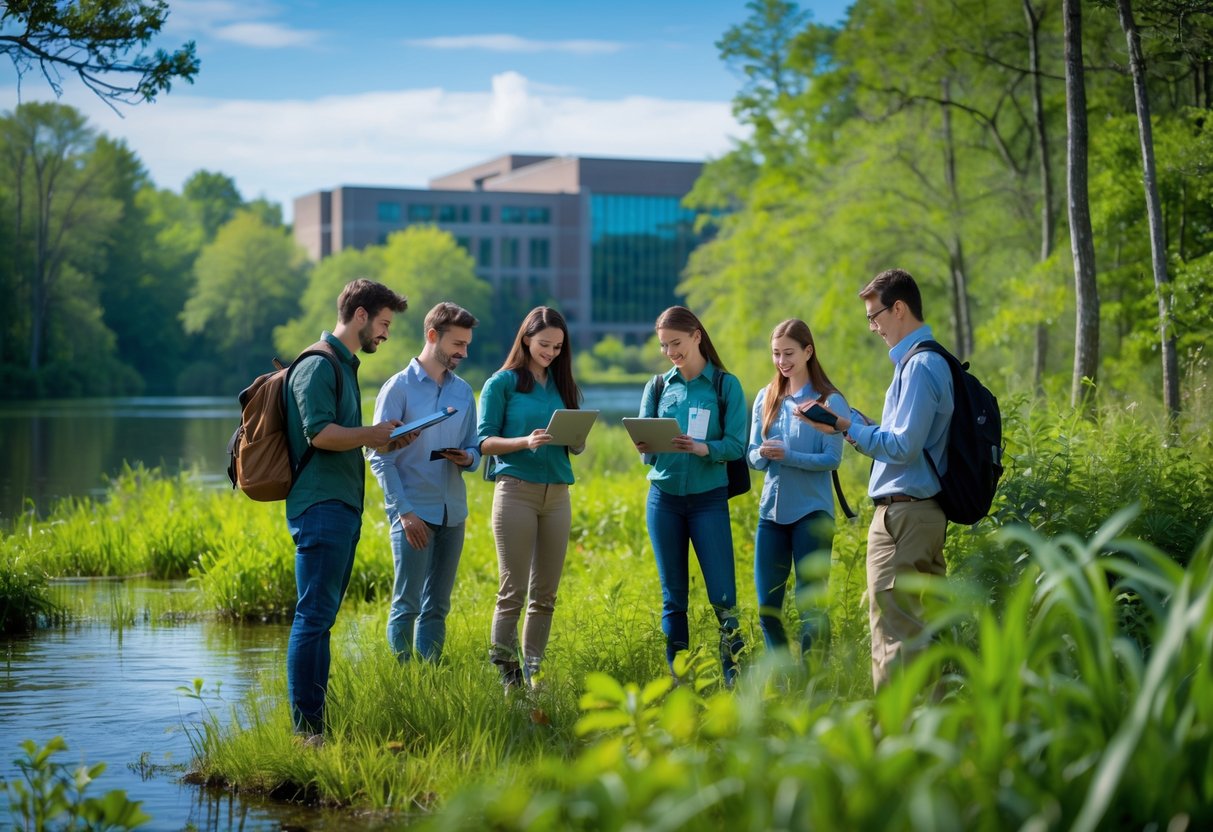
The University of Michigan, Ann Arbor offers a fully funded PhD Fellowship in Ecosystem Monitoring through the School for Environment and Sustainability (SEAS). The program starts in Fall 2026 under Dr. Lauren Gillespie.
You will use artificial intelligence (AI) and data science to monitor and forecast ecosystem changes at local and global levels.
The research focuses on building tools that track biodiversity, land use, and climate change impacts with AI-integrated environmental modeling.
The fellowship covers full tuition, health insurance, and an annual living stipend. Funding comes from university fellowships and graduate research assistantships.
SEAS offers access to interdisciplinary labs, remote sensing databases, and fieldwork. You can collaborate with NASA, NOAA, and the U.S. Geological Survey on major environmental projects.
Table 1. Key Details — PhD Fellowship in Ecosystem Monitoring
| Detail | Description |
|---|---|
| Host Institution | University of Michigan, Ann Arbor (SEAS) |
| Program Start | Fall 2026 |
| Funding Type | Fully funded (tuition, stipend, health insurance) |
| Duration | 4–5 years |
| Research Area | AI-integrated ecosystem and environmental monitoring |
Table 2. Application and Eligibility Overview
| Requirement | Detail |
|---|---|
| Eligibility | Strong background in environmental science, data science, or AI |
| Application Deadline | Expected by December 2025–January 2026 (check U-M SEAS site) |
| Application Materials | Online form, CV, statement of purpose, transcripts, reference letters |
| Target Audience | Domestic and international PhD applicants |
| Funding Source | University of Michigan internal fellowships and research grants |
Emphasize your quantitative skills, machine learning experience, and ecological fieldwork to strengthen your application.
The program prepares you for roles in environmental research, conservation, and sustainability analytics in academia, government, or industry.
27) Interdisciplinary Graduate Fellowship

The Interdisciplinary Graduate Fellowship (IGF) at the University of Michigan–Ann Arbor supports PhD and master’s students who work across multiple academic fields.
The fellowship promotes collaboration between departments like Engineering, Environment, Public Policy, and Data Science.
Awards are fully funded and include tuition, health insurance, and a $41,000 annual stipend.
Fellows join projects that integrate AI, sustainability, public health, and cognitive science.
You will receive research mentorship from multiple faculty members and access to U-M’s advanced research labs and computing resources.
This program suits students who want to drive cross-disciplinary innovation.
Applications open in Fall 2025 for the Fall 2026 intake via the Rackham Graduate School portal.
Selection focuses on research quality, interdisciplinary potential, and leadership capacity.
Table 1. Interdisciplinary Graduate Fellowship — Core Details
| Category | Description |
|---|---|
| University | University of Michigan–Ann Arbor |
| Funding Type | Fully Funded |
| Eligibility | Domestic and International Graduate Students |
| Disciplines | STEM, Environment, Public Health, Social Sciences |
| Annual Stipend | $41,000 (approx.) |
| Coverage | Tuition, Health Insurance, Living Stipend |
| Application Period | Fall 2025 for Fall 2026 Entry |
| Host Faculty | Rackham Graduate School, Interdisciplinary Research Programs |
Table 2. Fellowship Benefits and Support Services
| Support Type | Description |
|---|---|
| Research Funding | Covers project materials, lab expenses, and data resources |
| Professional Development | Workshops on grant writing, policy communication, and leadership |
| Mentorship | Joint supervision by two or more departments |
| Networking | Access to interdisciplinary research symposia and global collaborations |
| Career Impact | Preparation for roles in academia, industry, and research think tanks |
28) Gerald R. Ford Public Policy Scholarship

The Gerald R. Ford Public Policy Scholarship at the University of Michigan in Ann Arbor supports graduate students pursuing a Master’s in Public Policy (MPP).
This fully funded award values leadership, diversity, and academic achievement.
The program provides two years of full tuition, a living stipend, and health and dental coverage.
It aims to help students underrepresented in public policy fields who show strong potential for public service.
Both U.S. and international applicants can apply for the 2026–2027 academic intake.
Students enjoy small class sizes and access to leading faculty.
You can work with research centers like the Center for Local, State, and Urban Policy (CLOSUP) and the International Policy Center (IPC).
Ann Arbor’s location near Detroit and Chicago offers rich field engagement and policy internships.
Table 1. Gerald R. Ford Public Policy Scholarship – Key Details
| Feature | Details |
|---|---|
| Host Institution | University of Michigan, Gerald R. Ford School of Public Policy |
| Location | Ann Arbor, Michigan, USA |
| Degree Level | Master’s (MPP) |
| Funding Type | Full tuition, stipend, health and dental care |
| Duration | 2 years |
| Target Group | Students underrepresented in public policy |
| Application Cycle | Annual; open late 2025 for Fall 2026 intake |
Table 2. Related Ford School Funding Opportunities (2026)
| Scholarship/Fellowship | Eligibility | Coverage | Deadline (2026 Cycle) |
|---|---|---|---|
| Rackham Master’s Award (RMA) | MPP applicants with financial need | Full tuition + stipend + insurance | January 2026 |
| Public Policy Diversity Fellowship | U.S. and international minority applicants | Full or partial tuition + research funding | February 2026 |
| Fulbright-Ford Partnership Award | International candidates admitted to MPP | Joint full funding via Fulbright + Ford School | Varies by country |
Apply for this scholarship through the Ford School admissions portal when you submit your graduate application.
Prepare a statement of purpose, academic transcripts, and recommendation letters that show your leadership and commitment to public policy reform.
29) Technology and Operations Management Fellowships

The Technology and Operations Management Fellowships at the University of Michigan Ross School of Business support graduate students researching operations, supply chain, and technology strategy.
These fellowships encourage applied research that drives efficiency and innovation in real-world systems.
Ross is located in Ann Arbor, Michigan and offers access to top corporations, research centers, and labs.
Fellows often collaborate with the Center for Value Chain Innovation and the Tauber Institute for Global Operations.
Each fellowship covers full tuition, healthcare, stipend, and research support.
The university prepares doctoral and master’s students for leadership in academia and industry.
Key Program Features
| Item | Description |
|---|---|
| Funding | Full tuition, living stipend (average $34,000/year), health insurance, and research allowance |
| Eligibility | Master’s or PhD students in Technology and Operations or related fields |
| Application Cycle | Open annually; applications for Fall 2026 due Dec–Feb 2025 |
| Selection Criteria | Academic excellence, quantitative skills, research proposal quality |
Opportunities and Research Areas
| Research Track | Description |
|---|---|
| Operations Analytics | Focuses on data-driven decision making and process optimization |
| Sustainable Supply Chains | Studies circular economy, resource efficiency, and sustainability metrics |
| Technology Strategy | Examines digital transformation and innovation in production systems |
| Applied Industry Projects | Includes internships through the Tauber Institute with global firms |
Apply directly through the Rackham Graduate School or the Ross PhD portal.
For full funding, submit GRE/GMAT scores, transcripts, a research statement, and recommendation letters.
Fellows gain hands-on experience in multidisciplinary research, data analysis, and global supply strategy.
This fellowship offers long-term academic and professional advantages for those interested in technology and operations management in 2026 and beyond.
30) Graduate Student Leadership Awards

The Graduate Student Leadership Awards at the University of Michigan–Ann Arbor honor graduate students who demonstrate outstanding leadership, academic excellence, and service.
The awards recognize contributions that enhance student life and uphold university values.
You must be a current master’s or doctoral student in good standing to qualify.
Students with no university policy violations are eligible for nomination.
Awards include a monetary prize and public recognition at the annual M-LEAD ceremony.
Recipients often serve as mentors, researchers, and community leaders in schools like Rackham Graduate School, College of Engineering, and the School of Public Health.
Many winners combine research excellence with impactful service projects.
Table 1. Basic Details of the Graduate Student Leadership Awards
| Category | Details |
|---|---|
| University | University of Michigan–Ann Arbor |
| Administered by | M-LEAD and Rackham Graduate School |
| Level of Study | Master’s and Ph.D. |
| Purpose | Recognize leadership, academic excellence, community service |
| Application Period | Typically Fall semester each year |
| Award Year | 2026 |
| Funding Type | Institutional (internal) award |
Nominees are recommended by faculty or peers.
The evaluation focuses on measurable impact, innovation, and engagement in equity or interdisciplinary initiatives.
Table 2. Evaluation and Selection Criteria
| Criteria | Weight (%) | Description |
|---|---|---|
| Leadership Impact | 40 | Evidence of sustained, positive influence on campus or program |
| Academic Achievement | 30 | Research excellence and GPA performance |
| Community Service | 20 | Participation in student or professional organizations |
| Ethical Standards | 10 | Compliance with university policies and values |
Use this award to boost your academic profile and expand your professional network.
It reflects Michigan’s mission to develop leaders who serve with integrity and purpose.
31) Scholarships for International Graduate Students

The University of Michigan at Ann Arbor offers fully funded scholarships for international graduate students. These scholarships cover tuition, living costs, health insurance, and research expenses.
You can find opportunities through the Rackham Graduate School, academic departments, and external organizations. Scholarships span fields like engineering, public health, law, social sciences, and the arts.
The university attracts talented scholars from around the world. This creates a vibrant, global research community.
Always confirm departmental deadlines and requirements before applying.
Table 1. Key Fully Funded Graduate Scholarships (2026 Entry)
| Scholarship Name | Type | Funding Coverage | Eligibility | Application Window |
|---|---|---|---|---|
| Rackham Merit Fellowship | Internal | Full tuition, stipend, benefits | High-achieving international graduate students | Oct–Dec 2025 |
| Graduate Student Research Assistantship (GSRA) | Internal | Salary, tuition, health insurance | Research-based master’s & Ph.D. candidates | Rolling |
| Fulbright Foreign Student Program | External (U.S. Government) | Tuition, living stipend, travel, insurance | International graduates in all disciplines | Country-specific |
| U-M International Institute Fellowships | Internal | Tuition, research funding | Master’s & doctoral students in international studies | Jan–Mar 2026 |
| Knight-Wallace Fellowship (for journalists) | External | Full financial support, stipend | Mid-career international journalists | Dec 2025–Feb 2026 |
Most graduate students receive assistantships or fellowships from their academic departments. Engineering and science students often get Research Assistantships, while humanities and social sciences students may receive Teaching Assistantships.
Both types provide full tuition, stipends, and health insurance. This support helps students focus on their studies and research.
Table 2. Common Graduate Funding Types at University of Michigan (2026)
| Funding Type | Source | Average Annual Stipend (USD) | Tuition Coverage | Health Benefits |
|---|---|---|---|---|
| Teaching Assistantship (GSI) | Internal | $24,000–$36,000 | 100% | Yes |
| Research Assistantship (GSRA) | Internal | $28,000–$40,000 | 100% | Yes |
| External Fellowships (various) | External | $25,000–$45,000 | Partial or full | Varies |
| Rackham Predoctoral Fellowship | Internal | $36,000 | 100% | Yes |
Key Dates: Most 2026 scholarships open between October 2025 and March 2026. Check each program’s portal for the latest information.
Explore the scholarship region for various funding options. Financial Aid Office and the Rackham Funding Database for more opportunities.
32) Graduate Arts and Humanities Fellowships

The Graduate Arts and Humanities Fellowships at the University of Michigan, Ann Arbor (U-M) support graduate students in literature, history, philosophy, and cultural studies. These fellowships are fully funded and open to students pursuing original research in the humanities.
U-M’s Institute for the Humanities offers year-long residencies. Fellows receive stipends, tuition coverage, and research funding.
Participants join an interdisciplinary community. Weekly seminars foster collaboration and academic growth.
Internal programs like the Institute for the Humanities Graduate Student Fellowship provide direct university funding. External awards come from organizations and foundations that partner with U-M.
Applicants must show strong academic merit and clear research goals. Both international and domestic students can apply.
Applications usually open in late 2025 for the 2026–2027 academic year.
Table 1. Key Fellowship Details
| Fellowship Name | Type | Funding Coverage | Duration | Application Cycle |
|---|---|---|---|---|
| Institute for the Humanities Graduate Fellowship | Internal | Full tuition, stipend, research grant | 1 academic year | Opens Fall 2025 |
| Copernicus Fellowship (Polish Studies) | Internal | Tuition, stipend, travel funds | 1 academic year | Opens Spring 2025 |
| External Arts and Humanities Fellowships | External | Tuition + living allowance | Variable | Ongoing, rolling basis |
Table 2. Applicant and Selection Data
| Year | Average Applicants | Fellowships Awarded | Acceptance Rate | Typical Stipend |
|---|---|---|---|---|
| 2024–2025 | ~220 | 18 | 8% | $28,000–$32,000 |
| 2025–2026 (Projection) | ~250 | 20 | 8% | $29,000–$33,000 |
Quick Tips Checklist
- Prepare a clear project proposal (2–3 pages) with defined research goals.
- Include strong faculty recommendations.
- Confirm funding terms, as some fellowships renew for a second year.
- Track annual opening dates (typically September–October).
These fellowships encourage collaboration and innovation. Humanities scholars at U-M gain a supportive environment for research and teaching.
33) Social Work Excellence Scholarships

The University of Michigan–Ann Arbor offers Social Work Excellence Scholarships through its School of Social Work. This program ranks among the best globally.
The scholarship supports incoming Master of Social Work (MSW) students. Awards are fully funded and recognize outstanding academic and professional promise.
The scholarship covers full tuition, health insurance, and a living stipend. Both merit-based and need-based factors are considered.
Students join a vibrant academic community in Ann Arbor, Michigan. You can focus on child welfare, mental health, policy advocacy, or community practice.
Internal scholarships come directly from the university. External fellowships—like those from the NASW Foundation—may add extra support.
Most applicants are automatically considered when they submit the School of Social Work financial aid application.
Table 1. Funding Summary – Social Work Excellence Scholarships
| Component | Details |
|---|---|
| Tuition | 100% full coverage (resident and non-resident rates) |
| Living Stipend | Up to $28,000/year |
| Health Insurance | Included |
| Duration | 2 years (full-time MSW program) |
| Renewal | Annual review based on academic progress |
Table 2. Key Scholarship Facts (2026 Cycle)
| Criteria | Requirement |
|---|---|
| Eligibility | Admitted MSW students at U‑M School of Social Work |
| GPA | Minimum 3.3 undergraduate GPA |
| Application Deadline | January 15, 2026 (for Fall 2026 entry) |
| Selection Basis | Academic excellence, leadership, social service impact |
| Notification | March–April 2026 |
Applicants for 2026 should complete the MSW program application and the School of Social Work Financial Aid Application. Some awards may need extra essays or recommendation letters.
Apply early to maximize your funding opportunities and priority consideration.
34) Ann Arbor Public Service Graduate Awards

The Ann Arbor Public Service Graduate Awards support graduate students focused on community service, social policy, and sustainability. These awards help reduce financial barriers for students in public affairs and related fields.
Recipients get full tuition, health insurance, and a living stipend for one to two years. Both domestic and international students in public service or policy programs can apply.
Selection committees value clear public impact goals and strong leadership. Many recipients later work in government, non-profits, or academic research.
Table 1. Key Details of the Ann Arbor Public Service Graduate Awards
| Category | Details (2026 Cycle) |
|---|---|
| Type | Fully funded graduate scholarship |
| Sponsor | University of Michigan, Ann Arbor |
| Eligibility | Graduate students in public policy, urban planning, environmental science, or social work |
| Benefits | Tuition, stipend, health insurance |
| Application Period | Opens Sept 2025 – Closes Jan 2026 |
Table 2. Evaluation and Selection Criteria
| Criteria | Evaluation Focus | Weight (%) |
|---|---|---|
| Academic Merit | GPA, research quality | 40% |
| Public Service Record | Volunteer or leadership impact | 35% |
| Statement of Purpose | Clarity of career goals in public service | 15% |
| Recommendations | Academic and professional support | 10% |
Checklist for Applicants (2026 Cycle)
- Keep a minimum 3.4 GPA in your graduate program.
- Submit two letters of recommendation.
- Include a one-page statement connecting your fieldwork to public benefit.
- Apply through the Rackham Graduate School portal by January 2026.
Tip: Highlight measurable service outcomes, such as community engagement hours or policy workshops, in your application.
35) Graduate Public Health Scholarships

The University of Michigan School of Public Health in Ann Arbor offers several fully funded graduate scholarships for 2026 applicants.
These scholarships support students in Epidemiology, Biostatistics, Environmental Health Sciences, Health Management, and Policy.
You can apply for internal scholarships funded by the university and its donors.
You can also apply for external fellowships from national and international foundations.
Internal awards usually cover tuition, health insurance, and living stipends.
External grants may add research or travel support.
The school ranks among the top 5 public health programs in the United States.
Students can join research partnerships with the CDC, NIH, and local health departments.
Many doctoral students receive multi-year funding packages that cover all program costs.
Key Funding Opportunities Table:
| Scholarship Name | Type | Coverage | Eligibility | Deadline (2026 Cycle) |
|---|---|---|---|---|
| SPH Merit Scholarship | Internal | Full tuition + stipend | MPH and PhD students | Jan 10, 2026 |
| Public Health Fellowship | Internal | Full funding | Research-focused candidates | Varies by department |
| Rackham Graduate Fellowship | Internal | Tuition + stipend + insurance | U.S. and international PhD students | Feb 1, 2026 |
| Global Health Equity Award | External | Full tuition + travel | MPH students from low-income nations | March 2026 |
| Fulbright–Michigan Partnership Award | External | Full funding | International students | Fall 2025 for 2026 intake |
Funding Breakdown Table:
| Expense Category | Coverage Percentage | Source Type | Notes |
|---|---|---|---|
| Tuition and Fees | 100% | Internal and External | All full-time fellows receive full waiver |
| Health Insurance | 100% | Internal | Paid through Graduate Student Support |
| Living Stipend | 95–100% | Internal/External | Average annual stipend: $35,000–$40,000 |
| Research or Travel | 80–100% | External | NIH and foundation-funded grants available |
If you want to start a graduate degree in public health at Michigan in Fall 2026, begin preparing your application materials by late 2025.
Competitive candidates usually have prior public health experience, a strong research focus, and excellent recommendations.
Explore departmental assistantships for teaching or research roles.
Assistantships often include full tuition remission and a living stipend for the academic year.
International students should look into government-funded or multilateral organization scholarships like Chevening, Global Health Corps, or WHO Fellowships.
These awards help reduce remaining personal expenses and complement internal scholarships.
Eligibility Criteria for Fully Funded Scholarship Programs at the University of Michigan

The University of Michigan–Ann Arbor awards fully funded scholarships based on academic merit, leadership, financial need, and citizenship status.
Meeting eligibility requirements helps you compete for scholarships that cover full tuition and living costs for 2026 entry.
Academic Qualifications
You need a strong academic record to qualify for fully funded scholarships.
Most programs expect a minimum GPA of 3.5 on a 4.0 scale for undergraduate applicants.
Graduate and Ph.D. applicants often require a bachelor’s degree (or equivalent) from an accredited institution.
You should show evidence of research or professional achievement.
Applicants for selective awards like the Darrow Scholarship or Rackham Merit Fellowship must demonstrate leadership, community involvement, and academic excellence.
Maintain full-time enrollment and good academic standing during your studies.
| Qualification Level | Minimum GPA Required | Additional Requirements |
|---|---|---|
| Undergraduate | 3.5/4.0 | SAT/ACT (optional for some programs) |
| Master’s | 3.7/4.0 | Research experience or professional background |
| Ph.D. | 3.7/4.0 | Strong research proposal and faculty endorsement |
| Scholarship | Target Level | Key Academic Requirement |
|---|---|---|
| Go Blue Guarantee | Undergraduate | Michigan residency, need-based |
| Rackham Merit Fellowship | Graduate | Exceptional GPA and research record |
Citizenship Requirements
Eligibility depends on your citizenship or residency status.
U.S. citizens and Michigan residents may qualify for the Go Blue Guarantee, which covers full tuition for families below a set income threshold.
International students can apply for scholarships like the Darrow Scholarship, which funds up to 100% of tuition and living expenses.
Most international awards require a valid student visa (F-1 or J-1) and full-time enrollment.
| Group | Eligible Scholarships | Funding Coverage |
|---|---|---|
| Michigan Residents | Go Blue Guarantee | Full tuition and mandatory fees |
| U.S. Citizens | Federal and U-M scholarships | Tuition + partial living costs |
| International Students | Darrow, Rackham, and external fellowships | Full funding with stipend |
| Requirement Type | Details |
|---|---|
| Citizenship or Residency | Must meet program-specific conditions |
| Immigration Status | Must hold a valid visa for study in the U.S. |
Language Proficiency
If your first language is not English, you must show proof of English language proficiency.
The University of Michigan accepts several standardized tests.
Most programs require a TOEFL iBT score of 100 or higher or an IELTS score of 7.0 or above.
Graduate schools may also accept the Duolingo English Test with a minimum score of 120.
Some programs waive this requirement if you completed prior studies in English or at a recognized English-medium institution.
| Accepted Test | Minimum Score |
|---|---|
| TOEFL iBT | 100 |
| IELTS Academic | 7.0 |
| Duolingo English Test | 120 |
| Waiver Eligibility | Condition |
|---|---|
| Prior Education in English | At least two years in an English-medium institution |
| U.S. Accredited Degree | Automatic exemption from further testing |
Proof of English proficiency helps you succeed in lectures, research, and campus life.
Application Process and Timeline to Study in the USA

Fully funded scholarships at the University of Michigan, Ann Arbor for 2026 require careful planning.
You need to prepare specific documents, meet program deadlines, and follow the review process.
Required Documents
Each scholarship has its own documentation requirements.
Most programs at U-M request materials that confirm both academic merit and financial need.
You’ll usually submit your application through the Rackham Graduate School or the Office of Financial Aid portal.
Standard materials include:
- Completed online application form
- Academic transcripts
- Letters of recommendation
- Statement of purpose
- Curriculum vitae (CV)
- Proof of English proficiency (TOEFL, IELTS, or Duolingo)
- Financial documentation (if requested)
Add your department’s supplemental materials for specialized scholarships.
Submitting accurate and complete documents early can improve your review priority.
| Document Type | Typical Requirement | Notes |
|---|---|---|
| Application Form | Required | Completed through U-M portal |
| Transcripts | Required | Certified official copies |
| Letters of Recommendation | 2–3 | Preferably academic references |
| Statement of Purpose | 500–1,000 words | Tailor to scholarship goals |
| English Test Score | Varies by program | International students only |
Key Deadlines
Deadlines at the University of Michigan vary by college and program.
Most fully funded 2026 scholarships for graduate students close by December 1, 2025.
Deadlines for Winter 2026, Summer 2026, and Fall 2026 admission cycles may differ.
Start preparing at least three months before the deadline.
This gives you time to collect recommendation letters, verify transcripts, and finalize your research proposal.
Some scholarships use a rolling timeline.
Others, like the Rackham Merit Fellowship, operate on fixed annual cycles.
| Scholarship or Fellowship | Application Window | Deadline (Expected 2025–2026) |
|---|---|---|
| Rackham Merit Fellowship | Sept–Nov 2025 | Dec 1, 2025 |
| Stamps Scholarship (Undergraduate) | Oct 2025–Jan 2026 | Jan 15, 2026 |
| UMAPS Program (Africa Faculty) | Jan–Mar 2026 | Mar 31, 2026 |
| AI-Ecology PhD Scholarship | Sept–Nov 2025 | Dec 1, 2025 |
Submitting early gives reviewers more time to assess your application.
Always confirm the latest timeline on your department’s official site.
Selection Procedures
The University of Michigan selects scholarship recipients based on academic excellence, research potential, leadership qualities, and inclusivity.
Each department forms a faculty committee to review all eligible applications.
The review process typically has three steps:
- Initial screening of academic and eligibility criteria.
- Committee evaluation of essays, references, and research proposals.
- Final approval by scholarship sponsors or university offices.
International and domestic applicants are reviewed using the same academic standards.
Some awards may prioritize specific regions or study areas.
Interview invitations are rare but possible for competitive research-based funding.
| Selection Stage | Evaluator | Evaluation Focus |
|---|---|---|
| Screening | Admissions Office | Documentation and eligibility |
| Academic Review | Faculty Committees | Academic record and research fit |
| Final Approval | Scholarship Board | Funding alignment and policy goals |
Notifications usually arrive 8–12 weeks after the deadline.
This timeline helps you plan for visa applications and enrollment.
BFFS Scholar Quest Frequently Asked Questions

Fully funded scholarships at the University of Michigan, Ann Arbor for 2026 cover full tuition fees, living expenses, and health insurance under a fully-funded program.
These awards target top academic achievers and research students.
Most programs value academic excellence, leadership, and community impact.
Financial aid options help both domestic and international students.
What are the eligibility requirements for Fully Funded Scholarships for international students at the University of Michigan, Ann Arbor, for 2026?
You must meet both academic and language proficiency standards.
Most programs require a strong GPA, demonstrated research or leadership experience, and TOEFL or IELTS test results.
For graduate-level funding like the Rackham Graduate School Fellowships or Artificial Intelligence Monitoring PhD Scholarship, you also need admission to a U-M program and a research focus that matches the university’s priorities.
How can I apply for merit-based scholarships at the University of Michigan for the academic year 2026?
You usually apply automatically when you submit your admission application.
Some awards need a separate scholarship form through the Office of Financial Aid.
Submit all materials, like transcripts and recommendation letters, before the deadlines.
Graduate students should check the Rackham Graduate School and departmental websites for nomination deadlines and supporting documents.
Are there specific Fully Funded Scholarships available for incoming freshmen at the University of Michigan in 2026 for undergraduate scholarships?
Yes, there are options.
The Stamps Scholarship is highly competitive and covers full tuition, housing, and enrichment funds for undergraduate freshmen.
Selection depends on academic achievement and leadership potential.
In-state students may also qualify for the Go Blue Guarantee.
This program offers tuition-free education for up to four years if you meet eligibility criteria.
What types of financial aid are available for undergraduate international students at the University of Michigan for 2026 for Higher Education?
International undergraduates can access merit-based awards, departmental scholarships, and need-based funding.
Some programs offer full or partial tuition coverage with on-campus employment options.
Graduate students often receive research or teaching assistantships.
These assistantships include salary, tuition, and health benefits.
The Rackham Graduate School offers fellowships for outstanding international students.
When is the deadline to apply for Fully Funded Scholarships at the University of Michigan for 2026?
Most applications for fall 2026 open in late August 2025.
They usually close by early February 2026.
Some graduate fellowships accept rolling applications based on departmental schedules.
Check each program’s website for exact dates.
The Office of Financial Aid updates deadlines annually for all undergraduate and graduate opportunities.
How does the University of Michigan assess applicants for Full Ride Scholarships?
The University of Michigan uses a holistic review process. This process looks at academics, leadership, and personal achievements.
Reviewers examine the quality of essays. They also look at community involvement and research potential.
Applicants who show academic excellence and strong civic engagement stand out. These students have a higher chance of getting full support through programs like Stamps or Rackham Merit Fellowships.
Key factors for selection:
- High grades and rigorous coursework
- Leadership roles in clubs or organizations
- Meaningful community service
- Impressive essays that tell a unique story
The university values students who make a positive impact. They want scholars with both talent and purpose.
A full ride scholarship can change a student’s life. The process is competitive, but hard work and passion can make a difference.
View our Recent BFFS Scholar Quest Content here!
- Business, Finance & Economics PhD Programs 2026 Full Guide
- 25 Fully Funded Scholarships Pakistan: International Students 2026
- 25 Fully Funded Scholarships Vietnam: International Students 2026
- 25 Fully Funded Scholarships in Turkey: International Students 2026
- 25 Fully Funded Scholarships United Arab Emirates International ´26