Community Engagement Scholarships: Best 2025-2026 Opportunities for Student Leaders
Looking for the best community engagement scholarships for 2026?
Get ready to change your community and grab some cash to help pay for college.
Community engagement scholarships give students money for school and push them to jump into local projects.
It’s like hitting two birds with one stone—support for your education and making a real impact around you.
Many who took this path found that being involved not only eased their school costs but also opened doors to friendships and opportunities they never expected.
Imagine being part of something bigger while building your future.
Keep reading to discover how this could be your game-changer.

Community engagement scholarships reward students who show leadership in public service.
The Academy of Community Engagement Scholarship recognizes scholars who produce work that benefits society.
These programs often look for students with a track record of volunteer work or community projects.
You don’t always need to demonstrate financial need to qualify for these scholarships.
For example, Bucknell University’s Community Engagement Scholars Program awards $20,000 annually to promising public service leaders.
These opportunities can help you continue your community work while pursuing your degree.
Key Takeaways
- Community engagement scholarships support students who are active in public service
- Many programs don’t require financial need to qualify
- These scholarships encourage ongoing community involvement during college
Overview of Community Engagement Scholarships

Community engagement scholarships blend academic work with real-world impact.
They focus on collaborations between scholars and communities to address important social issues.
Defining CES
Community Engagement Scholarship (CES) involves partnerships between academics and local groups.
It aims to create knowledge that helps solve community problems. CES projects often tackle issues like health, education, or economic development.
Key aspects of CES include:
- Mutual benefit for scholars and communities
- Active collaboration throughout the research process
- Focus on real-world application of findings
CES differs from traditional research. It values community expertise alongside academic knowledge.
Scholars work closely with local partners to define questions, gather data, and implement solutions.
History and Evolution of CES
CES grew from earlier ideas about public service in higher education. In the 1990s, Ernest Boyer pushed for a broader view of scholarship. He argued that colleges should address societal needs.
This led to new forms of engaged scholarship:
- Service-learning courses
- Community-based research projects
- Public policy work
Over time, CES has gained recognition. Many universities now support it through:
- Dedicated centers or offices
- Promotion and tenure policies that value community work
- Funding for engaged research and teaching
CES continues to evolve. It now includes digital collaborations and global partnerships. The field keeps adapting to meet changing community needs.
The Role of CES in Higher Education

Community-engaged scholarship (CES) plays a key part in connecting universities with their communities.
It helps students learn by doing and lets schools give back to local areas.
Expanding Educational Horizons
CES opens new doors for students and teachers. It lets you:
- Learn outside the classroom
- Work on real-world problems
- Meet people from different backgrounds
Community-engaged scholarship mixes book learning with hands-on work. You might help design a park, tutor kids, or study local health issues.
These projects teach skills you can’t get from just reading textbooks.
CES also brings new voices into schools. Local experts share their knowledge. This two-way exchange makes learning richer for everyone.
Contributions to Academic Success
CES boosts your college success in many ways:
- Builds job skills employers want
- Improves your grades and test scores
- Helps you pick a career path
When you do CES, you practice teamwork, problem-solving, and communication. These are top skills that can help you land a job after college.
Studies show CES can lift your GPA. It makes class topics feel more real and interesting. This often leads to better grades and test scores.
CES lets you try out different jobs. You might find a passion you never knew about. This can guide your major choice and career plans.
Application Process and Financial Need
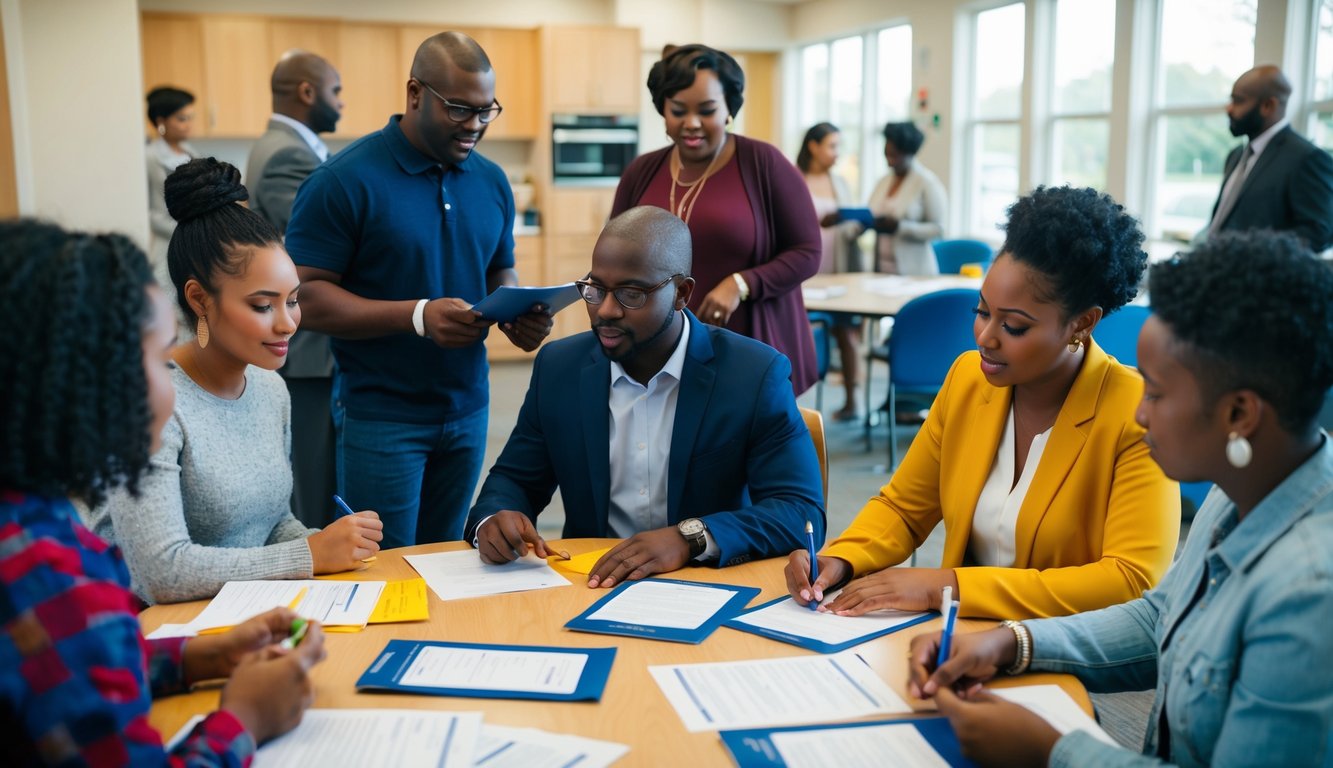
Applying for community engagement scholarships involves specific steps and proving financial need. These factors play a key role in getting funding for your education.
Eligibility Criteria
To apply for community service scholarships, you need to meet certain requirements. Most programs look for:
- Strong community service record
- Good grades (often 3.0 GPA or higher)
- U.S. citizenship or permanent residency
- Enrollment in an accredited school
Some scholarships have extra rules. For example, the Ron Brown Scholarship is for Black high school seniors interested in global business or community work.
Financial need is often a big factor. You may need to show your family’s income and expenses. This can include tax returns or financial aid forms.
Application Tips
Follow these tips to boost your chances of getting a scholarship:
- Start early. Many deadlines are in fall or winter of your senior year.
- Get organized. Make a list of scholarships and their due dates.
- Write a strong essay. Talk about your service work and its impact on you and others.
- Ask for help. Have teachers or mentors review your application.
- Be honest about your finances. Provide real proof of your need.
- Apply for many scholarships. Don’t limit yourself to just one or two.
Remember to tailor each application. Highlight how your service matches what the scholarship values. This personal touch can make your application stand out.
Impact on Students and Communities

Community engagement scholarships create positive change for both students and local areas.
These programs foster personal growth and contribute to community development in meaningful ways.
Personal Growth through Service
Students who take part in community engagement scholarships gain valuable life skills.
They learn teamwork, leadership, and problem-solving through hands-on experiences. Volunteering boosts confidence and helps students discover new interests and abilities.
You’ll develop empathy by working with diverse groups. This broadens your worldview and cultural understanding.
Many students find their career paths through community service. You might uncover a passion for teaching, healthcare, or nonprofit work.
Key benefits for students:
- Enhanced communication skills
- Stronger résumé and job prospects
- Greater sense of civic responsibility
Community Development and Knowledge
Local areas see real improvements from student engagement. You’ll help tackle important issues like poverty, education gaps, and public health.
Your fresh ideas and energy can revitalize struggling neighborhoods.
Community-engaged scholarship brings academic resources to those who need them most.
You’ll share knowledge from your studies with community partners. This creates a two-way exchange of information and skills.
Projects often lead to lasting partnerships between schools and local organizations.
These collaborations can attract funding and support for further community development.
Your work may inspire others to get involved, creating a ripple effect of positive change.
Academic Disciplines and CES
Community-engaged scholarship (CES) spans many fields. It connects academic work with real-world issues. CES helps students apply their learning to solve problems.
CES in Psychology
Psychology students use CES to study human behavior in real settings. They might work with local groups to research mental health.
This hands-on work helps them learn and helps the community.
Students might:
- Run surveys on stress in busy neighborhoods
- Create support groups for teens
- Study how exercise affects mood in elderly care homes
CES in psychology teaches students to think critically about social issues. They learn to design studies that matter to people’s lives. This work often leads to better mental health services.
CES in Engineering
Engineering students use CES to solve real problems. They might design things that help local groups. This work teaches them to think about how their designs affect people.
Projects could include:
- Building low-cost water filters for rural areas
- Creating apps to help disabled people navigate cities
- Designing solar-powered lights for schools without electricity
CES in engineering helps students see how their skills can improve lives. They learn to work with non-experts and explain complex ideas simply.
Interdisciplinary Approach
CES often mixes different subjects. This helps students see how complex real-world problems are.
They learn to use ideas from many fields to solve issues.
A project might include:
- Psychology students studying stress
- Engineering students designing relaxation spaces
- Art students making calming murals
This teamwork teaches students to respect other viewpoints. They learn how different skills can work together to make big changes.
CES projects help students see their studies in a new light. They learn how their work can make a real difference in people’s lives.
Experiential Learning Opportunities

Experiential learning helps students gain real-world skills through hands-on experiences. These opportunities blend classroom knowledge with practical application, preparing students for future careers.
Internships and Mentorship
Internships give students a chance to work in their field of study. Many community engagement scholarships support internship programs. These programs let you:
- Apply classroom concepts to real jobs
- Build your professional network
- Gain industry-specific skills
Mentorship pairs you with an experienced professional. Your mentor can:
- Give career advice
- Help you set goals
- Share industry insights
Some programs offer both internships and mentorship. This combo provides strong support for your career growth.
Service Learning and Problem Solving
Service learning links community service with academic study. It helps you:
- Develop civic responsibility
- Improve critical thinking
- Boost leadership skills
Experiential education programs often include service learning. These programs let you work on real community issues.
Problem-solving projects are a key part of service learning. You might:
- Design solutions for local nonprofits
- Create awareness campaigns
- Organize community events
These projects help you build teamwork and project management skills. You’ll learn to tackle complex issues in real-world settings.
Collaboration and Partnerships

Working together with community partners creates positive change. Partnerships between schools and communities boost learning and solve local problems.
Engagement with Community Partners
Community engagement scholarship brings together schools and local groups. Students and teachers team up with nonprofits, businesses, and government agencies.
They work on real issues that matter to people nearby.
These partnerships tackle things like:
• Hunger and homelessness
• Public health concerns
• Environmental problems
• Educational needs
Students gain hands-on experience. Community groups get extra help and fresh ideas. Everyone learns from each other.
The University of Georgia’s Archway Partnership is a great example. They place staff in towns across Georgia. These teams connect local needs with university resources.
Building Mutually Beneficial Partnerships
Good partnerships help both the school and the community. Each side brings something valuable to the table.
Schools offer:
• Research skills
• Student volunteers
• Expert knowledge
Communities provide:
• Real-world challenges
• Local wisdom
• Places to apply learning
The key is giving each partner a voice. Reciprocal partnerships value everyone’s input. You set shared goals together. You make decisions as a team.
Regular check-ins keep things on track. Be ready to adjust plans as you go. Celebrate your wins, big and small.
With time and effort, these partnerships can make a real difference in people’s lives.
Advancing Equity and Inclusion

Community engagement scholarships play a key role in promoting fairness and diversity in higher education.
They help create opportunities for underrepresented groups and foster collaboration with varied communities.
Promoting Equity and Diversity
Equity and diversity scholarships aim to increase representation in academic fields.
They provide financial support to students from underrepresented backgrounds. This helps remove barriers to education.
You can find scholarships that target specific groups. These may include:
• Racial and ethnic minorities
• First-generation college students
• Low-income students
• LGBTQ+ students
• Students with disabilities
Many programs look beyond grades. They consider factors like:
• Community involvement
• Leadership potential
• Unique perspectives
This holistic approach helps create a diverse student body. It brings together people with different life experiences.
Co-creation with Diverse Communities
Community engaged scholarship involves working closely with local groups. You partner with community members to:
• Identify real-world problems
• Design research projects
• Develop practical solutions
This approach values local knowledge. It ensures research benefits the community.
You gain hands-on experience through:
• Internships with community organizations
• Service-learning projects
• Collaborative research initiatives
These opportunities help you:
• Build cultural competence
• Develop communication skills
• Apply classroom learning to real issues
By engaging diverse voices, you create more inclusive and effective solutions. This prepares you for success in a global workforce.
Profiles in Leadership

Leadership in community engagement scholarship takes many forms. From dedicated board members to outstanding scholarship recipients, these individuals drive positive change through their work and studies.
ACES and its Board of Directors
The Academy of Community Engagement Scholarship (ACES) plays a key role in advancing community-engaged scholarship.
Its Board of Directors includes respected leaders in the field:
- Katy Campbell: Campbell brings expertise in community-university partnerships.
- Suzanne Morse Moomaw: Moomaw focuses on community development and civic engagement.
- Patricia Sobrero: Sobrero specializes in extension and engagement programs.
- Mary Simon Leuci: Leuci has extensive experience in rural community development.
- Lynn Blanchard: Blanchard champions service-learning and engaged research.
- Jeri Childers: Childers promotes innovative community-campus collaborations.
These directors guide ACES in recognizing excellence and fostering growth in engaged scholarship.
Noteworthy Scholarship Recipients
Exceptional students have made significant impacts through community engagement scholarships. Here are three standout examples:
- Meera Atreya: This 2009 Harvard graduate translates climate science into real-world impact. Atreya’s work bridges the gap between research and policy.
- Carlos Rodriguez: A first-generation college student, Rodriguez used his scholarship to start a mentoring program for high school students in his hometown.
- Sarah Chen: Chen’s engaged research on food insecurity led to the creation of a community garden network that now serves hundreds of families.
These scholars demonstrate how engaged scholarship can create meaningful change in communities.
Frequently Asked Questions
Community engagement scholarships offer unique opportunities for students to combine academic work with service.
These programs have specific requirements and benefits that differ from traditional scholarships.
How can students apply for community engagement scholarships in California?
Students in California can apply for community engagement scholarships through several channels.
Many universities offer their own programs, like the University of California system. You’ll need to check each school’s financial aid office or community engagement department.
The California Student Aid Commission also provides some community-based scholarships. To apply, you’ll usually need to submit:
- Your FAFSA or California Dream Act Application
- Proof of community service hours
- An essay about your engagement work
What are the eligibility criteria for the Engagement Scholarship Consortium?
The Engagement Scholarship Consortium (ESC) focuses on promoting engaged scholarship in higher education.
To be eligible for their programs, you typically need to:
- Be enrolled in an ESC member institution
- Show a strong commitment to community-engaged research or projects
- Maintain good academic standing
ESC looks for students who blend academic work with community service in innovative ways.
What is the role of the Academy of Community Engagement Scholarship?
The Academy of Community Engagement Scholarship (ACES) plays a key part in promoting engaged scholarship. ACES:
- Recognizes top scholars in community engagement
- Provides mentoring for new engaged scholars
- Advocates for community-engaged work in academia
As a student, you can benefit from ACES resources and networking opportunities.
What topics are discussed at the Engaged Scholarship Conference?
The Engaged Scholarship Conference covers a wide range of topics related to community-based research and learning. Common themes include:
- Best practices for community partnerships
- Measuring the impact of engaged scholarship
- Integrating engagement into curriculum
- Funding for community-based projects
You’ll find sessions on practical skills, research methods, and case studies from successful programs.
What types of community engagement programs are typically funded by scholarships?
Scholarships often fund diverse community engagement programs. Popular types include:
- Service-learning courses
- Community-based research projects
- Internships with non-profits
- Civic leadership programs
Many scholarships support programs that address local issues like education, health, or environmental concerns.
How does socially engaged scholarship differ from traditional academic scholarship?
Socially engaged scholarship differs from traditional academic work in several key ways:
- It directly involves community partners in research or projects.
- The focus is on practical, real-world problems.
- Results are shared with both academic and community audiences.
This type of scholarship aims to create positive change in communities while still meeting academic standards.
View our Recent BFFS Scholar Quest Content here!
- 45 Fully Funded Scholarships | California Institute of Technology 2027
- 45 Fully Funded Scholarships | University of California Santa Barbara 2027
- 20 Best Fully Funded PhD Scholarship Programs USA 2025-2026
- How to Apply for a PhD in USA with Scholarship Fully Funded 2026
- 21 Fully Funded Scholarships California -International Students 2026
