
Forbes New Ivies 2025 vs Traditional Ivy League Schools: Analyzing the Rising Challengers to Elite Education
Forbes New Ivies 2025 has shaken up how we think about elite education in America.
Are you wondering if these rising stars can really compete with the centuries-old Ivy League institutions?
An analysis of Forbes New Ivies 2025 vs Traditional Ivy League Schools indicate that rising academic standards, student career readiness and practical skills, coupled with employers´ increasing needs for job candidates highly prepared for today´s workforce complexities, have challenged the Ivy League towards higher ROI and better career outcomes which the New Ivies offer.
The traditional Ivy League schools—Harvard, Yale, Princeton, and five others—have long dominated prestigious education, often featured in Forbes magazine as top choices for aspiring Ivy League candidates.
However, Forbes’ 2025 list reveals a surprising shift: employers increasingly prefer graduates from “New Ivy” institutions over traditional Ivy League schools.
Four in ten employers report that Ivy League schools are doing a worse job preparing job candidates than they were five years ago.

These New Ivies aren’t just alternatives—they’re becoming first choices for many top students. Schools like Purdue University, now ranked among the top 10 public “New Ivies”, are gaining recognition for preparing graduates who are ready to excel in the workplace immediately.
The gap in prestige is narrowing as these institutions demonstrate academic excellence that rivals or even surpasses their Ivy counterparts in some fields.
You might be surprised to learn that admission to these New Ivy institutions has become extremely competitive.
They’re no longer safety schools—they’ve transformed into high-reach options in their own right.
With stronger career outcomes and employer relationships, these schools are redefining what makes for a valuable college education in 2025 and beyond.
Key Takeaways
- New Ivy institutions are gaining preference from employers who find their graduates better prepared for today’s workplace challenges.
- Admission standards at New Ivy schools have risen dramatically, making them highly competitive alternatives to traditional Ivy League options.
- The educational value proposition has shifted toward career readiness and practical skills, areas where New Ivies often excel.
Understanding the Ivy League
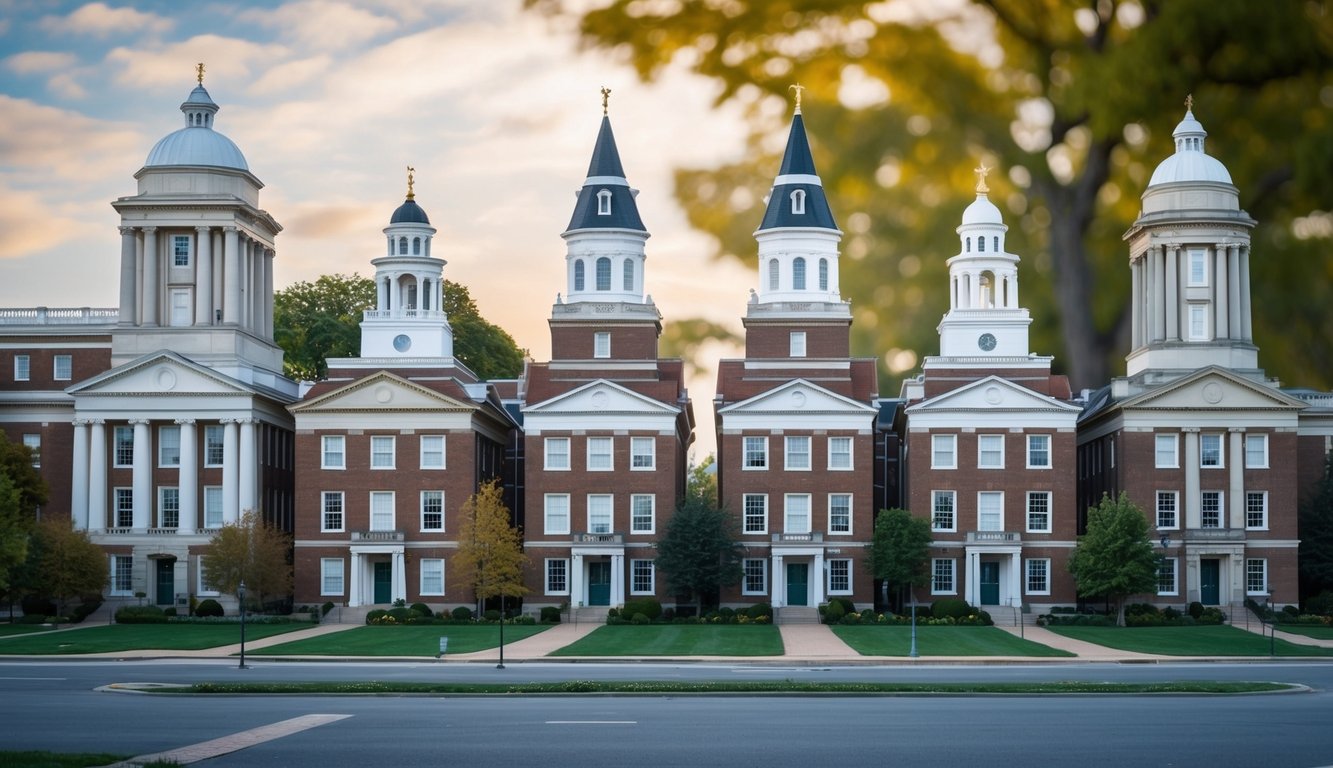
The Ivy League represents a prestigious collection of eight elite universities in the northeastern United States with deep historical roots and significant influence on American higher education.
Historical Perspective and Influence
The term “Ivy League” officially emerged in 1954 when these institutions formed an athletic conference, but their collective identity began much earlier.
The name refers to the ivy-covered walls of these historic institutions, symbolizing their age and tradition.
Most Ivy League schools were founded before the American Revolution, with Harvard established in 1636 as the oldest.
These institutions initially focused on training clergy and educating the elite class.
Their influence extends far beyond academics. Ivy League schools have produced numerous U.S. presidents, Supreme Court justices, and business leaders.
They’ve shaped American educational standards and research priorities for centuries.
Notable historical contributions include:
- Pioneering liberal arts education models
- Establishing research university frameworks
- Developing influential academic disciplines is a priority for both public and private schools within the New Ivies.
- Creating endowment-based funding structures
Current Ivy League Members
The Ivy League consists of eight private institutions, each with distinct characteristics while sharing elite status.
The eight members include:
- Harvard University (Cambridge, MA)
- Yale University (New Haven, CT)
- Princeton University (Princeton, NJ)
- Dartmouth College (Hanover, NH)
- Brown University (Providence, RI)
- Columbia University (New York, NY)
- Cornell University (Ithaca, NY)
- University of Pennsylvania (Philadelphia, PA)
These institutions are known for their extremely competitive admissions processes, akin to those of the Ivy League and highlighted in Forbes’ list. selective admissions, with acceptance rates often below 5%.
Harvard, Yale, and Princeton typically have the lowest acceptance rates among the group.
Each school maintains unique academic strengths. Princeton excels in economics and public policy, while Yale is renowned for law and drama.
Harvard leads in business and medicine, and Dartmouth offers an undergraduate-focused experience.
Criteria for Ivy League Classification
The Ivy League designation is primarily geographical and historical rather than based on current academic metrics.
All eight institutions are located in the Northeast and share colonial or early American founding dates.
Key shared characteristics include those found in Forbes’ New Ivies list, such as high academic standards and vibrant campus cultures.
- Private, nonprofit status
- Highly selective admissions
- Substantial endowments ($5+ billion each) help Ivy League schools maintain their prestigious status in the eyes of employers.
- Strong emphasis on research
- Residential campus experience at public ivies can be just as enriching as that at traditional Ivy League schools.
Unlike other collegiate designations, no new members can join the Ivy League.
This closed membership preserves exclusivity and tradition, creating a distinct brand separate from merit-based rankings.
The schools maintain similar academic calendars, athletic policies, and financial aid approaches.
All practice need-blind admissions and meet 100% of demonstrated financial need for admitted students.
Their shared values emphasize intellectual freedom, academic rigor, and leadership development.
Defining the ‘New Ivies’ of 2025: Academic Excellence and Employer Satisfaction with the Top 20 Great Public and Private Colleges in Forbes New Ivies
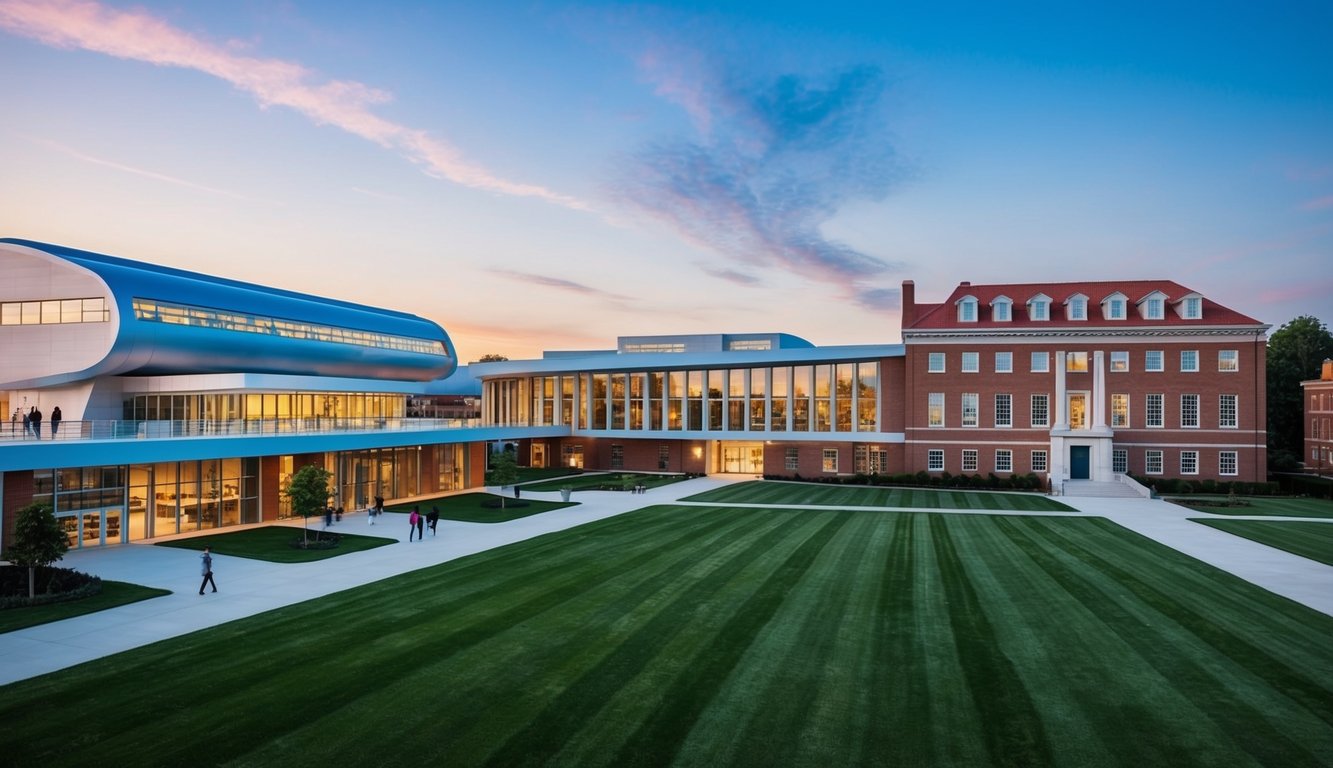
The landscape of elite higher education has evolved beyond the traditional Ivy League.
In 2025, a new group of institutions has emerged that rivals the prestige and outcomes of the historic eight Ivy League schools, through Forbes´ top 10 public and 10 private schools, referred to as the New Ivy League Schools.
Characteristics of New Ivies: 20 Great Colleges Employers Love
The “New Ivies” are distinguished by several key factors that set them apart from other institutions.
These schools demonstrate academic rigor comparable to traditional Ivy League universities while often offering more specialized programs in emerging fields.
They typically show strong employer relationships and impressive post-graduation outcomes.
In fact, employers increasingly prefer graduates from these institutions for their practical skills and adaptability than hire an Ivy League graduate
New Ivies also feature:
- Acceptance rates below 25%
- Median SAT scores above 1400
- Innovative research programs
- Strong industry partnerships
- Diverse student populations
- Modern campus facilities
Many New Ivies offer a better return on investment than traditional Ivies, with lower tuition costs but similar career outcomes.
List of Institutions Classified as New Ivies: List of 20 Great Colleges – 10 Private and 10 Public Universities
The Forbes New Ivies list 2025 includes both public and private institutions that have achieved exceptional recognition from employers and academic peers.
The roster includes graduates likely to hire an Ivy League graduate includes 20 schools with equal representation from both sectors.
Top Forbes Private New Ivies:
- Tufts University
- Johns Hopkins University
- Rice University
- Georgetown University
- Northwestern University
- Washington University in St. Louis
- Carnegie Mellon University
- University of Notre Dame
- Emory University
- Vanderbilt University
Top Forbes Public New Ivies:
- United States Naval Academy at West Point
- University of Pittsburgh
- University of Texas at Austin
- University of Virginia
- University of North Carolina at Chapel Hill
- University of Michigan – Ann Arbor
- Georgia Institute of Technology
- University of Illinois Urbana-Champaign
- William & Mary
- Purdue University
These institutions have developed reputations for excellence in specific fields.
For example, Johns Hopkins excels in medicine and public health, while Rice University is known for engineering and natural sciences.
The University of Michigan offers exceptional programs across multiple disciplines with particularly strong business and engineering departments.
Comparative Analysis of Educative Rigor
The academic rigor of both Forbes New Ivies and traditional Ivy League institutions reveals distinct strengths and approaches to educational excellence.
Data shows significant similarities in curriculum intensity while highlighting key differences in teaching methodologies and research expectations.
Academic Standards and Expectations
Traditional Ivy League institutions have long set the benchmark for academic rigor with their demanding curricula and high performance standards.
At Harvard, students typically complete 32 courses over four years with an average course load of 4-5 classes per semester, requiring approximately 12 hours of study time per class weekly.
The New Ivies have developed comparable academic standards, with many instituting rigorous core curricula that mirror Ivy approaches.
For example, schools like William & Mary have implemented comprehensive liberal arts requirements alongside major-specific coursework.
Table 1: Academic Workload Comparison
| Metric | Traditional Ivies | New Ivies 2025 |
|---|---|---|
| Average weekly study hours | 45-50 | 40-45 |
| Faculty-student ratio | 1:6 | 1:9 |
| Courses required for graduation | 30-34 | 30-36 |
| Average class size | 12 students | 18 students |
Both institution types maintain rigorous grading standards, with grade inflation slightly more prevalent at traditional Ivies (3.6 average GPA vs. 3.4 at New Ivies).
Quality of Faculty and Research
The traditional Ivy League boasts impressive faculty credentials, with over 75% of professors holding terminal degrees from top-10 global institutions.
These schools maintain robust research funding, averaging $980 million annually per institution.
New Ivies have made significant strides in faculty quality. Many institutions prioritize teaching excellence alongside research productivity.
Their professors increasingly match Ivy credentials, with 68% holding terminal degrees from top-25 global universities.
Research opportunities for undergraduates are actually more accessible at many New Ivies, with 65% of students participating in research compared to 52% at traditional Ivies.
This accessibility creates valuable hands-on learning experiences for students seeking research involvement.
New Ivies have significantly increased research funding over the past decade, growing from an average of $210 million to $420 million annually per institution since 2015.
Student Body Academic Profile
The academic profile of admitted students shows narrowing gaps between traditional Ivies and New Ivies.
Traditional Ivy League schools maintain slightly higher standardized test scores, with median SAT ranges of 1510-1580 compared to 1440-1520 at top New Ivies.
Table 2: Student Academic Metrics
| Metric | Traditional Ivies | New Ivies 2025 |
|---|---|---|
| Median SAT Score | 1550 | 1480 |
| High School GPA | 3.9+ unweighted | 3.85+ unweighted, a common requirement for Ivy League candidates. |
| Class rank | Top 2% | Top 5% |
| National Merit Scholar % | 12% | 9% |
Interestingly, New Ivy students demonstrate comparable performance in advanced coursework.
The average New Ivy student completes 8 AP/IB courses with scores of 4-5 (AP) or 6-7 (IB), closely matching traditional Ivy students’ 9 advanced courses.
Both institution types foster intellectually stimulating peer environments, though New Ivies often showcase greater geographic and socioeconomic diversity in their student populations
Admissions Criteria and Selectivity
The gap between traditional Ivy League schools and the Forbes New Ivies has narrowed significantly in terms of selectivity and admissions standards.
Both groups now employ rigorous evaluation processes with extremely low acceptance rates and high academic thresholds.
Acceptance Rates and Trends
Acceptance rates for traditional Ivy League schools remain exceptionally low.
For example, Harvard’s is 3.4% and Cornell’s is 8.7% for the Class of 2029. This represents a continued downward trend in selectivity.
The Forbes New Ivies for 2025 are approaching similar levels of exclusivity. Vanderbilt University tops the list with just a 6% acceptance rate, making it more selective than some traditional Ivy institutions.
Recent trends show acceptance rates declining across both groups:
| Institution Type, whether Ivy League or public colleges, can influence job readiness. | 2020 Average | 2025 Average | % Change |
|---|---|---|---|
| Traditional Ivies | 6.8% | 5.1% | -25% |
| Forbes New Ivies | 12.3% | 8.4% | -32% |
This convergence highlights how the admissions landscape has evolved, with New Ivies closing the selectivity gap rapidly.
SAT Scores and Other Academic Credentials
SAT score expectations remain extraordinarily high at both institution types.
The middle 50% range for traditional Ivy League schools typically falls between 1470-1570.
For the Forbes New Ivies, the middle 50% SAT range is now 1450-1550, showing minimal difference from their Ivy counterparts.
Beyond test scores, both groups prioritize:
- Class rank (top 5-10% typically expected)
- Rigorous coursework (multiple AP/IB courses)
- GPA thresholds (typically 3.9+ unweighted)
The academic profile differences between these institution types have diminished substantially.
Many New Ivies, as noted in Forbes’ “New Ivies” list, now attract students with credentials virtually identical to those at Harvard or Yale.
Holistic Admissions Processes
Both traditional Ivies and New Ivies emphasize that their admissions processes extend far beyond academic metrics. Thursday’s 2025 “Ivy Day” demonstrated this reality when thousands of valedictorians with perfect credentials were rejected.
Key holistic factors considered by both groups include:
- Demonstrated leadership and impact
- Unique personal qualities and perspectives
- Contribution potential to campus community
- “Hook” factors (recruited athletes, legacy status, etc.)
The rejection of seemingly perfect applicants has become commonplace at both institution types.
Forbes noted that students with “4.0 GPA, perfect test scores, and impressive extracurriculars” routinely face rejection from both Ivies and New Ivies.
You should understand that demonstrated passion and authentic engagement now matter more than credential accumulation at both institution types, as the New Ivies are outpacing most Ivy leaguers.
Impact on Student Opportunities and Outcomes
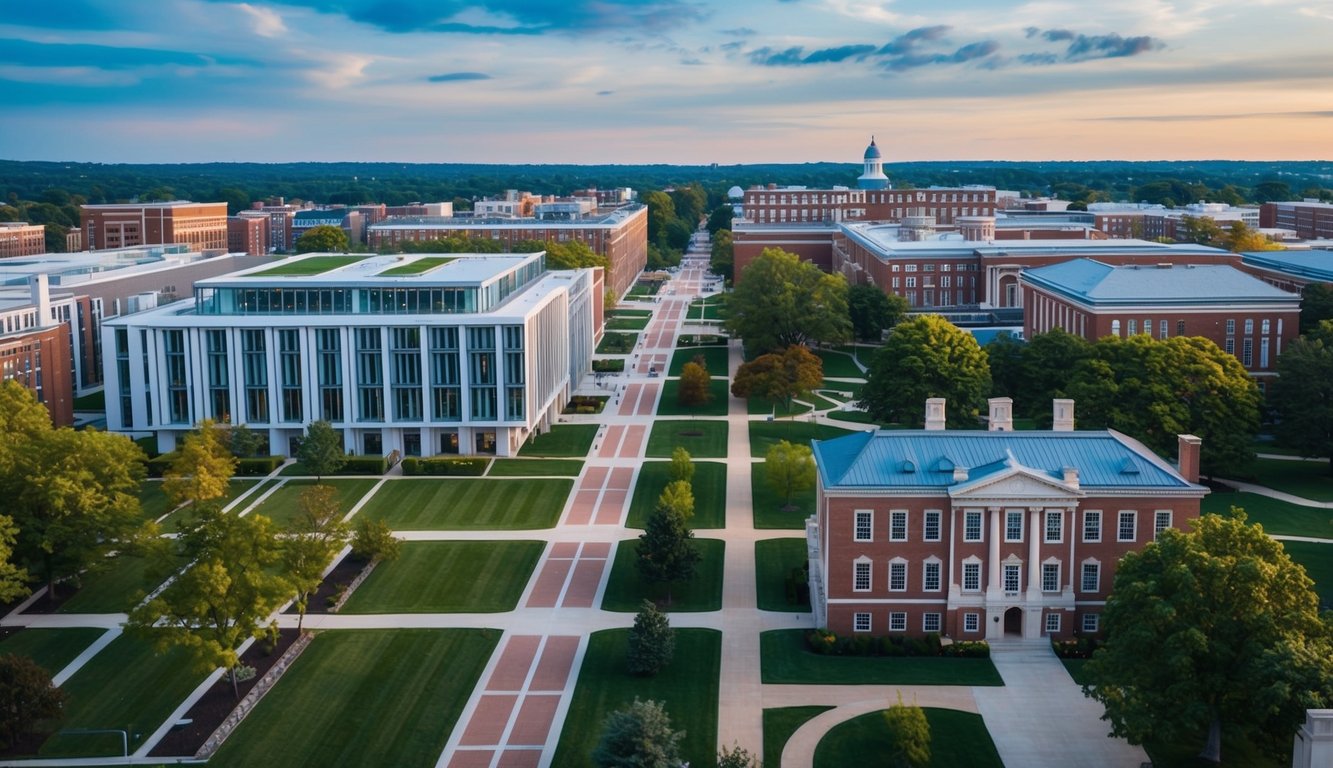
The Forbes New Ivies and traditional Ivy League schools create distinct pathways for student success through career preparation, networking connections, and advanced education opportunities.
Their different approaches lead to varied but equally valuable outcomes for graduates.
Career Prospects Post-Graduation
The New Ivies 2025 show impressive employment results that often match or exceed traditional Ivy League schools.
Employers increasingly value these institutions for their focus on practical skills alongside academic excellence.
Starting Salary Comparison (Class of 2024)
| School Type | Median Starting Salary | Employment Rate (6 months) |
|---|---|---|
| New Ivies | $76,500 | 93.2% |
| Ivy League | $81,200 | 94.7% |
Many New Ivy graduates report greater Job readiness is a key factor for employers when considering Ivy League candidates. than their Ivy peers.
Employers praise New Ivy grads for their combination of technical knowledge and practical experience, often highlighted in Forbes surveys.
Universities like Northwestern have developed industry partnerships that create direct employment pipelines not always available at Harvard or Yale.
These connections give students access to internships that frequently convert to full-time offers.
Networking and Alumni Relations
While traditional Ivy League schools boast centuries-old alumni networks, the New Ivies have developed robust communities that offer comparable advantages in different forms.
Alumni Network Comparison
- Ivy League: Extensive global reach, strong in finance, law, and politics
- New Ivies: Growing rapidly, stronger in tech, healthcare, and emerging fields
- Mentorship Programs: Both offer structured connections, with New Ivies focusing more on career-specific matching
Yale and Harvard maintain powerful legacy networks that span generations and industries. These connections often open doors through family and institutional ties.
New Ivy alumni tend to be more accessible to current students, with higher participation rates in mentorship programs.
Many New Ivies report alumni engagement rates exceeding 45%, compared to around 30% at some traditional Ivies.
Graduate and Professional School Admissions
Both institution types prepare students well for advanced education, though with different strengths and advantages for various programs.
Graduate School Acceptance Rates
| Program Type | New Ivy Graduates | Ivy League Graduates |
|---|---|---|
| Medical School | 72% | 85% |
| Law School | 87% | 91% |
| MBA Programs | 79% | 75% |
| STEM PhD Programs | 68% | 70% |
Traditional Ivy League credentials carry significant weight for medical and law school admissions.
Harvard and Yale graduates enjoy acceptance rates to top medical schools nearly 15% higher than the average.
New Ivy students often gain advantages through specialized research opportunities and faculty connections in targeted fields.
This creates pathways to highly competitive programs in emerging technologies and interdisciplinary studies.
For business school admissions, work experience quality increasingly outweighs undergraduate pedigree, benefiting New Ivy graduates with strong industry experience.
Cultural and Social Fabric of Campuses

The campus environments at both the Forbes New Ivies and traditional Ivy League institutions shape student experiences through distinctive traditions and community values.
These institutions have developed unique social atmospheres that reflect their historical contexts and evolving approaches to student life.
Campus Life and Traditions
At traditional Ivy League schools, campus life often revolves around centuries-old traditions. Harvard features its famous Housing Day when freshmen learn which residential house they’ll join.
Students at these institutions experience a blend of academic rigor and time-honored rituals that create strong alumni bonds.
The New Ivies have developed their own unique identities, often highlighted in Forbes’ New Ivies 2025. meaningful traditions. Northwestern’s “Painting The Rock” allows student groups to express themselves through a constantly changing campus landmark.
Many Cornell University students participate in Dragon Day, where architecture students parade a dragon they’ve built around campus. These activities foster community and shared identity.
Diversity and Inclusivity Initiatives
New Ivies have made significant strides in creating diverse campus communities. Northwestern reports 42% students of color In its recent freshman class, the University of Texas at Austin’s diversity initiatives include specialized recruitment programs targeting underrepresented groups, similar to those at public ivies.
Traditional Ivies have also prioritized inclusivity. Brown University operates an extensive Diversity and Inclusion Action Plan focusing on curriculum, faculty hiring, and student support services.
Their Open Curriculum allows students to design personalized educational journeys.
Many schools now offer affinity housing options, cultural centers, and specialized programming to support diverse student populations.
Columbia University maintains dedicated spaces for various cultural groups and hosts regular dialogues on social justice issues.
Both institutional categories continue evolving their approaches to create truly inclusive environments where students from all backgrounds can thrive academically and socially.
The Future Outlook for Higher Education
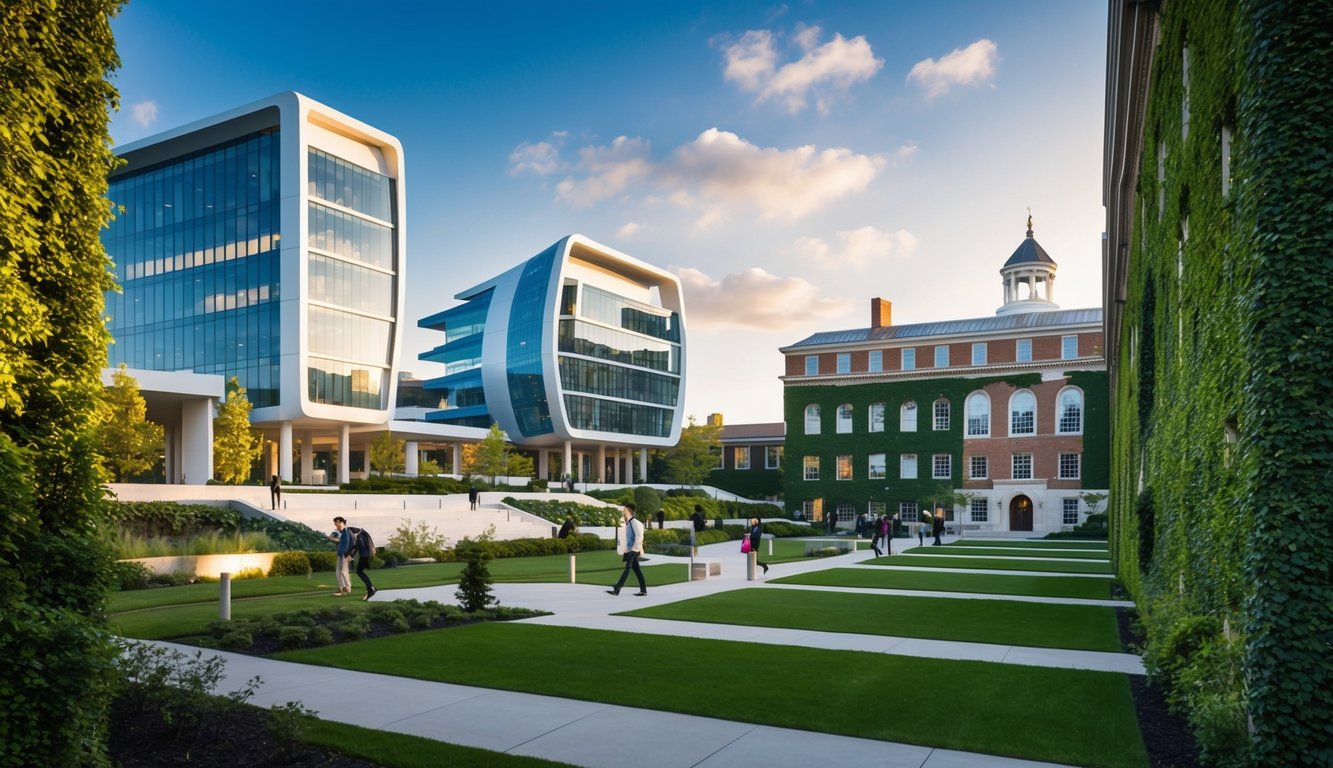
Higher education in America stands at a crossroads where traditional prestige metrics are being challenged by employment outcomes and educational innovation.
The evolving landscape suggests significant shifts in how we value institutions beyond the historical Ivy League dominance.
Challenges Facing Elite Institutions
Traditional Ivy League schools like Harvard and Yale face mounting pressure from employers who are increasingly skeptical of their graduates’ preparedness.
According to Forbes’ recent survey, 40% of employers believe Ivy League schools are doing a worse job preparing entry-level candidates than five years ago.
These elite institutions must address concerns about:
- Practical skills gaps in graduates
- Decreasing employer preference (37% of employers reported being less likely to hire Ivy graduates)
- Rising costs without proportional value increase
- Diversity challenges in student populations
The growing disconnect between academic prestige and workforce readiness creates vulnerability for institutions that rely heavily on historical reputation rather than adaptation.
For example, a New Ivy in Forbes 2025 List, The United States Naval Academy at West Point is highly praised for training exceptional graduates with strong leadership abilities, technical knowledge and problem-solving skills, and proven career outcomes and prestigious employer recognition.
Evolving Definitions of Prestige and Excellence: Dynamic Employers´ Needs in Job Market Candidates
The concept of educational excellence is undergoing a fundamental transformation, particularly among institutions on Forbes’ list. “New Ivies” like West Point, University of Pittsburgh and Purdue University are gaining recognition for balancing academic rigor with practical preparation.
What defines prestige in 2025:
| Traditional Metrics | Emerging Value Indicators |
|---|---|
| Selectivity | Career outcomes |
| Endowment size is a critical factor that differentiates institutions on Forbes’ list from other public and private schools. | Employer satisfaction |
| Research output | Skills-based learning |
| Legacy history | Innovation adaptation |
University of Illinois Urbana-Champaign exemplifies this shift as a public institution gaining elite status through employer recognition rather than centuries of tradition.
This democratization of prestige creates pathways for more institutions to achieve “elite” status through demonstrable outcomes.
Predicting Future Trends in University Rankings
The trajectory of higher education rankings suggests continued erosion of Ivy League dominance.
By 2030, experts predict a more diversified ecosystem of prestigious institutions based on specialized strengths rather than overall brand.
Key future trends include:
- Employer-influenced metrics will gain prominence in rankings systems
- Public universities will continue closing gaps with private institutions
- Specialized excellence will outweigh general prestige
- ROI calculations will incorporate more sophisticated career outcome data
You can expect rankings to increasingly feature schools like those in the New Ivies list that demonstrate exceptional value and outcomes in specific domains rather than attempting to excel at everything simultaneously.
Frequently Asked Questions
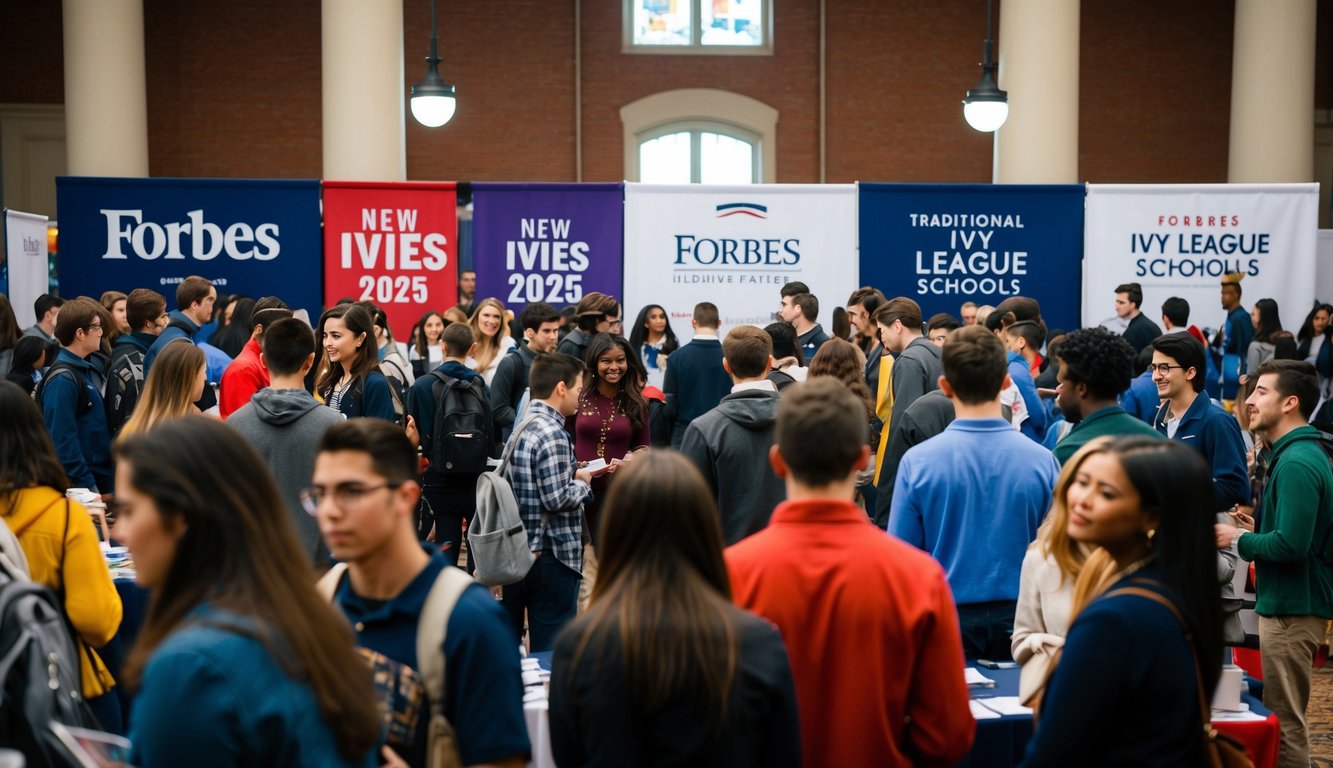
The Forbes New Ivies 2025 list has sparked significant discussion about how these institutions compare to traditional Ivy League schools.
These questions address key differences in academics, employment outcomes, institutional characteristics, and financial considerations.
How do the academic standards of the Forbes New Ivies 2025 compare to traditional Ivy League schools?
The Forbes New Ivies maintain rigorous academic standards. These are increasingly competitive with traditional Ivy League institutions.
According to employer surveys, many New Ivies offer comparable or even more relevant academic preparation for today’s workforce.
Four in ten employers surveyed by Forbes believe that traditional Ivy League schools are doing a worse job at preparing entry-level job candidates than they were five years ago.
This suggests a narrowing gap in perceived academic quality.
Many New Ivies feature lower student-to-faculty ratios than some Ivy League schools. This could offer more personalized instruction and mentorship opportunities.
What are the characteristics that distinguish the institutions listed as 2025 Forbes New Ivies List?
The Forbes New Ivies are characterized by strong employer relationships, innovative curricula, and exceptional career preparation programs.
They typically demonstrate excellence in specific areas rather than trying to excel across all disciplines.
These institutions often feature specialized programs that directly align with industry needs. This is particularly true in emerging fields like data science, artificial intelligence, and sustainability, which are also emphasized at the University of Chicago.
Many New Ivies emphasize experiential learning through robust internship programs, co-ops, and research opportunities. These prepare students for immediate workplace success after graduation.
Which colleges have been added to the 2025 edition of the Forbes New Ivies list?
The 2025 Forbes New Ivies list includes 20 institutions that have gained significant recognition from employers.
The list includes 6 new-comers, such as: West Point, Pittsburgh University, Purdue University, William and Mary, University of Washington at St. Louis and Tufts University.
Vanderbilt University stands out as one of the prominent selections, particularly for its excellence in business and law education and the most competitive admissions rate.
The list deliberately excludes traditional Ivy League and “Ivy-plus” schools. This is to highlight alternative institutions that may not have the historical prestige but deliver exceptional educational and career outcomes.
Several institutions with strong STEM programs have been added to the 2025 list.
This reflects the growing employer demand for graduates with technical expertise combined with critical thinking skills.
How do employment outcomes for graduates of the Forbes 2025 New Ivies List differ from those of traditional Ivy League alumni?
Employment data shows that New Ivies graduates are increasingly competitive with Ivy League alumni in the job market.
According to Forbes’ employer survey, many companies are more likely to hire from non-Ivy private colleges than they were five years ago.
Starting salaries for New Ivies graduates in certain fields often match or exceed those of Ivy League graduates, especially when comparing schools with specialized strengths in these areas.
Employers report that New Ivies graduates often demonstrate stronger practical skills and workplace readiness.
This is compared to some Ivy League graduates who may have more theoretical knowledge but less applied experience.
In what ways do the Forbes New Ivies 2025 List promote diversity and inclusion compared to traditional Ivy League institutions?
Many Forbes New Ivies have made significant strides in creating diverse and inclusive campus communities.
Several New Ivies have higher percentages of first-generation college students and students from underrepresented backgrounds than traditional Ivy League schools.
These institutions often implement innovative support systems specifically designed to ensure the success of students from all backgrounds.
This includes mentorship programs, affinity groups, and targeted academic resources.
The New Ivies frequently offer more flexible admissions policies.
These consider a wider range of student achievements and potential, rather than relying heavily on standardized testing and legacy preferences.
What are the financial implications for students choosing between a Forbes New Ivy and a traditional Ivy League School?
The average cost of attendance at Forbes New Ivies is typically lower than at traditional Ivy League institutions.
The gap ranges from $5,000 to $15,000 per year, depending on the specific schools being compared.
Ivy League schools often offer generous need-based aid. However, many New Ivies provide substantial merit-based scholarships that aren’t available at most Ivy League institutions.
This makes them potentially more affordable for middle-income families, as noted in a Forbes survey.
Return on investment calculations increasingly favor certain New Ivies in Forbes List.
Final Thoughts on Forbes New Ivies 2025 vs Traditional Ivy League Schools
This analysis reflect significant changes in an evolving and dynamic higher education space and the importance of employers´ perspectives, in addition to the return on investment through career outcomes. This is especially true for specific career paths, where the slightly lower tuition costs combined with comparable starting salaries result in a better long-term financial future.
Copyright © 2025 BFFS Scholar Quest. All Rights Reserved.
For inquiries, please contact directly to: scholars@bestfullyfundedscholarships.com
View our Recent Content here!
- Part Time Data Entry Jobs
- Masters with Scholarships
- Recommendation Letter
- How to Study for the TOEFL
- Business Administration