Fulbright Program Scholarship: 2025-2026 Application Guide and Tips for Success
Dreaming of studying overseas and leaving a mark on the world for 2026?
The Fulbright Scholarship opens the door to an unforgettable adventure that can change your life forever.
This prestigious program offers U.S. citizens the chance to teach, research, or study in over 135 countries.
Introduction
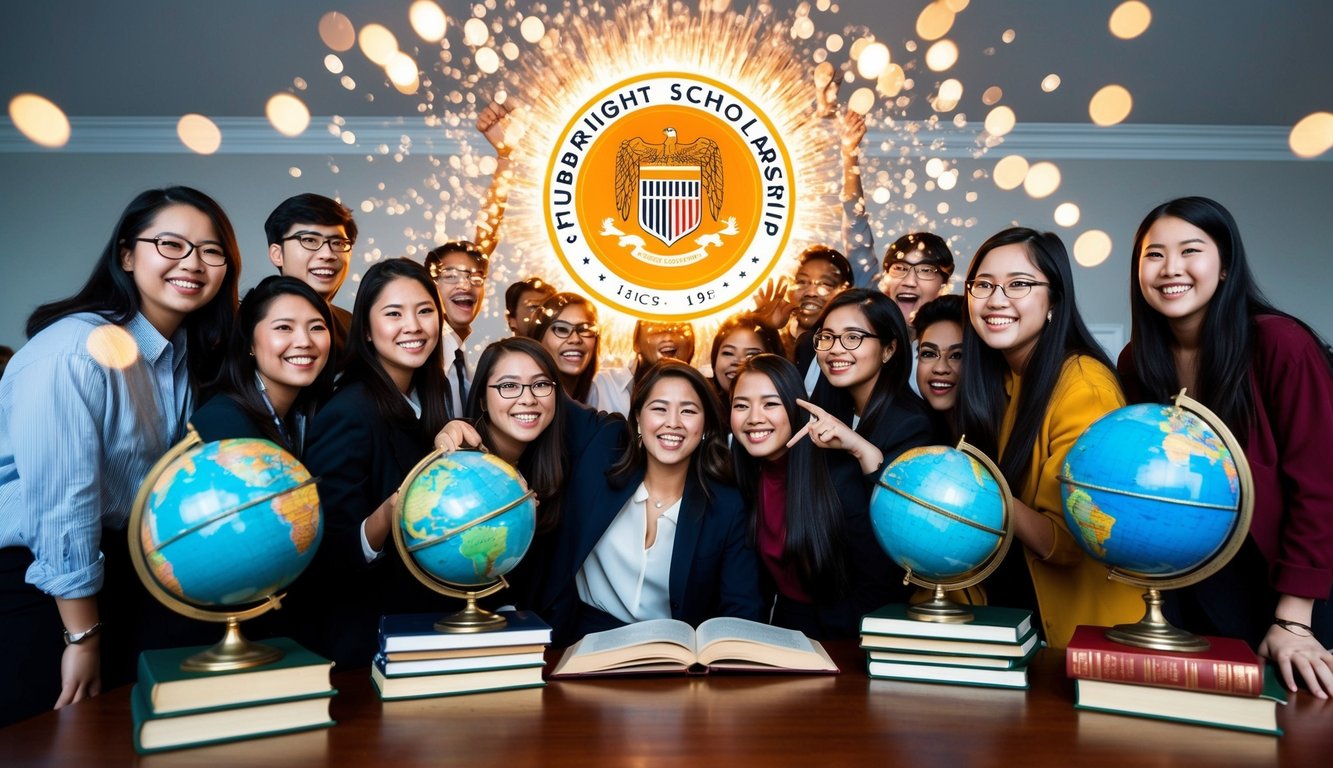
The Fulbright Program is more than just a scholarship; it is an exchange program that fosters international collaboration.
It’s a gateway to cultural exchange and mutual understanding between nations.
Since its start in 1946, it has helped thousands of students and professionals broaden their horizons and make lasting connections worldwide.
Applying for a Fulbright award might seem daunting, but the rewards are worth it.
You’ll join a network of accomplished individuals and gain skills through the Fulbright Scholar Program that can boost your career.
Plus, you’ll have the chance to represent your country and make friends from all corners of the globe.
Key Takeaways
- The Fulbright Program offers diverse opportunities for study, research, and teaching abroad
- Applicants should focus on academic merit and cross-cultural engagement
- Fulbright awards provide financial support and valuable international experience
History and Mission of the Fulbright Program Scholarship

The Fulbright Program has shaped international education and cultural exchange since its creation.
It aims to boost understanding between the U.S. and other countries through academic grants.
Establishment and Evolution
The Fulbright Program began in 1946 after World War II. Senator J. William Fulbright proposed it to promote peace through education exchanges.
At first, it focused on a few European countries. Over time, it grew to include over 160 countries.
The program started small but expanded quickly. By the 1960s, thousands of students and scholars took part each year.
The U.S. government funds most of the program. Partner countries also chip in resources.
Goals and Impact on International Relations and International Understanding
The Fulbright Program’s main goal is to increase mutual understanding between Americans and people from other nations.
It does this through academic, artistic, and cultural exchanges.
Fulbright grants let students, teachers, and pros study, teach, and do research abroad.
This helps build ties between countries. It also spreads knowledge across borders.
The program has had a big effect on global ties.
Over 400,000 people from the U.S. and abroad have taken part since 1946. Many Fulbright alumni have become leaders in government, business, and the arts.
Programs and Participants: Academics and Professionals

The Fulbright Scholarship offers a range of programs for U.S. citizens and includes opportunities for graduate students. foreign nationals.
These programs support research, teaching, and cultural exchange across many academic fields.
Fulbright Distinguished U.S. Scholar Program
This program gives U.S. faculty, administrators and professionals grants to teach or do research abroad.
You can apply if you have a Ph.D. or equivalent is often required for graduate students applying to the Fulbright Scholar Program. degree.
Some grants are also open to artists and other pros without doctoral degrees.
The program covers many academic areas.
You might teach American literature in Spain or study climate change in Norway. Grants usually last from 3 to 12 months.
To apply, you need:
- U.S. citizenship
- A strong academic record
- Relevant work experience
- A clear project plan
The program aims to boost global understanding through academic exchange.
Fulbright Foreign Student Program
This program brings students from other countries to study in the U.S. You can get a master’s degree or Ph.D., or do research.
The program is open to students from over 160 countries. Each country has its own rules for applying. But in general, you need:
- A bachelor’s degree
- Good grades
- Strong English skills
- A clear study plan
Grants usually cover:
- Tuition
- Living costs
- Health insurance
- Travel to and from the U.S.
The program helps create global leaders and boosts ties between countries.
Fulbright Visiting Scholar Program
This program brings non-U.S. scholars to the U.S. for research or teaching.
You can apply if you’re a teacher, researcher, or professional from another country interested in the Fulbright Scholar Program.
Grants last from 3 to 12 months. You might do research at a U.S. lab or teach your native language at a college.
To apply, you usually need:
- A Ph.D. or equal degree
- Relevant work experience
- Good English skills
- A clear project plan
The program helps spread knowledge and build global links in academia.
Fulbright Specialist Program
This program sends U.S. pros on short-term projects abroad. It’s for experts in many fields, from business to public health.
Projects last 2 to 6 weeks. You might help design a new course or advise on a museum exhibit.
To join, you need:
- U.S. citizenship
- At least 5 years of pro experience
- A Ph.D. or equal degree (in some fields)
The program offers a quick way to share U.S. expertise worldwide.
Fulbright U.S. Student Program
This program lets recent U.S. grads, master’s and doctoral students, and young pros study, research, or teach English abroad.
It’s a chance to learn about other cultures while sharing your own.
Grants usually last 9-12 months. You might study marine biology in Australia or teach English in South Korea as part of the exchange program.
To apply, you need:
- U.S. citizenship
- A bachelor’s degree (by the start of the grant)
- A strong academic record
- Clear project goals
The program helps create future leaders with a global outlook.
Application Process and Requirements: Fulbright Opportunities

The Fulbright Scholarship has specific steps and criteria for applicants. These cover who can apply, what documents are needed, and how winners are picked.
Eligibility Criteria
To apply for a Fulbright U.S. Student grant, you must:
- Be a U.S. citizen
- Have a bachelor’s degree or equivalent before the grant starts
- Be in good health
- Have sufficient language skills for your project
Your GPA matters, but there’s no set minimum. Strong candidates often have GPAs of 3.7 or higher.
You can’t apply if you:
- Have a doctorate at the time of application
- Have lived outside the U.S. for 5 or more years in the 6-year period before applying
- Are currently enrolled in a graduate program outside the U.S.
Documentation and Prerequisites
When you apply, you’ll need to submit your application for the foreign Fulbright Program.
- Academic records
- Three letters of recommendation
- A statement of purpose
- A personal statement
You may also need to take language tests. For non-English speaking countries, you might need to prove your skills in the local language.
For English-speaking countries, you may need to take the TOEFL or IELTS if English isn’t your first language.
The application deadline is usually in October for grants starting the following academic year.
Selection Procedure
The selection process has several steps:
- Initial screening by the Institute of International Education
- Review by the National Screening Committee
- Approval by the J. William Fulbright Foreign Scholarship Board
Factors considered include:
- Academic record
- Language preparation
- Quality of project proposal
- Personal qualifications
- Country priorities
The process is competitive. Only about 20% of applicants are chosen each year.
Interviews may be part of the selection process. If picked, you’ll be notified in the spring before your grant year starts.
Financial Aspects and Support Structures

The Fulbright Scholarship offers wide-ranging financial support. This covers many costs and comes from various sources.
Scholarship Coverage
Fulbright Scholarships pay for most expenses. These often include:
- Tuition fees
- Living costs
- Travel expenses are often covered by the Fulbright Scholar Program, making international opportunities more accessible.
- Health insurance
The exact amount varies by country and program. Some awards may also provide:
- Book and research allowances
- Language training funds
- Dependent allowances for family members
It’s key to Check the specific award details for the student program that provides grants for your area of interest..
Each grant has its own terms. You should plan your budget carefully based on the coverage offered.
Funding Agencies
The U. S. Department of State is the main funder of Fulbright Scholarships.
It gets money from Congress each year for this purpose.
These scholarships provide opportunities for students, scholars, and professionals to engage in research, study, and teaching abroad.
Many recipients pursue specialized programs, such as economics studies scholarship through prestigious Fulbright scholarships, which enhance their academic and professional development.
The program not only fosters international cooperation but also builds relationships between the United States and other countries, promoting mutual understanding and cultural exchange.
Other key funders include:
- Host countries and institutions
- Private donors and foundations
- U.S. embassies
The Institute of International Education (IIE) helps manage the program in the U.S. AMIDEAST does this in some Middle Eastern countries.
Funding amounts can change yearly. They depend on budget approvals and global events. You should always check the latest info when you apply.
Educational and Professional Opportunities

The Fulbright Scholarship opens doors to amazing chances for learning and career growth. It lets you study, teach, and do research in many fields around the world.
The Fulbright Scholarship not only fosters academic and cultural exchange but also encourages recipients to become leaders in their respective fields.
Known for its rigorous selection process, it is one of the most sought-after competitive scholarship opportunities, attracting talented individuals from across the globe.
This prestigious program empowers scholars to gain unique perspectives, build international networks, and make a lasting impact in a globalized world.
Fields of Study and Research Opportunities
The Fulbright U.S. Scholar Program offers over 400 awards in more than 135 countries. You can apply for grants in almost any academic area. Popular fields include:
- STEM subjects
- Social sciences
- Arts and humanities
- Business and economics
- Public health
You can do research at top labs and institutions worldwide. Many scholars work on projects that tackle global issues like climate change or public health.
The program also has special initiatives. These focus on key topics like the Arctic or Amazon regions.
You get to work with experts from different countries on big challenges.
University Placements and Academic Collaboration
As a Fulbright scholar, you can teach or study at schools across the globe. The program works with over 160 countries.
You might lecture at a foreign university or take graduate courses abroad.
Some key benefits:
- Access to world-class facilities and resources
- Chance to learn new teaching methods
- Opportunity to build international research teams
You can also join academic projects with local experts.
This helps create lasting ties between U.S. and foreign schools through educational and cultural exchanges.
Fulbright Alumni Achievements and Network
Fulbright alumni have gone on to conduct research and do great things in various fields. The program has produced:
- 60 Nobel Prize winners
- 88 Pulitzer Prize recipients
- 39 heads of state or government
You join a network of over 400,000 alumni when you finish. This group includes leaders in many fields. As an alum, you can:
- Get career advice from top pros
- Find job leads through Fulbright contacts
- Attend special events and conferences
The alumni network helps you keep growing long after your grant ends. It’s a powerful tool for your career.
Frequently Asked Questions

The Fulbright Scholarship has specific rules and processes. These cover who can apply, how to apply, and what the award provides.
What are the eligibility requirements for the Fulbright Scholarship for 2025 – 2026?
You need to meet certain criteria to apply for the Fulbright Scholar Program. A key requirement is U.S. citizenship.
Your academic record is also important. You usually need a bachelor’s degree before the grant begins.
Some programs may have extra rules. These can include language skills or work experience.
How can international students apply for the Distinguished Fulbright Scholarship?
If you’re not a U.S. citizen, you can still apply for a Fulbright Scholarship. The process is different from U.S. applicants.
You need to contact the Fulbright Commission or U.S. Embassy in your home country for information on the foreign language requirements. They manage the application process for international students.
Each country may have its own deadlines and requirements. Check early to make sure you don’t miss anything.
What is the acceptance rate for the Fulbright Scholarship?
The Fulbright Scholarship is very competitive. Exact acceptance rates can vary by country and program type.
Generally, the acceptance rate is low. This reflects the high number of applicants and the scholarship’s prestige.
Your chances may depend on factors like your field of study and the country you’re applying to.
By when do applicants need to submit their Fulbright Scholarship applications?
Deadlines for Fulbright Scholarships change based on the program and country.
For U.S. scholars, the main competition opens in February and closes in mid-September. Some special programs, like International Education Administrator awards, may have different timelines.
It’s best to check the official Fulbright website or your local Bureau of Educational and Cultural Affairs office for exact dates.
How much financial support does the Fulbright Scholarship provide?
The Fulbright Scholarship typically covers your basic expenses. This usually includes a living stipend and travel costs.
Some Fulbright Scholarships don’t cover full tuition fees. There are some exceptions, like the Fulbright-Anne Wexler Scholarship and Fulbright Future Scholarships.
The exact amount can vary by country and program. It’s designed to cover your living costs while you study or research abroad.
What are the steps involved in the Fulbright Scholarship application process?
The application process has several steps. First, you need to check if you’re eligible and choose a program.
Next, gather the required documents. These often include transcripts, letters of recommendation, and a project proposal.
Then, you’ll submit your application online as part of the student program that provides grants for international study. If you’re selected, you may have an interview.
The final step is waiting for the results. This can take several months after the application deadline.
View our Recent BFFS Scholar Quest Content here!
- 25 Fully Funded Scholarships Hungary: International Students 2026
- 25 Fully Funded Scholarships in Poland: International Students 2026
- 25 Fully Funded Scholarships Hong Kong International Students ´26
- 25 Fully Funded Scholarships in Taiwan: International Students 2026
- 19 Fully Funded Scholarships in Luxembourg: International 2026