
Harvard University International Students Transfer Guide 2025: Admission Steps and Key Requirements

Key Highlights
Are you an international student at Harvard University facing transfer questions or possible changes in your plans for 2025?
The Harvard international students transfer guide 2025 gives you essential information about your transfer options, deadlines, and available support.
This guide provides the latest facts, step-by-step instructions, and expert advice for transferring as an international student at Harvard.
Immediate Transfer Support: Harvard international students facing policy changes in 2025 can access dedicated transfer counseling at the Harvard International Office.
Emergency guidance helps with urgent status changes or visa issues.
Verified Transfer Deadlines: Top U.S. universities have Spring 2025 transfer application deadlines between November 1, 2024 and January 15, 2025.
The Fall 2025 deadlines range from March 1, 2025 to April 15, 2025.
Required Documents Checklist:
Document Required for Transfer Notes Official Transcripts Yes All colleges attended IELTS/TOEFL Scores Yes If English is not native Recommendation Letters Yes 1-2 required Statement of Purpose Yes Explain transfer reason Financial Documents Yes Proof of funding Valid Passport Yes Must be current Visa Guidance: You need to transfer your SEVIS record.
Contact your current and future university’s international advisor before you make travel plans.
Rolling Admission: Some U.S. universities offer rolling transfer admissions.
This lets you apply and receive decisions throughout the year.
Application Process:
- Check each university’s requirements.
- Gather your application materials and update your resume.
- Submit your applications through the Common App or direct portals.
- Request your SEVIS transfer and notify the Harvard International Office.
Expert Quote:
“International students should follow official guidance and check deadlines early to ensure a smooth transfer process,” says an advisor from Harvard’s International Office.Support Contacts: Contact the Harvard International Office and visit EducationUSA for more resources.
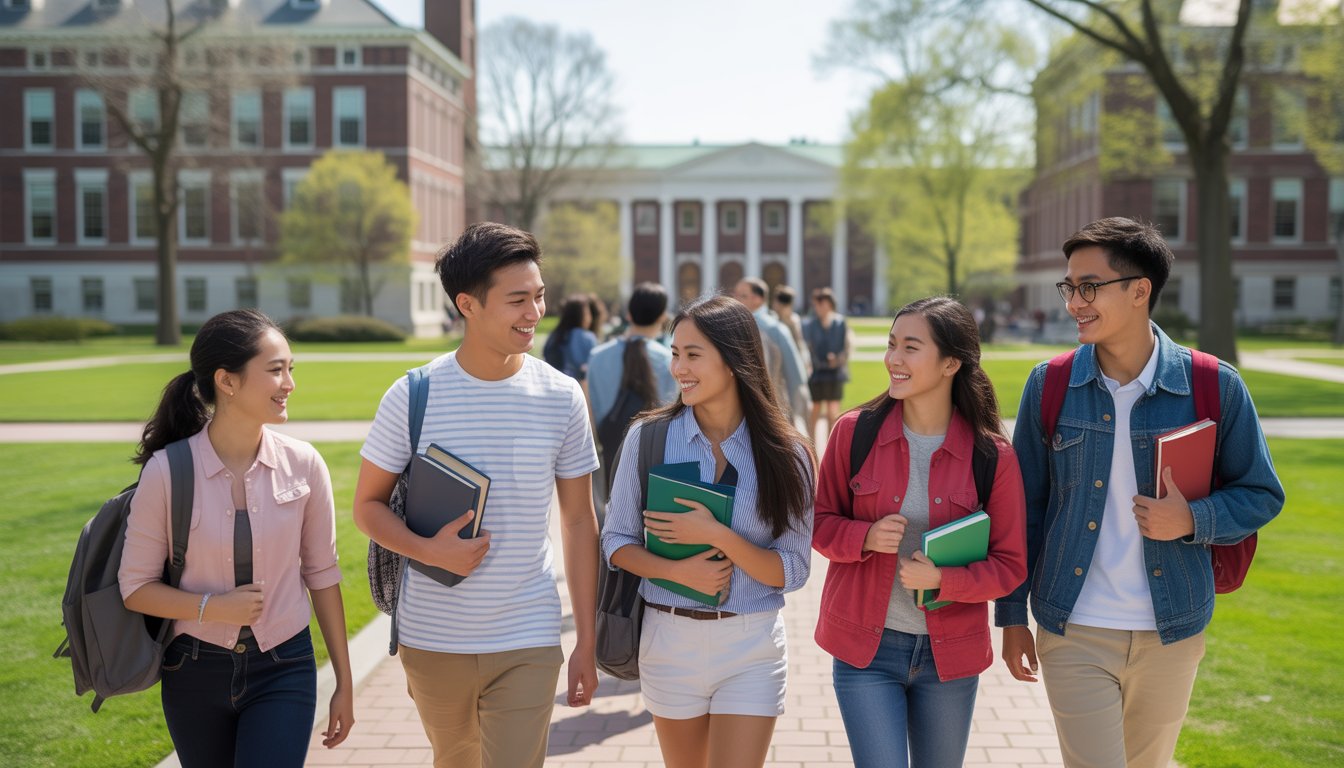
International students often need clear answers because U.S. policies and Harvard requirements can change quickly.
If you are on campus or preparing to arrive for Fall 2025, you will find step-by-step guidance and important information on transfer timelines, application details, and resources for international students.
You will also find direct links to helpful scholarship reviews and information on transfer experiences, including this systematic review of international students’ experiences and challenges.
Learn what you need to do now to stay on track with your education and keep your options open.
This guide includes legal advice, contact information, campus support, and expert tips to help you make informed choices as a Harvard international student.
Key Takeaways
- Get accurate transfer deadlines, steps, and requirements for Harvard international students.
- Find current policy updates, support services, and key campus resources.
- Learn your best options for Spring and Fall 2025 transfers.
Eligibility Requirements for Transfer Applicants from Harvard University

Harvard University sets strict academic and paperwork requirements for international students who want to transfer.
You must meet specific standards, provide official paperwork, and follow all deadlines during your transfer process.
Academic Criteria
You must complete at least one full academic year of college coursework at an accredited university by June of your transfer year.
High school credentials are not enough.
Most accepted transfer students have outstanding academic records, including a GPA of 3.8 or higher (on a 4.0 scale).
Meeting only the minimum does not guarantee admission.
Harvard looks for challenging courses like advanced math, science, and humanities.
You need to submit official copies of your transcripts from every university you have attended.
Harvard prefers students who have not completed more than two years of full-time college study by the time of transfer.
If you have already earned a bachelor’s degree, you are not eligible.
Checklist: Harvard Transfer Academic Requirements
| Requirement | Details |
|---|---|
| Minimum College Credits | 1 full academic year by June 2025 |
| GPA (recommended) | 3.8+ |
| Maximum College Credits | No more than 2 years full-time |
| Bachelor’s Degree Completed? | Not eligible if already earned |
| Required Subjects | Math, science, humanities, etc. |
| Official Transcripts Needed | Yes, from all colleges/universities |
Certification and Documentation Needs
You must collect several important documents for your transfer application.
Official transcripts from all current and previous colleges and universities are required.
If your documents are in another language, you need to provide certified English translations.
You must also submit a School Report, a College Instructor Evaluation, and the Mid-Term Report form showing current grades.
A university official or instructor must complete each form and submit it by the deadline.
As an international student, you must show English language proficiency with TOEFL or IELTS scores unless you studied in a country where English is the main language.
Check the 2025 Harvard transfer deadlines carefully—usually, applications are due by March 1, 2025 for fall entry.
Visit Harvard’s official transfer guide for exact dates and more requirements.
Required Documentation Table
| Document | Required for International Students? | Details |
|---|---|---|
| Official College Transcripts | Yes | Submit for all colleges attended, with English translation if not in English |
| School Report | Yes | Completed by college official |
| College Instructor Evaluation | Yes | Completed by at least one college instructor |
| Mid-Term Report | Yes | Must show current grades from ongoing courses |
| English Proficiency Test Scores | Yes (unless educated in English) | TOEFL, IELTS, or similar; required if native language is not English |
| Valid Passport | Yes | Must match name on your application |
Application Process for International Student Transfers

As an international student transferring from Harvard, you must meet strict deadlines and gather the correct documents.
Understand how Harvard will evaluate your previous coursework and make sure your application matches the 2025 requirements.
Application Timelines and Deadlines
For Spring 2025, most top U.S. universities open transfer applications in September. Deadlines usually fall between October 1 and November 15. Fall 2025 transfer applications open in December and close between February 1 and March 15.
Some universities offer rolling admissions. Apply early for the best chance of acceptance.
Deadlines Table (Spring & Fall 2025):
| University | Spring 2025 Deadline | Fall 2025 Deadline | Rolling Admissions |
|---|---|---|---|
| Stanford | Nov 1, 2024 | Mar 1, 2025 | No |
| Yale | Nov 15, 2024 | Mar 15, 2025 | No |
| Columbia | Oct 15, 2024 | Mar 1, 2025 | No |
| NYU | Nov 1, 2024 | Mar 1, 2025 | Yes |
| UCLA | Nov 30, 2024 | Jan 31, 2025 | No |
Set reminders for application portals like the Common Application transfer platform. Check each university’s website for any changes in dates.
Required Supporting Materials
You must submit:
- Official transcripts, including Harvard courses
- Proof of English proficiency (TOEFL, IELTS, Duolingo)
- Letters of recommendation, preferably from Harvard professors
- A statement of purpose
- Resume or CV (for graduate students)
- Valid passport and current visa copy
- Financial documentation (bank statements or sponsor letters)
- SEVIS record transfer (Form I-20 for most U.S. colleges)
Quick Checklist:
- Translate all records if they are not in English.
- Notify Harvard’s Registrar and International Office before requesting documents.
- Prepare digital and paper copies for each university.
- Follow Harvard International Office guidelines for official document requests.
Graduate students often need GRE/GMAT scores and a detailed research or professional history.
Transferring Credits Evaluation
Each university sets its own policies for reviewing previous coursework. General education and elective credits usually transfer more easily than major-specific classes.
Many top universities ask for syllabi and course descriptions for each class you want reviewed.
Transfer Credit Evaluation Steps:
- Obtain detailed Harvard course syllabi and descriptions.
- Submit them with your application or upload to the transfer portal.
- Expect initial, unofficial evaluations within 4-8 weeks.
- Official decisions usually arrive after admission offers.
- Minimum grade for credit transfer is usually “B” or higher.
Key Considerations Table:
| Factor | Typical Requirement |
|---|---|
| Minimum Transferable Grade | B or higher |
| Max Transferable Credits | 60-90 (varies by school) |
| Required Documents | Syllabi, course descriptions |
Review each university’s transfer admissions policies and contact admissions early about department-specific rules.
Visa and Immigration Policies

International students transferring from Harvard face unique visa regulations and strict reporting requirements. Stay updated with U.S. immigration rules to protect your legal status and academic future.
Student Visa Types and Acquisition
Most Harvard international students use the F-1 visa. Some students hold J-1 or M-1 visas.
Table: Common Student Visas for Harvard Transfers
| Visa Type | Use Case | Renewability | Dependents Allowed |
|---|---|---|---|
| F-1 | Academic (undergrad/grad) | Yes | Yes (F-2) |
| J-1 | Exchange Visitor | Sometimes | Yes (J-2) |
| M-1 | Vocational/Technical | Limited | Yes (M-2) |
You need a new Form I-20 (F-1/M-1) or DS-2019 (J-1) from your new school to transfer.
Transfer Steps:
- Request a transfer release from Harvard International Office (HIO).
- Apply to your new school and provide proof of acceptance.
- Receive updated visa documents before the transfer release date.
- File all forms on time through the Department of Homeland Security’s SEVIS portal.
Reporting Requirements and Legal Status
The Department of Homeland Security (DHS) and the Student and Exchange Visitor Program (SEVP) require strict status reporting for international students.
Update your SEVIS record within 21 days of any changes, such as a transfer, new address, or updated funding.
Checklist: Legal Reporting Essentials
- Report transfer plans to HIO and DHS.
- Update your home and U.S. address in SEVIS within 10 days.
- Register for a full course load unless approved for a reduced course load.
- Keep your passport valid for at least 6 months into the future.
- Carry your I-20 or DS-2019 and other identification at all times.
If you fail to report, you may lose F-1, J-1, or M-1 status, which can affect your ability to study, transfer, or work. Use school advising services and visit the Study in the States portal for current rules.
Deportation Risks and Protections
Losing visa status is a serious risk. Common reasons include not following transfer protocols, dropping below full-time status, or providing false information.
Key Risks:
- Unreported transfer—can trigger SEVIS termination
- Enrollment gap of more than 5 months
- Unauthorized off-campus work
- Expired documents or overstaying visa duration
Protections and Steps in Case of Trouble
- Contact your Designated School Official (DSO) or HIO immediately if you have status issues.
- Seek legal help from organizations like NAFSA or EducationUSA.
- The DHS allows “reinstatement” in some honest error cases, but not all. The review can take months.
Table: Who to Contact for Urgent Help
| Issue | Contact | Link |
|---|---|---|
| Status/SEVIS issues | Harvard International Office | hio.harvard.edu |
| DHS procedural/allegation questions | SEVP Response Center | ice.gov/sevis |
| Legal emergencies | Immigration attorneys | uscis.gov/students |
Harvard Campus Life and International Student Support

Harvard University offers specialized support services, strong inclusion programs, and resources for underrepresented groups. The campus is diverse, and students from all backgrounds receive tools to succeed in a new environment.
Orientation and Integration Programs
Harvard organizes orientation sessions and integration programs for new international students. These initiatives start with pre-arrival webinars and continue with Welcome Weeks on campus.
Harvard International Office (HIO) staff help with visa documentation, housing, class registration, health insurance, and banking as soon as you arrive.
Key orientation activities include:
| Activity | Description | Date |
|---|---|---|
| Pre-Arrival Webinar | Visa info, cultural prep, Q&A | July 10-20, 2025 |
| Check-in at HIO | Document check, I-20/DS-2019 processing | Aug 20-25, 2025 |
| Group Campus Tours | Led by current students, covers main sites | Aug 21-27, 2025 |
| Peer Mentor Matching | Connects you with a trained upperclassman | Aug 25, 2025 |
These programs help you settle into the student body and connect with mentors. You will meet other newcomers quickly.
HIO offers guidance about Harvard’s official orientation schedules and support. Check their site for updates.
Student Body Diversity and Inclusion
Harvard’s student body is one of the most internationally diverse in the US, with over 23% being international students in 2025.
The university tracks and publishes detailed enrollment figures. It supports student-led cultural groups, including those for Jewish students, Asian students, and African students.
Diversity and Inclusion Snapshot:
- Total enrolled students (2025): 22,400
- International students: 5,150
- Countries represented: 150+
- Major networks: International Students Association, Harvard Hillel (for Jewish students), African and Caribbean Student Association
Inclusion workshops take place every semester. These cover anti-bias training, cultural customs, and U.S. academic life.
Student government advocates for inclusion policies. Harvard’s Office for Equity, Diversity, Inclusion, and Belonging supports requests for community building events.
You can join more than 40 international student clubs and attend regular multicultural events.
Safe spaces are available for peer support. Harvard’s community values every background and story, giving you channels to voice your needs or concerns.
Resources for International Minority Students
Harvard provides dedicated resources for minority and underrepresented international students.
You have access to specialized advisors, counseling services, and grant support for sudden needs such as travel or emergency legal help.
Checklist – Key Support Services:
- Office of Diversity, Inclusion & Belonging (ODIB)
- Harvard College Women’s Center
- Harvard Hillel (Jewish student life)
- Harvard University Health Services (counseling, crisis lines)
- First Generation and Low-Income Students Office
- Legal Aid Bureau (immigration and housing help)
Grant programs help cover unexpected expenses like sudden visa issues or emergency airfare. Peer support networks are available 24/7 through chat groups and regular drop-in events.
Contact HIO, ODIB, or specific student affinity groups if you want tailored support.
More details about support for international and minority students at Harvard can be found in books about higher education and global student life.
Solutions and Opportunities for Harvard International Student Transfers

![Harvard campus with international students walking, holding documents ready for transfer, springtime, photo-realistic, AI-generated]
Immediate Steps if You’re Impacted
If you need to transfer because of a change in policy or a personal situation, start by gathering your key documents.
This includes your transcript, a copy of your current visa, and your financial records.
Check the official Harvard communications for updates and statements: Harvard GSAS Admissions, Harvard International Office.
“We are working to support every international student transition,” said Harvard International Office in January 2025.
Quick Action Student Checklist
| Action Item | Deadline |
|---|---|
| Request transcript | Within 2 days |
| Contact potential schools | Within 1 week |
| Review transfer credit policies | Within 5 days |
| Submit visa documents | Check each school |
| Update financial affidavits | With each application |
2025 Verified Transfer Deadlines and Top Options
Spring 2025
- Most US universities: January 15 – February 10
- Rolling admission: Some schools accept until March
Fall 2025
- Major deadlines: March 1 – May 15
Top Transfer-Friendly Schools Accepting International Students
- Stanford University
- Columbia University
- University of California, Berkeley
- New York University
- University of Toronto (Canada)
Find detailed and current deadlines on the Common App Transfer and Coalition for College sites.
Key Requirements for Transferring
- Official transcripts and syllabi
- Current, valid passport and visa documentation
- Proof of English proficiency
- Updated financial documents and affidavits
- Letters of recommendation
Find more details on documentation at studyinthestates.dhs.gov and educationusa.state.gov.
Support and Resources
If you have questions or need urgent help:
Counselors and transfer specialists can help review your case. They can give you advice on your next move.
Expert Tip
“Always keep your documents handy and review transfer requirements as they change fast in 2025,” recommends Tara Brooks, EducationUSA Advisor.
Act quickly and reach out early to schools and official offices for the smoothest transfer process.
Safety, Discrimination, and Campus Environment
Many international students at Harvard have questions about personal safety, discrimination, and the campus climate.
These concerns are especially timely as 2025 sees ongoing incidents that impact your daily experience, including antisemitism and student protests.
Unsafe Campus Concerns
Reports from student organizations and independent studies show that discrimination and antisemitic acts have increased across multiple U.S. campuses, including Harvard.
Jewish students and others have reported feeling unsafe in campus housing, libraries, and during large gatherings.
Key risks highlighted by safety surveys:
| Issue | % Reported Experiencing |
|---|---|
| Physical or verbal threats | 18% |
| Discrimination (racial/religious) | 22% |
| Unsafe campus areas at night | 35% |
In parking lots, shared dorms, or late-night campus spaces, students reported unsafe interactions. Language barriers and cultural differences make international students more vulnerable.
Harvard’s Office of Diversity & Inclusion tracks complaints and offers a contact point for support.
Seek support if you observe or experience pro-terrorist agitators, anti-American slogans, or direct threats.
Research on Melbourne safety for international students provides additional comparisons for global students.
Checklist: What to Do If You Feel Unsafe
- Contact campus police immediately
- Inform your Resident Dean or House Supervisor
- Use university escort services after dark
- Document and report all incidents (photos, screenshots, emails)
Protests and Free Speech on Campus
Harvard’s campus has seen increased student activism around international conflicts. Pro-Palestinian rallies and protests involving anti-American and pro-terrorist rhetoric have taken place.
For international students, these protests can feel intimidating. Some students experience discrimination as a result.
Table: Recent Protest-Related Incidents (Harvard, 2024-2025)
| Date | Type | Reported Incident |
|---|---|---|
| April 2025 | Sit-in | Library disruption, 2 arrests |
| March 2025 | March | Antisemitic slogans reported |
| February 2025 | Rally | Pro-terrorist chants, campus closure |
Harvard’s official policy supports free speech. The university prohibits hate speech, threats, and harassment.
The university encourages students to report all incidents to campus police or the Dean of Students.
Jewish community groups have set up safe spaces for affected students and urge everyone to respect differences and seek help if targeted.
Actions if You Encounter Discrimination During Protests:
- Avoid confrontations—move to a safe area
- Use your phone to record incidents
- Notify the university protest response team immediately
- Contact student legal services if you feel your rights are violated
Learn about protest etiquette, campus guidelines, and your rights as an international student. This knowledge will help you respond safely to campus disruptions.
For further reading on campus discrimination and safety, see this critical review of violence against international students.
Recent Legal and Political Developments Impacting International Students

Recent changes in U.S. law and policy affect how international students transfer or remain at Harvard. You need to know about new rules, major court decisions, and funding updates.
Trump Administration Policies and Implications
During the Trump Administration, the Department of Homeland Security (DHS) made it harder for international students to stay in the U.S. and transfer between schools.
DHS proposed limiting duration of status and added stricter rules for maintaining student visas.
A key proposal aimed to end the “duration of status” model. Students on F-1 visas would have fixed end dates, which would make it harder to extend stays during transfers.
Many student groups and universities, including Harvard, expressed concern about these changes.
Policy Impact Checklist:
| Policy Area | Changes Made | Result for Students |
|---|---|---|
| Duration of Status (D/S) | Proposed elimination | Risk of out-of-status for delayed transfers |
| Online Course Limits | Enforcement increased | Less flexibility during remote learning |
| OPT and H-1B regulations | Processing delays/limits | Tougher to get work authorization |
Quote:
“We are closely monitoring federal regulatory proposals that directly impact our students’ visa status and ability to transfer,” — Harvard International Office Official Statement (2024).
Federal Judge Rulings Affecting Transfers
Federal judges have stopped or adjusted several new policies that affected international students. In 2020, courts blocked the DHS order that would have forced international students out if classes went fully online.
Recent lawsuits have delayed or reversed rules about visa overstay counting. These decisions make your status more secure during unexpected delays.
Courts consider the hardships international students may face if forced to quickly transfer or leave due to bureaucratic slowdowns.
Important Federal Judge Decisions:
- July 2020: Blocked ICE order on remote classes
- 2023-2024: Delayed DHS ‘unlawful presence’ rules
Impact Table:
| Year | Court Ruling | Student Result |
|---|---|---|
| 2020 | Blocked class format rule | Kept F-1 students at Harvard safe |
| 2023-24 | Deferred overstay changes | Less risk during transfers |
Federal Grants and Funding Challenges and Opportunities
Pandemic relief measures and political debate changed how federal grants reach international students.
Most federal financial aid, like Pell Grants and Stafford Loans, still exclude non-U.S. citizens.
Congress tied some grant access to citizenship. Universities have used institutional support and private funds to fill these gaps.
For 2025, Harvard and other top universities stress alternative funding for those impacted. You may want to use university grants, private scholarships, or merit-based awards.
As of 2024, some policy reviews are underway. No broad federal grant expansion for international students is expected soon.
Harvard’s International Office regularly posts emergency funding resources and updated deadlines.
Funding Overview Table:
| Grant Type | Eligibility | Tip for Students |
|---|---|---|
| Federal Pell/Stafford | U.S. citizens only | Apply for university/private funding |
| Harvard institutional aid | Some internationals | Contact Office of International Education |
| COVID-19 emergency funds | Case-by-case | Check current deadlines |
Frequently Asked Questions

Q: What are the deadlines for transferring from Harvard to other top U.S. universities in 2025?
Most top U.S. universities, such as Yale, Stanford, and MIT, set Spring 2025 transfer deadlines in early October 2024.
Fall 2025 deadlines range from March 1 to April 1, 2025.
| University | Spring 2025 Deadline | Fall 2025 Deadline |
|---|---|---|
| Yale | Oct 15, 2024 | Mar 1, 2025 |
| Stanford | Nov 1, 2024 | Mar 15, 2025 |
| MIT | Oct 15, 2024 | Mar 15, 2025 |
Check official university admissions sites for the latest deadlines.
Q: What documents are required to transfer?
You need your current Harvard transcript and official course syllabi.
Also prepare English proficiency test scores (if relevant), proof of financial support, previous visas, and a valid passport.
Checklist for Documents
- Harvard transcript and GPA report
- Official test scores (SAT/ACT/TOEFL/IELTS, if asked)
- Letters of recommendation
- Course syllabi for credit evaluation
- Completed transfer application (CommonApp/Coalition App)
- Proof of funding for international students
Q: Can my F-1 visa status be transferred?
You can usually transfer your F-1 SEVIS record if you avoid a gap longer than five months between enrolling at Harvard and your next school.
Work with the Harvard International Office and your new university’s international office to manage the SEVIS release.
Q: What happens to my credits earned at Harvard?
Most top universities review credit transfers individually.
They will evaluate each course syllabus, but acceptance of credits is not guaranteed.
Q: Where can I get urgent support?
Contact the Harvard International Office, EducationUSA, and your new school’s admissions and international offices.
These offices provide guidance and legal resources for urgent situations.
Q: Are there options to transfer to universities outside the U.S.?
Top universities in Canada, the UK, Europe, and Asia accept transfer students.
Deadlines and requirements differ by country and institution. Programs like UCAS in the UK have strict timelines, so review their sites directly.
Q: What are my chances of being accepted as a transfer student?
Transfer admission rates at top schools are typically 5–15%, which is lower than freshman admissions. However, a Harvard student has already gone through Harvard University´s rigorous admissions process.
Harvard coursework and recommendations can help your application stand out.
Key Takeaways

Harvard international students transfer guide 2025: If policy changes affect your visa or enrollment, respond quickly.
Stay informed with updates from the Harvard International Office and official university news.
Spring and Fall 2025 transfer deadlines are strict.
Spring 2025 applications due: November 1, 2024. Fall 2025 applications open: January 15, 2025–March 1, 2025 on Common App.
Several schools offer rolling admission, especially for community college transfer students.
Have these documents ready:
- Transcripts (official and translated if needed)
- Valid F-1 visa/SEVIS transfer forms
- Proof of funding for tuition and living expenses
- Personal statement & recommendation letters
- Course syllabi for credit evaluation
Emergency Checklist:
- Contact the Harvard International Office for guidance
- Notify your current department or advisor
- Gather required documents and update financial statements
- Check deadlines at each target institution
Transfer credit policies differ between universities.
Compare your course lists with target universities’ policies before you apply.
Legal and support resources are available at USCIS Student Portal and EducationUSA.
Track your application status carefully.
Contact admissions if you need urgent support.
View out Recent Content here!
- Part Time Data Entry Jobs
- Masters with Scholarships
- Recommendation Letter
- How to Study for the TOEFL
- Business Administration
