
How to Study for the TOEFL: Expert Tips for Success in 2025-2026
Getting ready for the TOEFL can seem like a giant mountain to climb, but with a solid plan, it’s totally possible to conquer it.
Many people have turned nervous energy into high scores by breaking study time into small, manageable chunks and using real practice tests to spot weak spots.
Did you know that 60 percent of test-takers boost their scores by focusing on listening and speaking drills?
This strategy helps the exam feel less like a puzzle and more like second nature.
If you’re aiming to prove your English skills for college or work, learning these tips will give you a smart edge.
Keep reading to discover how to turn that fear into confidence and ace the test with tricks others don’t know.
The best way to study for the TOEFL is to practice English every day and use official prep materials.
This means reading, writing, listening, and speaking in English as much as you can.

The TOEFL checks how well you can use English in a school setting. It has four parts: reading, listening, speaking, and writing.
Each part tests different skills you’ll need for college classes.
To get ready, you’ll want to work on all these areas.
There are many ways to study for the TOEFL. You can use books, apps, or online classes.
The key is to find what works for you and stick with it. With hard work and the right tools, you can reach your TOEFL goals.
Key Takeaways
- Practice all four English skills daily: reading, listening, speaking, and writing
- Use official TOEFL prep materials to get used to the test format
- Make a study plan and stick to it to improve your English and test-taking skills
Understanding the TOEFL

The TOEFL is a key test for non-native English speakers. It checks reading, listening, speaking, and writing skills. Many schools and jobs ask for TOEFL scores.
Overview of the TOEFL Exam
The TOEFL tests how well you can use English in school settings. It has four parts:
- Reading (54-72 minutes)
- Listening (41-57 minutes)
- Speaking (17 minutes)
- Writing (50 minutes)
The test takes about 3 hours total. You get scores from 0-30 for each part. Your total score can be up to 120 points.
Many colleges and jobs look at TOEFL scores. A good score can open doors for you.
Types of TOEFL Tests
There are two main types of TOEFL tests:
- TOEFL iBT (Internet-Based Test)
- TOEFL PBT (Paper-Based Test)
The iBT is the most common. You take it on a computer at a test center. The PBT uses paper and pencil. It’s only given in places without internet.
The iBT lets you type your essays. For the PBT, you write by hand. The iBT also has a speaking section. The PBT does not.
TOEFL Registration and Preparation

The TOEFL test requires careful planning and study. Getting ready involves signing up, picking good study tools, and making a schedule.
Registration Process
To register for the TOEFL iBT test, you need to create an ETS account online. Choose your test date and location. Pay the fee, which varies by country.
Make sure to register early. Popular test dates fill up fast. Have your ID ready when you sign up. You’ll need it on test day too.
Double-check all your info before submitting. Fixing mistakes later can be hard. Print your admission ticket after registering. Bring it to the test center.
Choosing the Right Study Materials
Pick study guides that match the current TOEFL format. The Official Guide to the TOEFL iBT Test is a great start. It has real test questions and tips from the test makers.
Look for books with lots of practice tests. These help you get used to the test format. Online resources can be helpful too. Many have interactive exercises.
Don’t forget listening practice. The TOEFL tests your ability to understand spoken English. Use podcasts or English news shows to improve.
Creating a Study Plan
Start by taking a practice test. This shows your strengths and weak spots.
Then, make a schedule that gives more time to areas you struggle with.
Set aside time each day for TOEFL prep. Even 30 minutes can help. Break your study into small chunks. Focus on one skill at a time.
Use a mix of study methods. Read articles one day. Do listening exercises the next. Take practice tests regularly to track your progress.
Plan for at least 8 weeks of study. This gives you time to improve all skills. Adjust your plan as you go based on your progress.
Developing English Skills for TOEFL

Improving your English skills is key for TOEFL success. Focus on listening, speaking, reading, and writing to boost your test performance.
Improving Listening Skills
Watching TV shows and movies can help build your listening skills. Pick content that interests you and use subtitles at first.
As you get better, try watching without them.
Listen to English podcasts and radio shows. This helps you get used to different accents and speaking speeds. Take notes on main ideas and details.
Practice with TOEFL-style listening exercises. These often cover academic topics like science or history.
Try to guess what questions might be asked about the content.
- Use apps like TED or NPR One for varied content
- Join English conversation groups to hear native speakers
- Listen to audiobooks while reading along
Honing Speaking Abilities
Speak English every day, even if it’s just to yourself. Record yourself talking about different topics for 1-2 minutes. Listen back and note areas to improve.
Find a language exchange partner online. Practice having real conversations about school, work, or current events.
Ask them for feedback on your pronunciation and fluency.
Use TOEFL speaking practice tests to get used to the exam format. Time yourself and compare your answers to sample responses.
- Join English clubs or meetups in your area
- Use language learning apps with speaking exercises
- Practice describing pictures or graphs out loud
Boosting Reading Comprehension
Read English texts daily. Start with news articles or blogs on topics you enjoy. Move on to more academic texts as you improve.
Look up new words, but try to guess meanings from context first.
Practice skimming and scanning techniques. Skim to get the main idea quickly. Scan to find specific information. These skills are crucial for the TOEFL reading section.
Take practice TOEFL reading tests. Focus on academic topics like you’ll see on the exam. Time yourself to build speed and accuracy.
- Use reading comprehension workbooks
- Try online speed reading exercises
- Summarize what you read in your own words
Enhancing Writing Competency
Write in English every day. Keep a journal, start a blog, or write short essays on various topics. Focus on clear organization and using transition words.
Learn common academic vocabulary and phrases. Use these in your writing to sound more formal and sophisticated.
Practice paraphrasing to explain complex ideas simply. Engage with academic texts and practice summarizing key points to strengthen your comprehension and writing skills.
Additionally, participate in discussions or study groups to refine your ability to articulate thoughts clearly.
By connecting with peers and language mentors, you can improve your English and TOEFL scores through the power of networking, gaining insights and support from others on the same journey.
This collaborative approach not only enhances language proficiency but also builds confidence in tackling challenging academic tasks.
Do timed writing exercises like those on the TOEFL. Plan your essays quickly and leave time to review for errors. Ask a teacher or tutor to give feedback on your writing.
- Use grammar checkers to catch common mistakes
- Study sample high-scoring TOEFL essays
- Practice typing to increase your speed
Examining TOEFL Test Content
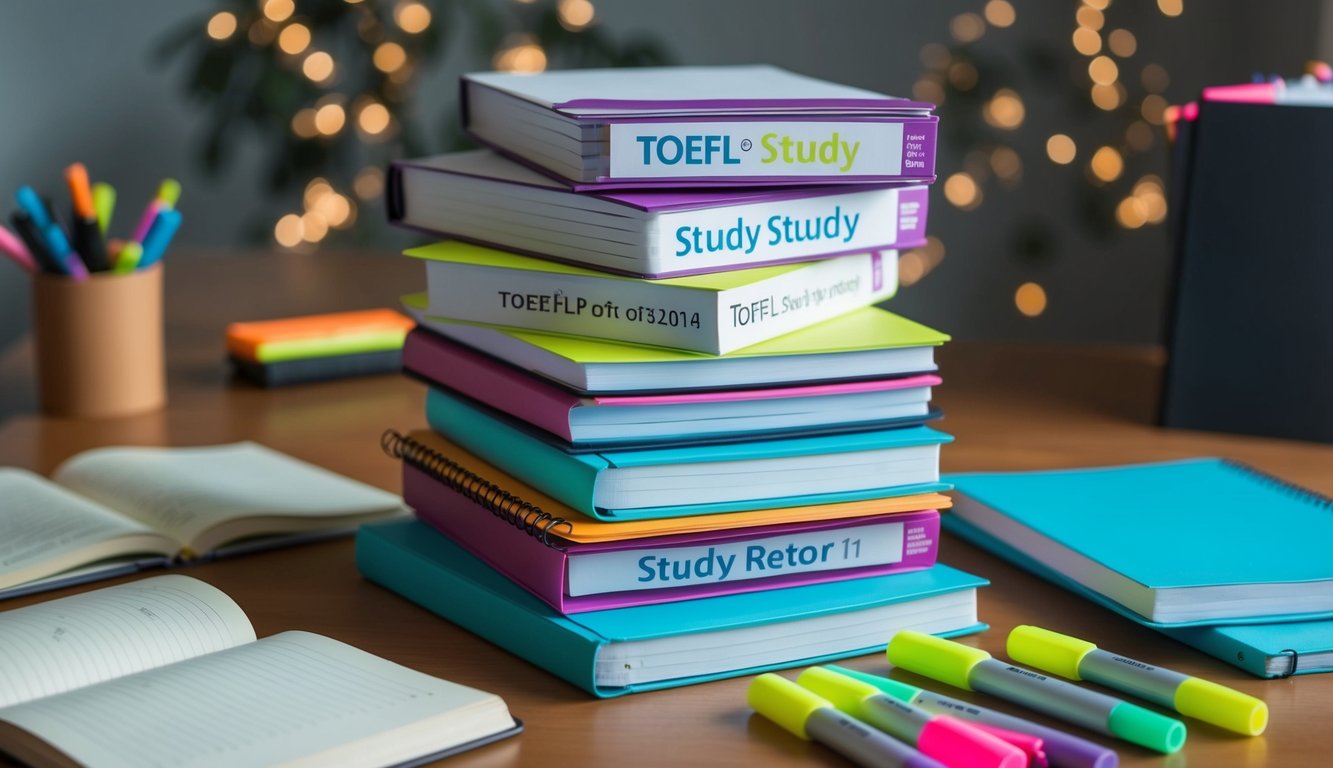
The TOEFL test checks your English skills in four key areas. Each part tests different abilities you need for studying at an English-speaking school.
Listening Section Overview
The TOEFL Listening section tests how well you understand spoken English. You’ll hear lectures and talks like those in college classes.
The recordings include different accents to match what you might hear at school.
This part has 3-4 lectures and 2-3 chats. Each lecture is 3-5 minutes long. The chats are about 3 minutes each. After listening, you answer questions about what you heard.
Questions check if you:
- Got the main idea
- Understood details
- Could make conclusions
Tips for this section:
- Take notes while listening
- Pay attention to the speaker’s tone
- Listen for key words and phrases
Reading Section Deep Dive
The TOEFL Reading section checks how well you understand written English. You’ll read 3-4 passages on different topics. Each passage is about 700 words long.
After each passage, you answer 10 questions. These test your ability to:
- Find main ideas and details
- Make inferences
- Understand vocabulary in context
The texts are like what you’d read in college courses. They cover topics in science, social studies, and the arts.
To do well:
- Skim the passage first
- Look for topic sentences
- Practice reading quickly
Speaking Section Insights
The TOEFL Speaking section tests how clearly you can express your thoughts in English. It has 4 tasks that take about 17 minutes total.
Tasks 1-2: You give your opinion on a topic.
Tasks 3-4: You respond to what you read and hear.
For each task, you have a short time to prepare and then speak for 45-60 seconds. Your answers are recorded and scored later.
Graders look at how well you:
- Organize your ideas
- Use proper grammar and vocabulary
- Speak clearly and naturally
To improve:
- Practice speaking on various topics
- Record yourself and listen back
- Learn to outline quickly
Writing Section Breakdown
The TOEFL Writing section checks your ability to write clear, organized essays in English. It has two parts:
Integrated Writing Task (20 minutes):
- Read a short passage
- Listen to a related lecture
- Write an essay comparing the ideas
Independent Writing Task (30 minutes):
- Write an essay giving your opinion on a topic
Graders look at:
- How well you address the topic
- Your essay structure
- Your use of grammar and vocabulary
To prepare:
- Practice typing in English
- Learn to write outlines quickly
- Study common TOEFL essay topics
Leveraging Practice and Preparation Resources

To get ready for the TOEFL, you need good study tools. These tools help you learn and practice for the test.
Effective Use of Practice Questions
Official TOEFL practice questions are key for your test prep. These questions match the real test in style and difficulty. Use them to:
- Learn question types
- Practice time management
- Build test-taking skills
Try to answer questions without help first. Then check your answers and learn from your mistakes. Keep track of which areas you need to work on more.
Make a study plan and set aside time each day to practice questions. This helps you get used to the test format.
Maximizing Benefits from TOEFL Practice Tests
Full TOEFL practice tests are great tools. They help you:
- Get used to the test length
- Practice all sections together
- Learn to manage your energy
Take practice tests in one sitting. Try to create test-like conditions.
This means finding a quiet place and timing yourself.
After each test, review your answers carefully. Look for patterns in your mistakes.
Use this info to guide your future study.
Take several practice tests over time. This helps you track your progress and see where you still need work.
Utilizing Flashcards for Vocabulary
Flashcards are great for learning TOEFL vocab. You can make your own or use pre-made sets. Here’s how to use them well:
- Review cards daily
- Say words out loud
- Use new words in sentences
- Group words by theme
Try digital flashcard apps. They let you study anywhere and track your progress.
Focus on words that come up often in TOEFL prep materials. Learn their meanings, uses, and common phrases they’re in.
Finding Accessible Formats and Tutors
The TOEFL TestReady prep portal offers materials in different formats. This includes options for screen readers. Look for prep books with audio CDs too.
Working with a tutor can help a lot. They can:
- Give personal feedback
- Help with weak areas
- Teach test strategies
Look for tutors with TOEFL experience. Online tutoring is a good option if you can’t meet in person.
Join study groups or online forums. They’re great for sharing tips and staying motivated.
Strategies for Success on Test Day

Preparation and mindset are key to performing well on TOEFL test day. These tips will help you stay calm, focused, and ready to do your best.
Before the Test: Final Review and Relaxation
Get a good night’s sleep before the exam. Aim for 7-8 hours of rest to feel refreshed.
Have a light, healthy breakfast to fuel your brain. Avoid heavy foods that may make you sluggish.
Review your study materials briefly, but don’t cram. Focus on key points and test strategies.
Pack what you need the night before:
- Valid ID
- Test registration
- Snacks and water
- Watch (no smartwatches)
- Layered clothing
Do some light exercise or stretching to reduce stress. Take deep breaths to calm nerves.
During the Test: Time Management and Performance
Stay aware of the time for each section. Wear a watch to track your pace.
Read instructions carefully. Don’t rush – make sure you understand what’s asked.
For listening and reading sections:
- Skim passages quickly
- Look for main ideas
- Take brief notes
Speaking and writing tips:
- Outline responses quickly
- Use clear transitions
- Speak confidently, even if unsure
Take short breaks between sections to refocus. Have a snack or water if needed.
If stuck on a question, make your best guess and move on. You can’t go back to previous sections.
After the Test: Understanding Scores and Next Steps
TOEFL scores are usually available online 6-10 days after the test. You’ll get an email when ready.
Score breakdown:
- Reading: 0-30
- Listening: 0-30
- Speaking: 0-30
- Writing: 0-30
Total score range: 0-120
Check if your target schools require minimum section scores. Some may want higher writing or speaking scores.
If your score is lower than needed, you can retake the test. ETS allows retakes as often as weekly.
To improve:
- Review your performance
- Focus on weak areas
- Try new study methods
- Consider a tutor
Remember, TOEFL scores are valid for 2 years. Plan retakes with application deadlines in mind.
Applying TOEFL Skills Beyond the Test

The skills you gain from TOEFL prep can help you with visa applications and adapting to life in English-speaking countries.
These abilities will be useful long after you take the test.
Using TOEFL Knowledge for Visa Applications
Your TOEFL skills can give you an edge when applying for visas to English-speaking countries.
The test develops your ability to read complex documents, which is key for understanding visa forms and instructions.
Writing practice for TOEFL essays transfers directly to completing visa application statements. You’ll be able to clearly explain your purpose for travel and plans.
TOEFL speaking prep helps you feel more confident in visa interviews. You can answer questions about your background and goals with ease.
Listening skills from TOEFL training allow you to follow instructions during the visa process. This helps avoid mistakes that could delay your application.
Transitioning to English-Speaking Universities and Countries
TOEFL preparation gives you tools to thrive in English-speaking academic settings. The reading and listening sections mirror real university lectures and textbooks.
You’ll be ready to take notes, understand assignments, and participate in class discussions. TOEFL writing practice prepares you for essays and research papers.
The speaking section builds skills for class presentations and group projects. You’ll feel more at ease talking with professors and classmates.
Outside of academics, TOEFL skills help with daily life in a new country. You can confidently handle tasks like:
- Opening a bank account
- Finding housing
- Shopping for essentials
- Making friends
Your improved English allows you to fully engage in campus life and local culture.
TOEFL and Your Future

A high TOEFL score can open doors to top schools and boost your career. Keeping up your English skills after the test is key for long-term success.
Long-Term Benefits of a High TOEFL Score
A good TOEFL score can help you get into top schools. Many top universities require high TOEFL scores for admission. A high score shows you can handle college-level work in English.
Good TOEFL scores can also lead to:
- More scholarship chances
- Better job options after graduation
- Higher starting salaries
Your TOEFL score stays valid for 2 years. This gives you time to apply to multiple schools. You can also use it for jobs that need proof of English skills.
Continuing to Develop English After TOEFL
Keep growing your English skills after the TOEFL. This will help you do well in school and work. Here are some ways to keep learning:
- Read English books and news daily
- Watch English TV shows and movies
- Practice speaking with native speakers
- Take advanced English classes
Set clear goals for your English growth. You might aim to learn 10 new words a week. Or you could try to have one long talk in English each day.
Track your progress to stay on track. You can take practice TOEFL tests to see how you’ve improved.
This will help you stay ready for any future English tests or job interviews.
Frequently Asked Questions

The TOEFL test has many aspects to consider. Students often have questions about study methods, time management, and useful resources.
What are the best resources for TOEFL preparation at home?
Official TOEFL practice materials are top picks for home study. These include practice tests, sample questions, and skill-building exercises.
Online courses and apps can also help. They give you structured lessons and instant feedback.
Textbooks with audio CDs are good for offline study. Pick ones with full-length practice tests to build test-taking skills.
What strategies are recommended for effective TOEFL study?
Set a regular study schedule. Stick to it daily or weekly.
Focus on your weak areas. Spend more time improving these skills.
Practice all four test sections: reading, listening, speaking, and writing.
Take timed practice tests often. This helps you get used to the test format and pace.
How much time should I allocate to study for the TOEFL test?
The time needed varies for each person. It depends on your current English level and target score.
Most students study for 2-3 months. Plan for at least 10-15 hours of study per week.
If you’re starting from a lower level, you might need 4-6 months of prep time.
Can you recommend any free online resources for TOEFL preparation?
Quizlet offers free TOEFL study guides and practice questions. These can help you learn key vocabulary and concepts.
ETS, the TOEFL maker, has some free prep materials on their website. These include sample questions and tips.
YouTube has many free TOEFL prep videos. Look for channels run by experienced teachers or test prep companies.
What are some top TOEFL preparation books to use for studying?
The Official Guide to the TOEFL Test is a must-have. It’s made by ETS and has real test questions.
Barron’s TOEFL iBT is popular for its detailed explanations and study plans.
Cambridge Preparation for the TOEFL Test offers in-depth skill-building exercises.
How can I simulate test conditions at home for TOEFL practice?
Use a quiet room with a desk and computer. This mimics the test center setup.
Take full-length practice tests in one sitting. Follow the real test time limits for each section.
For the listening parts, use headphones. This helps you focus like in the real test.
For the speaking section, speak your answers out loud. Then, record yourself to review later.
View our Related Content!
- Part Time Data Entry Jobs
- Masters with Scholarships
- Recommendation Letter
- How to Study for the TOEFL
- Business Administration