
Time Management Tips for High School Seniors: Mastering College Prep in 2025-2026
Are you struggling to balance schoolwork, college applications, and social life as a high school senior for 2025-2026?

Introduction: Strong Time Management Skills and College Prep Planner
Time management is key to success in your final year. Effective time management helps you reduce stress, improve grades, and prepare for college.
It’s about making smart choices with your limited hours each day.
Good time management starts with setting clear goals.
What do you want to achieve this year? Maybe it’s getting into your dream college or raising your GPA. Once you know your goals, break them down into smaller tasks.
Use a planner or app to track deadlines and schedule study time.
Don’t forget to include breaks and fun activities in your schedule. Balance is important. Taking time to relax and recharge will actually help you be more productive when you’re working.
With practice, high schoolers will find a rhythm that works for them and sets them up for success beyond high school.
Key Takeaways
- Set clear goals and break them into manageable tasks
- Use a planner to track deadlines and schedule study time
- Include breaks and fun activities for better productivity
The Essentials of Time Management Tips for Students to Stay Organized

Good time management helps students do better in school and feel less stressed. It lets you get more done and enjoy free time too.
Understanding Time Management for Students
Time management means using your time wisely. It’s about planning your day and week to fit in everything important. This includes classes, homework, activities, and rest.
Students who manage time well often get better grades. They also have less stress and more free time. Learning this skill now will help you in college and your future career.
Time management isn’t hard, but it takes practice. Start by looking at how you spend your time now. Then make small changes to use it better.
Setting Clear Goals
Setting goals gives you direction and motivation. They help you focus on what’s most important.
Set both short-term and long-term goals. Short-term goals might be finishing a project or studying for a test. Long-term goals could be getting into college or improving your GPA.
Write your goals down in a planner to improve your time management skills. Put them where you can see them every day. Break big goals into smaller steps. This makes them less scary and easier to achieve.
Reward yourself when you reach a goal. It can be something simple like watching a movie or getting ice cream.
Prioritization of Tasks for Efficient Time Management
Not all tasks are equally important. Prioritizing means doing the most important things first.
Make a to-do list each day. Put the hardest or most important tasks at the top. Do these when you have the most energy.
Use the 80/20 rule to focus on what matters most. This means 20% of your tasks often lead to 80% of your results.
Don’t forget to include breaks in your schedule. Short breaks help you stay focused and avoid burnout. Try working for 25 minutes, then taking a 5-minute break to manage your time effectively.
Learn to say no to things that waste your time. This leaves more time for what’s truly important to you.
Strategies to Enhance Productivity

Boosting productivity through effective time management can help high school seniors manage their time better as they prepare for 2025. These methods can make studying more effective and efficient.
By implementing strategies like creating detailed study schedules and prioritizing tasks, students can focus on what truly matters.
The management of time effectively for high school students with their extracurricular activities ensures they can balance academics while pursuing their passions.
Additionally, setting realistic goals and eliminating distractions can further optimize their daily routines.
Creating a Productive Environment
A good study space can make a big difference. Pick a quiet spot with good lighting. Keep your desk clean and organized. Have all your supplies ready before you start.
Try to study in the same place each time. This helps your brain get into “work mode” faster. Remove things that might distract you, like your phone or TV remote.
Make sure you’re comfortable, but not too cozy. A chair that’s too soft might make you sleepy.
Good air flow and a cool room temperature can help you stay alert.
The Pomodoro Technique Explained
The Pomodoro Technique is a simple but powerful way to study. Here’s how it works:
- Pick a task to work on
- Set a timer for 25 minutes to help middle and high school students focus on their school work.
- Work until the timer rings
- Take a 5-minute break
- Repeat steps 1-4 four times to develop effective time management and organization skills.
- Take a longer break (15-30 minutes)
This method helps you focus intensely for short periods. The breaks keep your mind fresh.
It also makes big tasks feel less scary by breaking them into smaller chunks.
Many students find they get more done with this technique. It can help you avoid burnout too.
Dealing with Distractions to Help Students to Focus
Distractions can eat up your study time. Here are some tips to help students manage their time effectively. stay focused:
- Turn off phone notifications
- Use apps that block social media during study time
- Wear noise-canceling headphones if your space is noisy
- Tell friends and family when you’re studying so they don’t interrupt
If you catch your mind wandering, don’t get upset. Just gently bring your attention back to your work. This gets easier with practice.
Sometimes, a quick stretch or deep breath can help you refocus. If you’re really stuck, try switching to a different subject for a while.
Remember, it’s normal to get distracted sometimes. The key is to notice it and get back on track quickly.
Organizational Tools and Techniques

Keeping track of tasks and deadlines is key for high school seniors. These tools and methods can help you stay on top of your work.
Utilizing To-Do Lists Effectively
To-do lists are simple but powerful tools for managing tasks. Start by writing down everything you need to do.
Break big tasks into smaller steps.
Prioritize your list:
- Must do today
- Should do soon: evaluate your time management habits to see if students need to adjust their priorities.
- Can wait
Cross off tasks as you finish them. This gives you a sense of progress. Update your list daily. Add new tasks and remove completed ones.
Try different formats to find what works best for you:
- Paper planner
- Using sticky notes can be an effective strategy for high school students learning time management.
- Digital app
- Whiteboard
Review your list often. Move items up or down as priorities change.
Digital Tools vs. Traditional Methods
Both digital and paper tools have pros and cons. Digital apps offer features like reminders and syncing across devices.
Paper planners give you a physical record and don’t need charging.
Popular digital tools:
- Google Calendar
- Todoist
- Trello
Paper options:
- Incorporating a bullet journal as a time management tool can enhance students’ time management skills.
- Weekly planner
- A wall calendar can be a great tool for students in grades to visualize their time management.
Using time management apps can help high schoolers stay organized and focused. can track how you spend your time. This helps you find ways to be more efficient.
Try mixing methods. Use a paper planner for daily tasks and a digital calendar for long-term planning. Pick tools that fit your style and use them regularly.
Planning and Executing Tasks
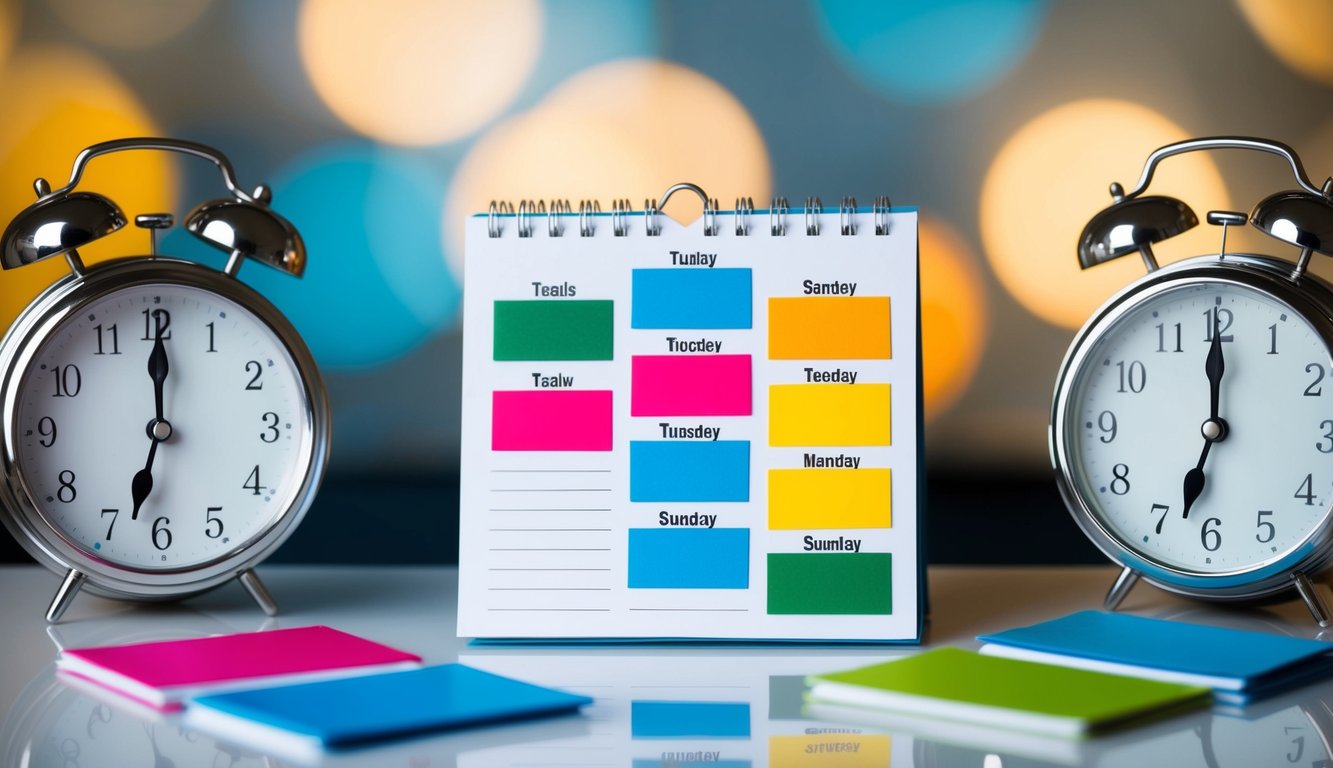
Good time management starts with a solid plan and follows through with effective execution.
High school seniors can boost their productivity by using specific strategies to tackle assignments and adapt to changing schedules.
Breaking Down Large Assignments
Big projects can feel scary. The key is to split them into smaller, more doable parts. Start by looking at the due date and working backward.
Make a list of all the steps needed to finish the project. Then, set mini-deadlines for each step.
Use a calendar or planner to mark these deadlines.
This helps you see what needs to be done each day or week. It also stops you from waiting until the last minute to start managing your time effectively.
Try the “2-minute rule.” If a task takes less than 2 minutes, do it right away. This keeps small tasks from piling up and becoming big problems later.
Time Blocking Method
Time blocking is a way to plan your day in chunks. You set aside specific times for certain tasks. This helps you focus and get more done.
Here’s how to use time blocking:
- List your daily tasks
- Group similar tasks together
- Assign each group a time slot
- Stick to your schedule as best you can
For example, you might block 9-11 AM for math homework, 1-3 PM for reading, and 4-6 PM for sports practice. Don’t forget to add breaks between blocks. Your brain needs rest to work well.
Time blocking can help you avoid distractions and multitasking. It also shows you how much time you really have each day.
Adapting to Changing Schedules
Life doesn’t always go as planned. You need to be ready to change your schedule when things come up. Keep your plan flexible so you can move tasks around if needed.
Review your schedule each night. Look at what you got done and what’s left. Then, make a plan for the next day.
This helps you stay on track even when things change.
Use a mix of digital and paper planners. Digital ones are easy to change, while paper ones give you a big picture view. Try different planning tools to find what works best for you.
Time Management Tips for Academic Success

Good time management helps you get better grades and feel less stressed. These tips will help you study well, balance your life, and plan for the future.
Study Tips Students Need for Efficient Learning
Set up a Create a quiet study space that fosters good time management habits for students in grades 6-12. with no distractions. Turn off your phone and close social media. This helps you focus.
Make a study schedule. Plan when you’ll work on each subject. Stick to your plan.
Use the Pomodoro method:
- Study for 25 minutes
- Take a 5-minute break
- Repeat 4 times
- Take a longer 15-30 minute break
Try different study methods to find what works for you. Some options:
- Flashcards
- Practice tests
- Teaching the material to someone else
- Making mind maps or diagrams
Balancing Academic and Personal Life: Time to Relax
Use a planner or app to track all your tasks and events. Include schoolwork, sports, clubs, and free time.
Prioritize your tasks. Do the most important things first. Use the 80/20 rule – 20% of your work often leads to 80% of your results.
Don’t forget self-care. Make time for:
- Sleep (8-9 hours per night)
- Exercise
- Healthy meals
- Hobbies you enjoy
- Friends and family
Learn to say no to things that aren’t important. It’s okay to skip some events to focus on your goals.
Long-term Planning for Career and College
Start thinking about your future goals now. Research colleges and careers that interest you.
Make a timeline of important dates and deadlines:
- SAT/ACT test dates
- College application deadlines
- Scholarship applications
- Summer program applications
Break big goals into smaller steps. For example, if you want to apply to 5 colleges:
- Make a list of schools
- Research requirements
- Take needed tests
- Write essays
- Get recommendation letters
- Submit applications
Meet with your guidance counselor to discuss your plans. They can help you stay on track.
Evaluating and Improving Personal Time Management

Tracking your time use and getting input from others can help you get better at managing your schedule.
These steps will help you find ways to use your time more wisely as a high school senior.
Self-Assessment for Better Time Use
Start by keeping a log of how you spend your time for a week. Write down what you do each hour, including classes, homework, activities, and free time.
Look for patterns in your log. Are you using study time well? Do you waste time on your phone? Time management allows students to set aside time for studying and finishing assignments.
Make a list of your goals and priorities as a senior. Compare this to how you actually spend your time.
See if they match up. If not, think about changes you can make. Maybe you need to cut back on some activities or set limits on social media use.
Try time management Consider using tools like planners or apps to improve time management and organization. These can help you schedule tasks and track deadlines. Test a few options to find what works for you.
Seeking Feedback and Continuous Improvement
Ask teachers, parents, or friends for input on your time management. They may notice things you miss.
A mentor or counselor can also give tips on using time better.
Set small goals to improve, like “I’ll study for 30 minutes each night this week,” to build effective time management habits.
Check if you met the goal. If not, try to figure out why. Make changes and try again next week.
Evaluate your progress every few weeks. Are you getting more done with better time management skills? Do you feel less stressed?
If not, keep adjusting your methods. Time management is a skill you build over time.
Be open to new ideas. Read books or articles on time management for students. Talk to peers about their methods. You might find fresh tips to try.
Frequently Asked Questions: The Importance of Time Management for High School Seniors

Time management can be tricky for high school seniors. Let’s explore some key strategies to help you balance your commitments and stay on track.
What are effective time management strategies for high school seniors?
Use a planner to track homework, tests, and deadlines. Break big tasks into smaller chunks. Set specific goals for each study session.
Try the Pomodoro Technique – study for 25 minutes, then take a 5-minute break.
Limit distractions like social media and TV while studying. Find a quiet workspace that helps you focus. Review your schedule weekly to stay organized.
How can high school seniors balance academics, extracurricular activities, and social commitments?
Prioritize your commitments. Put schoolwork first, then add in other activities. Don’t overload your schedule – it’s okay to say no sometimes.
Use a calendar to plan your week. Block out study time, club meetings, and hangouts with friends. Look for ways to combine activities, like studying with classmates.
Be flexible. Some weeks may need more study time than others. Adjust as needed to keep a healthy balance.
What are the best ways for high school seniors to prioritize and organize their tasks?
Make daily to-do lists. Put the most important tasks at the top. Use an ABC system to rank tasks: A for must-do, B for should-do, C for could-do.
Try the Eisenhower Matrix. Split tasks into four boxes: urgent and important, important but not urgent, urgent but not important, and neither urgent nor important.
Use digital tools like Trello or Asana to track projects. Break big assignments into smaller steps with deadlines.
How can high school seniors avoid procrastination and stay motivated?
Set clear, specific goals for each day and week to emphasize the importance of time management. Reward yourself when you meet your time management goals to encourage students to stay motivated. Find a study buddy to keep you accountable.
Use the “two-minute rule” – if a task takes less than two minutes, do it right away. Start with the hardest task when your energy is highest.
Take short breaks to avoid burnout. Use positive self-talk to stay motivated. Remember your long-term goals when you feel like slacking off.
What time management techniques can help high school seniors prepare for college?
Practice good habits now. Use a planner, set priorities, and manage your time wisely. These skills will be crucial in college.
Learn to estimate how long tasks take. This helps with planning study time and meeting deadlines. Start big projects early to avoid last-minute stress.
Try different study methods to find what works best for you. This will help you adapt to college coursework more easily.
How does time management impact the academic performance of high school seniors?
Good time management leads to better grades. You’ll have more time to study, complete assignments, and prepare for tests. This reduces stress and improves focus.
It also helps you avoid rushing through work, which can lead to mistakes. With time to review and edit your assignments, you’ll make fewer errors.
Effective time management also leaves room for sleep and self-care. This boosts your energy and helps you perform better in school.
View our Related Content!
- Part Time Data Entry Jobs
- Masters with Scholarships
- Recommendation Letter
- How to Study for the TOEFL
- Business Administration
