
Athlete and Sports Scholarships: Top 5 Strategies for Securing Athletic Scholarships in 2025 – 2026
Can athletic scholarships help you afford college for 2026?

Athletic scholarships can make a big difference in paying for college. Many schools offer money to students who are good at sports.
These scholarships can cover some or all of your college costs. They are a way for talented athletes to get an education while playing the sport they love.
Not all athletes get full rides to college. Many get partial scholarships. This means they still need to pay for some of their costs, even with scholarships available.
But even a partial scholarship can save you a lot of money. It’s a big help for many students and their families.
Getting an athletic scholarship takes hard work. You need to be good at your sport and do well in school.
Coaches look for athletes who can help their teams win. They also want students who will do well in class.
If you want a scholarship, you need to start preparing early.
Key Takeaways: 2025 Student Athlete Scholarships
- Athletic scholarships can help pay for college but often don’t cover all costs
- You need to excel in both sports and academics to get a scholarship
- Start preparing early to boost your chances of getting an athletic scholarship
Understanding Athletic Scholarships
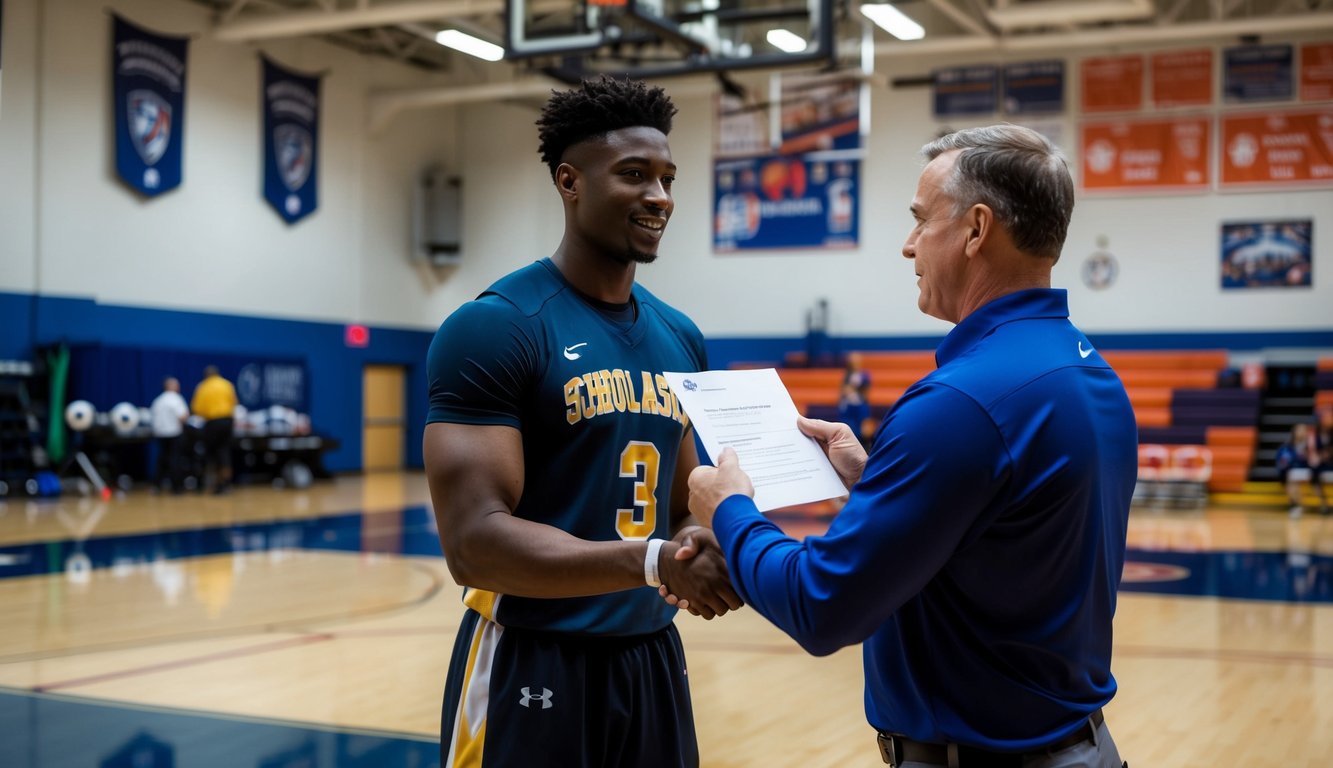
Athletic scholarships help talented student-athletes pay for college. These awards come in different types and have specific rules.
Types of Athletic Scholarships
Full scholarships cover all college costs, including tuition, room, board, and books. They’re most common in high-profile sports like football and basketball.
Partial scholarships cover only part of college expenses. These are more typical in other sports.
Athletes might get 25%, 50%, or another portion of their costs covered.
Equivalency scholarships let coaches split one full scholarship among multiple athletes.
This helps sports teams stay within NCAA limits while supporting more student-athletes.
NCAA Scholarship Rules and Limits
The NCAA sets strict rules for schools that offer a scholarship. athletic scholarships. These rules aim to keep college sports fair and balanced.
D1 schools have the most scholarships to offer. For example, D1 football teams can give up to 85 full scholarships. Other sports have lower limits.
Scholarship limits vary by sport and division. Some sports are “head count” sports with a set number of full scholarships.
Others are “equivalency” sports where coaches can divide scholarships.
Title IX impacts scholarship distribution. This law requires schools to offer equal opportunities for men and women in sports, including scholarship chances.
NCAA rules may change. Starting fall 2025, D1 programs might switch to a “roster limits” system.
This could allow more flexibility in scholarship offers.
Eligibility and Deadlines for Athletic Scholarships and Grants
To get an athletic scholarship, you must meet academic and athletic standards. These rules make sure you can handle both school and sports.
Academic Requirements
You need good grades To qualify for an athletic scholarship, students must meet the deadline set by the NCAA. The NCAA sets minimum academic standards for Division I and II schools. For Division I, you must:
- Graduate high school to become a competitive student-athlete.
- Complete 16 core courses
- Earn a minimum 2.3 GPA in core courses
- Get a combined SAT or ACT score that matches your GPA
For Division II, the rules are a bit different:
- Graduate high school
- Complete 16 core courses
- Earn a minimum 2.2 GPA in core courses
- Get a minimum SAT score of 820 or ACT sum score of 68
Pro tip: Take the right classes early. Start in 9th grade to make sure you meet all core course requirements.
Athletics Requirements
Your athletic skills are key for getting a scholarship. Coaches look for:
- Skill level in your sport
- Physical attributes (height, speed, strength)
- Game stats and achievements
- Potential for growth
Less than 2% of high school athletes get athletic scholarships. To stand out:
- Excel in your sport
- Get good grades
- Build relationships with coaches
- Attend camps and showcases
- Create a sports resume and highlight video
Did you know? Some sports offer more scholarship chances than others. Women’s rowing and men’s ice hockey often have more spots available.
The Recruitment Process
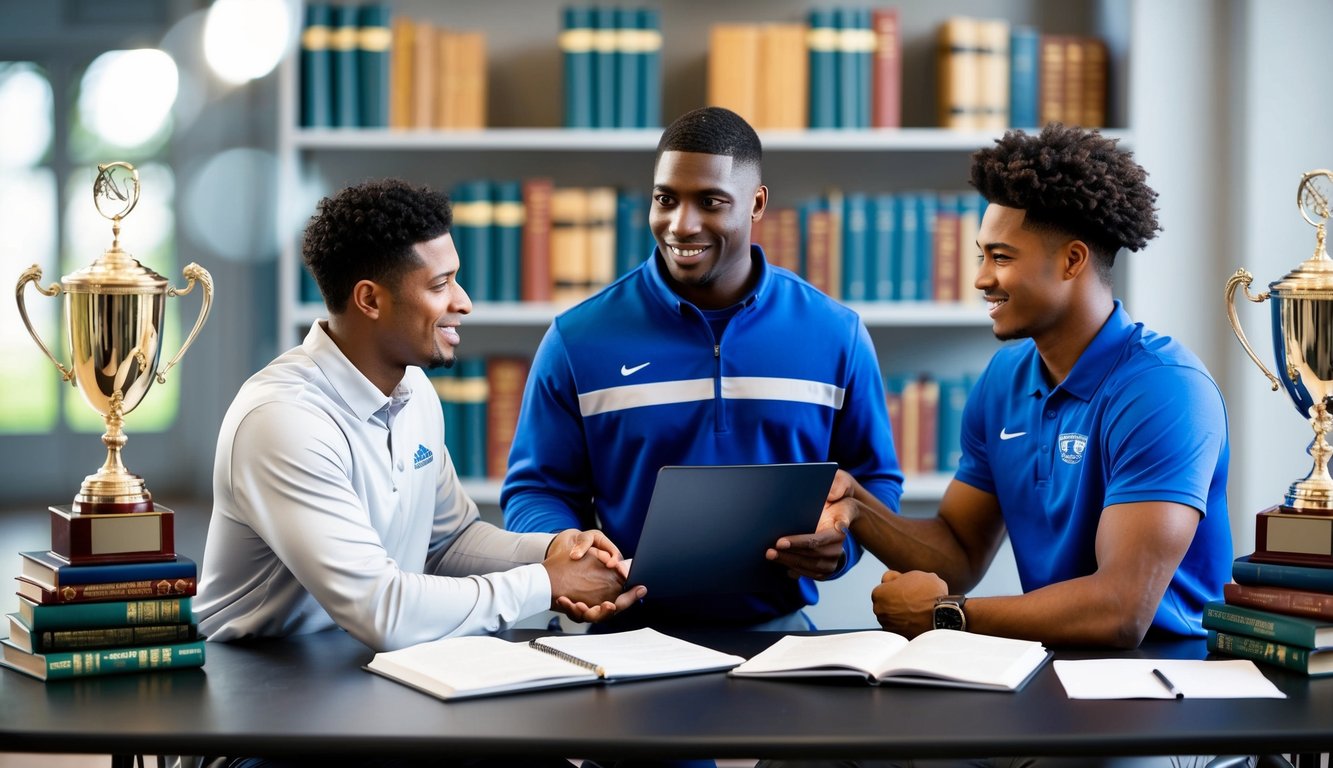
The recruitment process involves connecting with college coaches and building a strong athletic resume. These steps are key for high school athletes seeking scholarships.
Connecting with College Coaches
College coaches play a big role in recruiting athletes. You can reach out to coaches by email or phone.
It’s best to start early, often in your sophomore or junior year.
Be ready to share your stats, grades, and game footage. Coaches want to see your skills and potential.
They may invite you to campus visits or showcases.
Remember, NCAA rules limit when coaches can contact you. Different rules apply to each division. Know these rules to avoid problems.
Building an Athletic Resume
A good athletic resume shows off your talents. Include:
- Your contact info and basic details
- Sports achievements and stats
- Academic record
- Awards and honors
- Game footage links
Keep it short – one or two pages max. Update it often with new accomplishments.
Coaches look at your grades too. A strong GPA can help you stand out. It also shows you can handle college coursework.
Consider making a sports highlight video. This gives coaches a quick look at your skills. Keep it short and focused on your best plays.
Financial Aid and the Best Athletic Scholarships
College athletes can get money for school through different types of aid. This includes athletic scholarships and other financial help based on need or grades.
FAFSA and Need-Based Aid
The Free Application for Federal Student Aid (FAFSA) is key for getting need-based aid.
All student-athletes should fill out the list of scholarships they are eligible for. This form helps schools figure out how much financial help you need.
Some aid you might get after filing FAFSA:
- Pell Grants
- Work-study jobs
- Federal student loans
Families with lower incomes may pay very little for college. At some schools, if your family makes under $65,000 a year, you might not have to pay anything.
Balancing Athletic and Academic Scholarships
You can often combine athletic scholarships with other types of aid. This can help cover more of your college costs.
Types of scholarships to look for:
- Athletic scholarships
- Academic merit scholarships
- Talent-based awards
- Private scholarships can also help students pursue higher education while playing a sport.
Many student-athletes get partial athletic scholarships. You can add academic scholarships to help pay for school.
Some schools offer special funds just for athletes.
Pro tip: Talk to your school’s financial aid office. They can help you find the best mix of aid for your situation.
College Sports Divisions and New NCAA Scholarships
College sports are organized into different divisions and associations. These structures determine the level of competition, scholarship opportunities, and rules for student-athletes.
NCAA Divisions
The National Collegiate Athletic Association (NCAA) has three main divisions:
- Division I: Largest schools with biggest athletic budgets
- Division II: Mix of large and small schools
- Division III: Smallest schools, focus on academics over athletics
Division I schools can offer full athletic scholarships. They have the most rigorous competition and strictest rules.
Division II offers partial scholarships. The focus is on regional competition and a balance between sports and academics.
Division III doesn’t give athletic scholarships. These schools stress the importance of academics and the overall college experience.
NAIA and NJCAA Structure
The National Association of Intercollegiate Athletics (NAIA) is for smaller colleges.
It has one main division for most sports. NAIA schools can give athletic scholarships.
The National Junior College Athletic Association (NJCAA) oversees sports at two-year colleges. It has three divisions:
- Division I: Full scholarships allowed
- Division II: Partial scholarships are allowed, and there are various scholarships available.
- Division III: No athletic scholarships
NAIA and NJCAA offer chances for athletes to play college sports at different levels. They have more flexible rules than the NCAA.
Ivy League Considerations
The Ivy League is a group of eight prestigious schools. They compete in NCAA Division I but have special rules:
- No athletic scholarships
- A strong focus on academics is essential to qualify for athletic scholarships to play.
- Strict admission standards
Ivy League schools look for top students who are also great athletes. They offer need-based financial aid instead of sports scholarships.
These schools have produced many successful athletes and leaders who have gone on to attend college. They value both academic and athletic excellence.
Maintaining Athletic Scholarships
Keeping an athletic scholarship takes hard work both on and off the field. You need to excel in your classes and in your sport.
Academic Performance
To keep your athletic scholarship, you must meet academic standards. Most schools require a minimum GPA, often 2.0 or higher. You’ll need to:
• Take a full course load each term
• Pass your classes
• Make progress toward your degree
Study tips:
- Use a planner to track assignments and meet deadlines for scholarship applications.
- Form study groups with teammates
- Meet with tutors if you’re struggling
Good grades not only keep your scholarship but also prepare you for life after sports. Some schools offer extra academic support for athletes.
Take advantage of these resources.
Athletic Performance and Conduct
Your athletic performance and behavior matter too. To maintain eligibility, you must:
• Attend all practices and games
• Follow team rules
• Stay in shape during the off-season
• Avoid breaking school or NCAA rules
Coaches watch your effort and attitude. Give 100% at all times if you want to play a sport in college. Be a good teammate. Follow a healthy diet and sleep schedule to stay at your peak.
Key conduct rules:
- No performance-enhancing drugs
- Maintain amateur status (no pay for play)
- Follow social media guidelines
Breaking rules can cost you your scholarship. When in doubt, ask your coach or compliance office. They want you to succeed.
Exploring Types of Sports Scholarships

Sports scholarships come in different forms. They can cover all or part of college costs. The type of scholarship often depends on the sport and school.
Scholarships by Sport
Different sports offer different scholarship opportunities. Some sports have more money to give out than others.
Full-ride scholarships are common in Division I football and basketball. These sports bring in a lot of money for schools. Other popular sports for scholarships include:
- Baseball
- Soccer
- Track and field
- Volleyball
- Swimming
Less common sports can still offer scholarships. These might include fencing, rowing, or water polo.
The number of scholarships varies by sport and division level.
Full-Ride vs. Partial Scholarships
Not all sports scholarships cover all college costs. The two main types are full-ride and partial scholarships.
Full-ride scholarships pay for:
- Tuition
- Room and board
- Books
- Fees
These are rare. Only about 1% of student-athletes get full rides.
Partial scholarships are more common. They cover some, but not all, college costs. You might get:
- Half of your tuition paid
- Just your room and board covered
- A set amount of money each year
Equivalency sports often use partial scholarships. Coaches split scholarship money among many players. This lets them build a full team.
Costs and Additional Funding

College expenses can be high, but athletes have options to help cover their costs. Scholarships and other funding sources can make education more affordable.
Understanding Tuition, Fees, and Other Expenses
Tuition and fees are the main costs for student-athletes. These vary by school type:
- Public in-state schools: $10,000-$15,000 per year
- Public out-of-state schools: $25,000-$35,000 per year
- Private schools: $35,000-$50,000+ per year
Other expenses include:
- Room and board at a college or university: $10,000-$15,000 per year.
- Books and supplies: $1,000-$2,000 per year
- Personal expenses: $2,000-$3,000 per year
Total yearly costs can range from $25,000 to $70,000+. Athletic scholarships may cover part or all of these expenses.
Supplemental Scholarship Opportunities
Athletes can seek extra funding beyond sports scholarships. Options include:
- Academic scholarships
- Need-based grants
- Work-study programs
- Private scholarships
Many schools offer combined athletic and academic awards. For example, a $30,000 tuition might be covered by new NCAA scholarships or athletic aid.
- $20,000 athletic scholarship
- $5,000 academic scholarship
- $5,000 from the family
Ivy League schools don’t offer athletic scholarships. But they provide generous need-based aid. Families earning under $65,000 often pay nothing for tuition.
You can apply for multiple scholarships. This helps cover any gaps in your athletic award.
Look for opportunities tied to your major, background, or special skills.
Frequently Asked Questions: BFFS Scholar Quest Athletic Scholarships

Athletic scholarships can be complex. Many high school athletes have questions about eligibility, application processes, and their chances of securing funding.
Let’s address some key concerns.
What are the eligibility criteria for college athlete scholarships?
To be eligible for athletic scholarships, you must:
- Be a high school graduate
- Meet academic standards set by the college to pursue higher education and receive athletic scholarships.
- Excel in your chosen sport
- Register with the NCAA Eligibility Center (for Division I and II schools)
Your GPA and test scores also play a big role in whether you receive athletic aid. Each division has its own rules regarding athletic scholarships to play.
How can high school students apply for athlete scholarships?
To apply for athletic scholarships:
- Start early – begin in your sophomore or junior year
- Build a strong athletic resume to increase your chances to receive a scholarship.
- Create highlight videos of your performances
- Contact coaches at schools you’re interested in
- Attend camps and showcases to get noticed and increase your chances to receive athletic scholarships.
Be proactive in seeking out athletic scholarships to play and pursuing higher education opportunities. Don’t wait for coaches to find you.
What are the academic requirements for student-athletes seeking scholarships?
Academic requirements vary by division:
- Division I: 2.3 GPA in core courses, qualifying SAT/ACT score
- Division II: 2.2 GPA in core courses, qualifying SAT/ACT score
- Division III: Set by individual schools (no athletic scholarships offered)
NAIA schools have their own standards. Keep your grades up to boost your chances.
How can an athlete obtain a fully-funded athletic scholarship?
To get a full scholarship:
- Excel in a high-profile sport (football, basketball)
- Compete at an elite level in your sport
- Maintain strong academic performance
- Showcase leadership skills
- Attend camps and clinics to improve
- Network with coaches and scouts
Full rides are rare. Most athletes receive partial scholarships.
What are the chances of securing a full-ride athletic scholarship?
Your odds of a full-ride scholarship depend on:
- Your sport (easier in revenue-generating sports)
- Your skill level
- The division and school you’re targeting
- Your academic performance
Less than 2% of high school athletes get full rides. Partial scholarships are more common.
Which colleges offer the most scholarships for student-athletes?
Top schools for athletic scholarships include:
- Stanford University
- Ohio State University
- University of Florida
- University of Alabama
- University of Michigan
Division I schools often have the most money for scholarships. Research schools that excel in your sport.
View our Recent BFFS Scholar Quest Content here!
- 25 Fully Funded Scholarships New Zealand: International 2026
- 25 Fully Funded Scholarships Hungary: International Students 2026
- 25 Fully Funded Scholarships in Poland: International Students 2026
- 25 Fully Funded Scholarships Hong Kong International Students ´26
- 25 Fully Funded Scholarships in Taiwan: International Students 2026
