
Countries with Free College: 2025-2026 Global Guide to Tuition-Free Education
Looking to study abroad in countries with free college in 2026 for a debt-free top education?
Why do some countries offer free college education? The idea of getting a degree without paying tuition fees sounds like a dream for many students.
Yet, this dream is a reality in several nations around the world. Free college education is offered in many European countries and a few others globally.

These programs aim to make higher education more accessible and reduce student debt. They can open doors for students who might not be able to afford college otherwise.
But it’s important to note that “free” doesn’t always mean totally free. Students may still need to pay for books, housing, and other living costs.
Countries with free college often have different systems and rules. Some only offer free tuition to their own citizens, while others extend this benefit to international students too.
The quality of education and the subjects offered can vary between countries.
Key Takeaways
- Free college education is available in several countries, mainly in Europe
- Students may still have costs for living expenses and materials
- Each country has its own rules for who can get free tuition
Overview of Free College Education

Free college education is becoming more common around the world. Many countries now offer tuition-free programs at public universities.
This can help more students get degrees without big debts.
Free college works differently in each country. Some only cover tuition costs. Others pay for books and living expenses too. Most free college is at public universities.
Private schools usually still charge tuition.
Who gets free college? It depends on the country. Some offer it to:
• All citizens
• Low-income students
• Top academic performers
• International students
Popular degree programs with free tuition include:
- Engineering
- Computer science
- Medicine
- Teaching
Free college has pros and cons. Benefits are more access to education and less student debt. But it can lead to overcrowded classes and less funding per student.
Brazil and Denmark are examples of countries with free college for citizens. Some nations like Germany even offer free tuition to international students.
Free college is still rare in the U.S. A few states have started small programs. But nationwide free public college is not yet a reality.
Countries Offering Free College Education

Many nations provide tuition-free college education. This helps students access higher learning without taking on debt.
Free college programs vary by country in terms of eligibility and coverage.
European Nations with No Tuition Fees
Germany offers free public university education to both domestic and international students.
You only pay small administrative fees each semester. Norway and Finland also have no tuition fees for public universities.
Sweden provides free education for EU/EEA students. Non-EU students pay fees, but scholarships are available. France has very low tuition at public schools – under €200 per year for most programs.
Austria charges EU students minimal fees of €20 per semester. Non-EU students pay €726 per semester, which is still quite affordable.
Spain’s public universities charge around €800-2,000 per year, much lower than private schools.
Non-European Countries with Free Education Initiatives
Brazil offers free education at public universities. You must pass an entrance exam to qualify. Competition is high for limited spots.
Mexico provides free public university education to citizens. The National Autonomous University of Mexico is the largest tuition-free university in North America.
Some other countries with low-cost or free options:
• Argentina
• Czech Republic
• Greece
• Iceland
Free college programs aim to increase access to higher education. Each country has its own rules and limits.
Research specific requirements if you want to study abroad tuition-free.
Understanding the True Costs: Living and Administrative Expenses

Free college doesn’t mean zero expenses. Students face costs beyond tuition that can add up quickly. Let’s look at the key areas where expenses occur.
Cost of Living
The price of daily life varies widely between countries and cities. Food, transportation, and personal items make up a big part of student budgets.
In some places, eating out is cheap. In others, groceries cost a lot. Public transit might be affordable or pricey. These costs change how much money students need.
Some free college programs give living stipends. This extra cash helps cover basic needs. Without it, students may struggle to afford school even if tuition is free.
Administrative Fees
Many “free” colleges still charge fees. These can include:
- Registration fees
- Student ID cards
- Technology fees
- Health services fees
These charges are often smaller than tuition but can still be hundreds of dollars per year. Some schools waive fees for low-income students. Others require everyone to pay.
It’s key to check all costs before choosing a school. Hidden fees can surprise students who expect totally free education.
Student Housing
Where you live affects your budget big time. Options include:
- Dorms
- Off-campus apartments
- Living at home
Dorms can be cheaper in expensive cities. But in some places, sharing an apartment costs less. Living at home saves the most money if it’s possible.
Some free college programs include free or reduced-price housing. Others leave students to figure out and pay for housing on their own.
Room and board costs can be high. They often match or exceed tuition at many U.S. schools.
Even in countries with free tuition, housing can be a major expense for students.
Qualification Criteria for Free College

Getting free college education depends on various factors. Different countries have specific requirements for students to qualify for tuition-free programs.
EU Citizens versus International Students
EU citizens often have an easier path to free college in European countries. In Germany, EU students can study for free at public universities. Non-EU students may need to pay small fees.
Some countries extend free education to international students too. Norway offers free tuition to all, regardless of nationality. Sweden used to do this but now charges non-EU students.
Key points for international students:
• Check residency rules
• Learn the local language
• Look for English-taught programs
• Apply early – spots can be limited
Required Academic Excellence
Most countries with free college expect strong academic performance. This helps them maintain quality and manage limited spots.
Typical requirements include:
• High school diploma or equivalent
• Good grades (often B average or higher)
• Entrance exams
• Language proficiency (local or English)
Some programs may ask for:
• Recommendation letters
• Personal statements
• Interviews
Finland is known for its high academic standards. Students must pass rigorous entrance exams to get free education there.
Keep in mind that competition can be fierce. You may need to stand out beyond just grades.
Extracurricular activities and volunteer work can help your application shine.
Scholarship Opportunities and Financial Aid
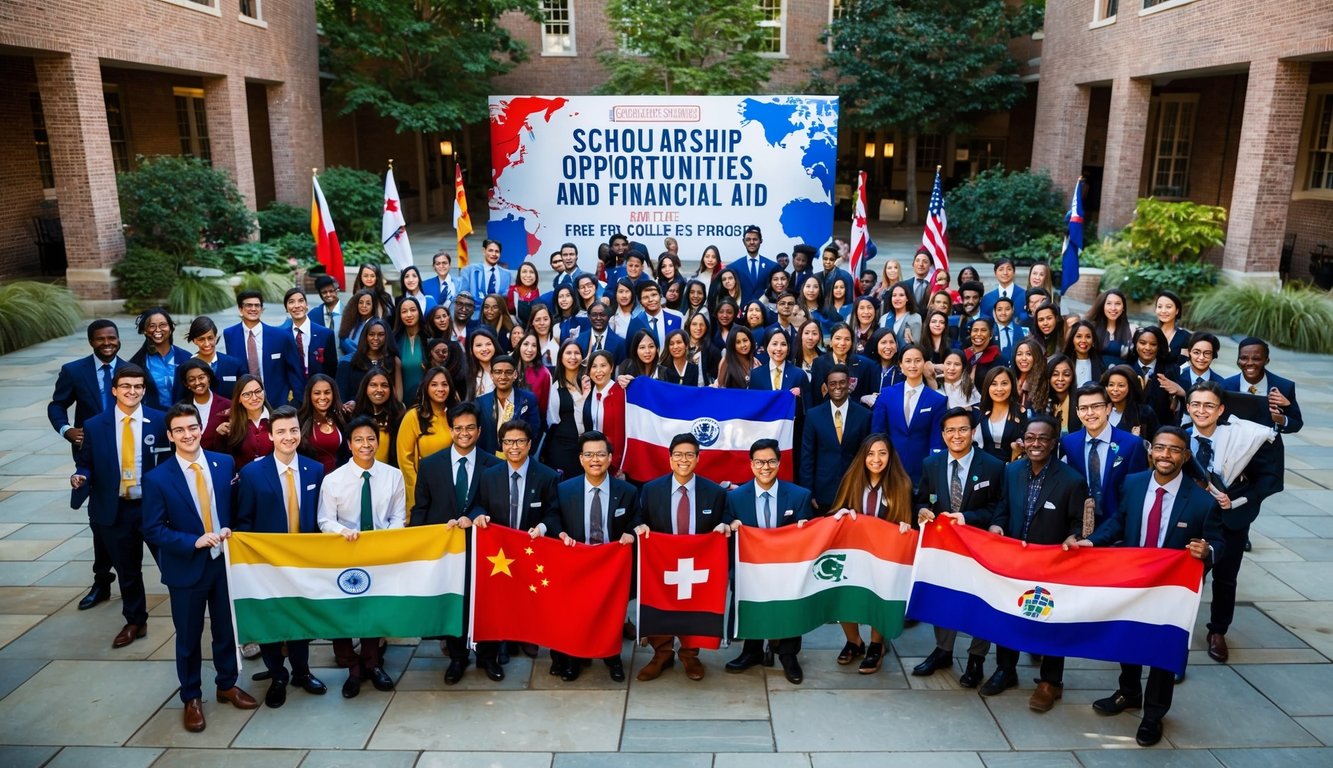
Getting a free college education abroad is possible through various scholarship opportunities.
Many countries offer financial aid to international students. These programs often cover not only tuition fees but also living expenses, travel costs, and even health insurance in some cases.
Pursuing tuition-free education abroad allows students to focus on their studies without the burden of overwhelming financial stress.
Additionally, it provides the chance to immerse oneself in diverse cultures, gain global perspectives, and build a strong international network.
Government Scholarships are a great option. These are often fully funded and cover tuition, living expenses, and sometimes travel costs.
You can find these scholarships through embassy websites or education ministries.
University Scholarships are another path. Many schools have need-based financial aid programs for international students.
For example, Cornell University offers aid based on family financial situations.
Research Grants can help fund your studies. These are given to students for in-depth research in specific topics. You can find these through universities, government bodies, or private organizations.
Work-Study Programs allow you to earn money while studying. This can help offset living costs and provide valuable work experience.
Some countries with free or low-cost education also offer scholarships for international students.
Spain, for instance, has seen a 36% rise in international student enrollment over five years.
This demonstrates the growing appeal of countries that provide affordable education options combined with financial aid opportunities.
Such initiatives not only make higher education more accessible but also enable students to fulfill their academic aspirations without incurring significant debt.
For those looking to study college for free around the world, exploring these countries can be a life-changing decision that broadens horizons and opens doors to global opportunities.
To improve your chances of getting a scholarship:
- Maintain a high GPA
- Get strong letters of recommendation
- Write compelling essays
- Participate in extracurricular activities
Remember to check application deadlines and requirements carefully. Each scholarship has its own criteria and process.
Cultural and Academic Life in Tuition-Free Countries
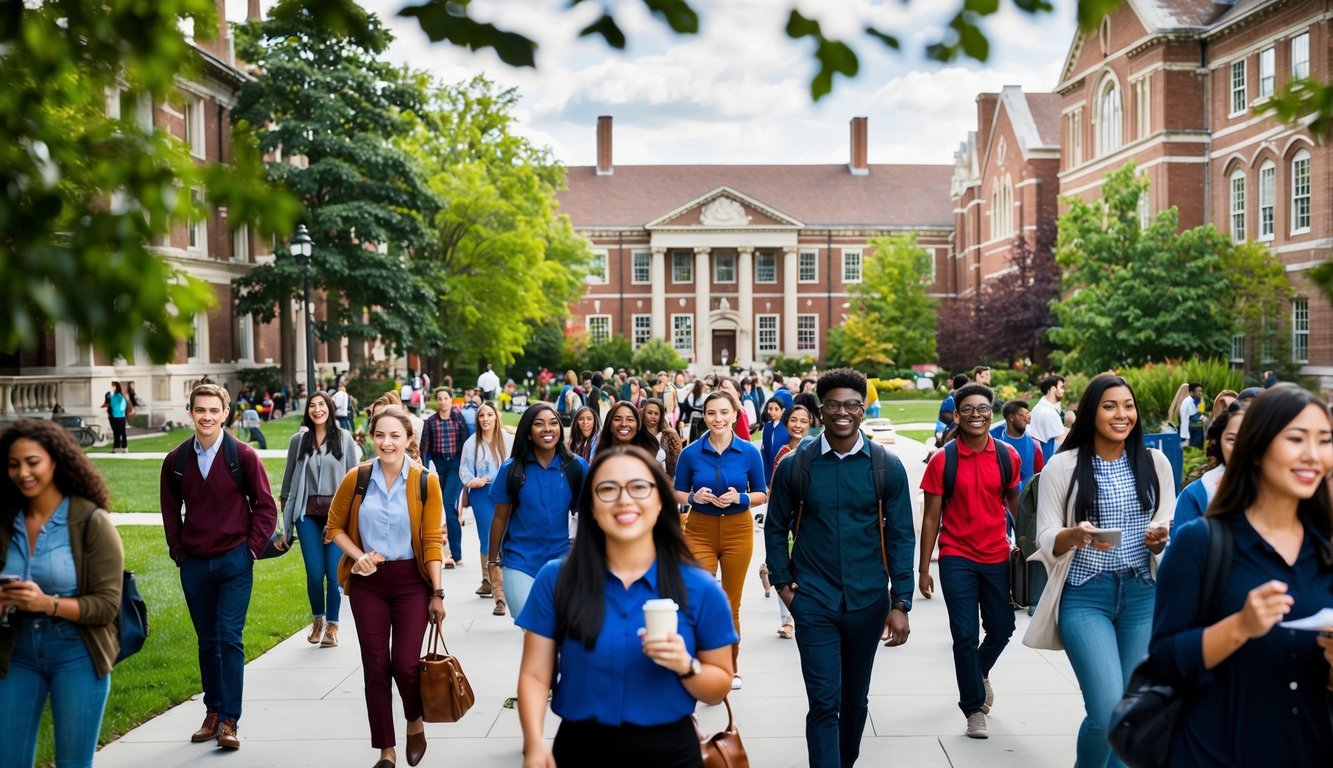
Students who choose tuition-free countries for their education can expect a rich blend of academic opportunities and cultural experiences.
These nations offer unique learning environments that combine high-quality education with diverse cultural settings.
Courses in English
Many tuition-free countries offer programs taught in English. This makes it easier for international students to study without language barriers. Germany has over 1,000 English-taught programs at various levels.
Norway and Finland also have many English courses.
Popular English-taught subjects include:
- Engineering
- Business
- Computer Science
- Environmental Studies
Tips for finding English courses:
- Check university websites
- Use online course finders
- Contact international student offices
Some universities require proof of English skills. Common tests are TOEFL and IELTS.
Student Visa and Residency
Getting a student visa is a key step for studying abroad. Each country has its own rules and processes.
Most tuition-free countries offer student visas that allow you to stay for your entire study period. Some even let you work part-time during your studies.
Common visa requirements:
- Proof of admission to a university
- Proof of funds to support yourself
- Health insurance
- Valid passport
After graduation, many countries offer a post-study residence permit.
This lets you stay and look for work. It’s a great chance to start your career in a new country.
Cultural Heritage and Integration
Studying in a tuition-free country lets you dive into a new culture. You’ll learn about local customs, food, and traditions.
This cultural exchange is a big part of the study abroad experience.
Many universities have programs to help international students adjust. These might include:
- Language exchange partners
- Cultural events and trips
- International student groups
Living in student housing is a good way to meet locals and other international students. It helps you build a social network and improve your language skills.
Remember, being open to new experiences is key. Try local foods, join student clubs, and explore your new home.
This will enrich your time abroad and help you make the most of your tuition-free education.
The Impact of Free College on Global Higher Education

Free college policies have changed higher education around the world. Many countries now offer low-cost or no-cost college to their citizens.
This has big effects on students and schools.
In Germany, college has been free since 2014. This helps both German and international students. More people can now go to college without worrying about money.
Free college can increase access to education. But it doesn’t always lead to more graduates.
For example, Finland spends a lot on free college. Yet its college graduation rate is lower than some countries that charge tuition.
Student loan debt is a major issue in many countries. Free college could help solve this problem. Students wouldn’t need to borrow as much money for school.
Free college may affect academic excellence. Schools might have less money for research or top professors. But they may also focus more on teaching quality.
International students often benefit from free college policies. Many countries let foreign students attend for free or low cost. This can increase diversity on campus.
Free college isn’t always completely free. Students may still pay for:
- Books and supplies
- Housing and food
- Transportation
- Other fees
Countries with free or low-cost college include:
- Germany
- Norway
- Finland
- Sweden
- Denmark
These policies can shape the global job market. More educated workers may boost the economy.
But it can also lead to “degree inflation” where more jobs require degrees.
Free college has pros and cons. It can open doors for many students. But it also presents challenges for schools and governments to manage.
View our BFFS Scholar Quest Country-Specific Fully Funded Scholarships:
25 Fully Funded Scholarships in Germany for International Students 2025-2026 here.
25 Fully Funded Scholarships in Norway for International Students 2025-2026 here.
25 Fully Funded Scholarships in Sweden for International Students 2025-2026 here.
25 Fully Funded Scholarships in France for International Students 2025-2026 here.
25 Fully Funded Scholarships in Italy for International Students 2025-2026 here.
25 Fully Funded Scholarships in the Netherlands for International Students 2025-2026 here.
25 Fully Funded Scholarships in Spain for International Students 2025-2026 here.
25 Fully Funded Scholarships in Austria for International Students 2025-2026 here.
19 Fully Funded Scholarships in Denmark for International Students 2025-2026 here.
19 Fully Funded Scholarships in Luxembourg for International Students 2025-2026 here.
25 Fully Funded Scholarships in China for International Students 2025-2026 here.
25 Fully Funded Scholarships in Japan for International Students 2025-2026 here.
25 Fully Funded Scholarships in Singapore for International Students 2025-2026 here.
25 Fully Funded Scholarships in Australia for International Students 2025-2026 here.
25 Fully Funded Scholarships in UK for International Students 2025-2026 here.
25 Fully Funded Scholarships in Switzerland for International Students 2025-2026 here.
25 Fully Funded Scholarships in Finland for International Students 2025-2026 here.
25 Fully Funded Scholarships in Taiwan for International Students 2025-2026 here.
25 Fully Funded Scholarships in South Korea for International Students 2025-2026 here.
25 Fully Funded Scholarships in Hong Kong for International Students 2025-2026 here.
25 Fully Funded Scholarships in Poland for International Students 2025-2026 here
25 Fully Funded Scholarships in Ireland for International Students 2025-2026 here
25 Fully Funded Scholarships in Hungary for International Students 2025-2026 here
25 Fully Funded Scholarships in Brazil for International Students 2025-2026 here
25 Fully Funded Scholarships in Dubai for International Students 2025-2026 here
25 Fully Funded Scholarships in New Zealand for International Students 2025-2026 here
25 Fully Funded Scholarships in Qatar for International Students 2025-2026 here
25 Fully Funded Scholarships in Malaysia for International Students 2025-2026 here
25 Fully Funded Scholarships in India for International Students 2025-2026 here
25 Fully Funded Scholarships in Russia for International Students 2025-2026 here
25 Fully Funded Scholarships in Mexico for International Students 2025-2026 here
25 Fully Funded Scholarships in Indonesia for International Students 2025-2026 here
25 Fully Funded Scholarships in Thailand for International Students 2025-2026 here
25 Fully Funded Scholarships in Chile for International Students 2025-2026 here
25 Fully Funded Scholarships in Colombia for International Students 2025-2026 here
25 Fully Funded Scholarships in South Africa for International Students 2025-2026 here
25 Fully Funded Scholarships in Saudi Arabia for International Students 2025-2026 here
25 Fully Funded Scholarships in Argentina for International Students 2025-2026 here
25 Fully Funded Scholarships in Colombia for International Students 2025-2026 here
25 Fully Funded Scholarships in United Arab Emirates for International Students 2025-2026 here
25 Fully Funded Scholarships in Belgium for International Students 2025-2026 here
25 Fully Funded Scholarships in Turkey for International Students 2025-2026 here
25 Fully Funded Scholarships in Vietnam for International Students 2025-2026 here
25 Fully Funded Scholarships in Pakistan for International Students 2025-2026 here
25 Fully Funded Scholarships in Israel for International Students 2025-2026 here
25 Fully Funded Scholarships in the Czech Republic for International Students 2025-2026 here
Frequently Asked Questions

Free college education policies vary across countries. Eligibility, funding, and benefits differ.
Here are answers to common questions about tuition-free higher education globally.
What are the eligibility criteria for foreigners to study in countries with tuition-free college education?
Eligibility rules for international students differ by country. Some key factors:
- Language skills: Many require proof of language proficiency
- Academic records: Grades and test scores matter
- Visa requirements: Student visas are needed
- Program restrictions: Some majors may not be open to foreigners
Germany offers free tuition to all, including non-EU students. Norway has no tuition fees but high living costs.
How do countries that offer free college education finance this system?
Countries fund free education through taxes. Methods include:
- Higher income taxes
- Special education taxes
- Cutting other budget areas
- Limiting spots in programs
Some nations charge small fees for books or admin costs. Others only cover tuition, not living expenses.
Can American students attend college for free in other countries, and what are the requirements?
Yes, U.S. students can study for free in some countries. Common requirements:
- Language skills (local or English)
- Completed high school
- Proof of funds for living costs
- Health insurance
- Student visa
Popular options include Germany, Norway, and Iceland.
What benefits do countries typically experience by providing free college education to their citizens?
Free college often brings national benefits:
- Higher education rates
- Skilled workforce
- Less student debt
- More equal access to education
- Better global competitiveness
Countries may see long-term economic growth from a more educated population.
Are there any English-speaking countries where higher education is offered for free?
Few English-speaking countries offer fully free college. Some options:
- Norway: Many English programs, no tuition fees
- Finland: Some English programs, fees for non-EU students
- Germany: Growing number of English degrees, free for all
Most free options are in non-English speaking countries.
Why do some countries provide free higher education and others do not?
Reasons for free education vary:
- Social values: Education as a right
- Economic strategy: Investing in human capital
- Political choices: Voter priorities
- Historical traditions: Long-standing policies
Countries without free college often cite costs or prefer private funding models. Cultural and economic factors shape these choices.
